
Description
Free to read: the Marrakech travel guide on this site covers the essentials (when to go, what to see, getting around, etiquette and an itinerary). This PDF goes deeper.
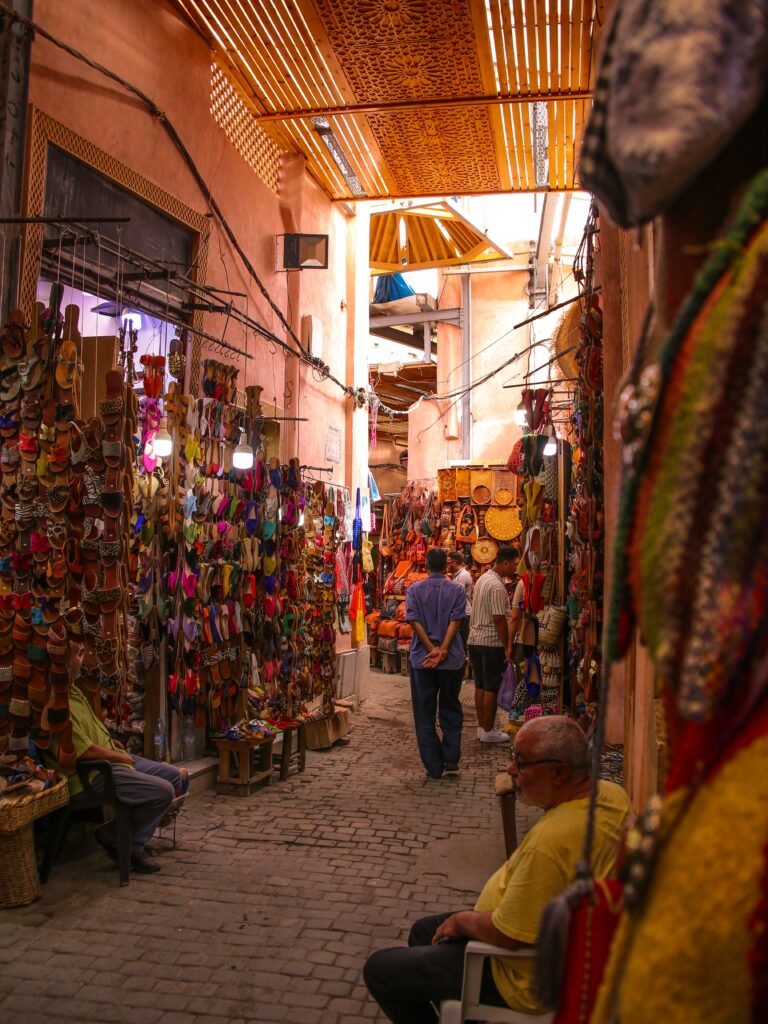 This Marrakech travel guide is built to prevent exactly that.
Marrakech, honestly
Most people do Marrakech wrong: three days circling the same four monuments, two mediocre tagines on a rooftop with a view, a lamp they later regret, and a verdict of “intense” on the flight home.
The city is not a checklist. It is a thousand-year-old trading post at the point where the Sahara meets the Atlas, and it rewards exactly one thing: slowing down.
Below is the free version — what the city actually is, what is worth your time, and the three things nobody tells you before you land. The paid guide is what comes after that: 40 pages of timing, riads, bargaining scripts, itineraries and the full wedding chapter.
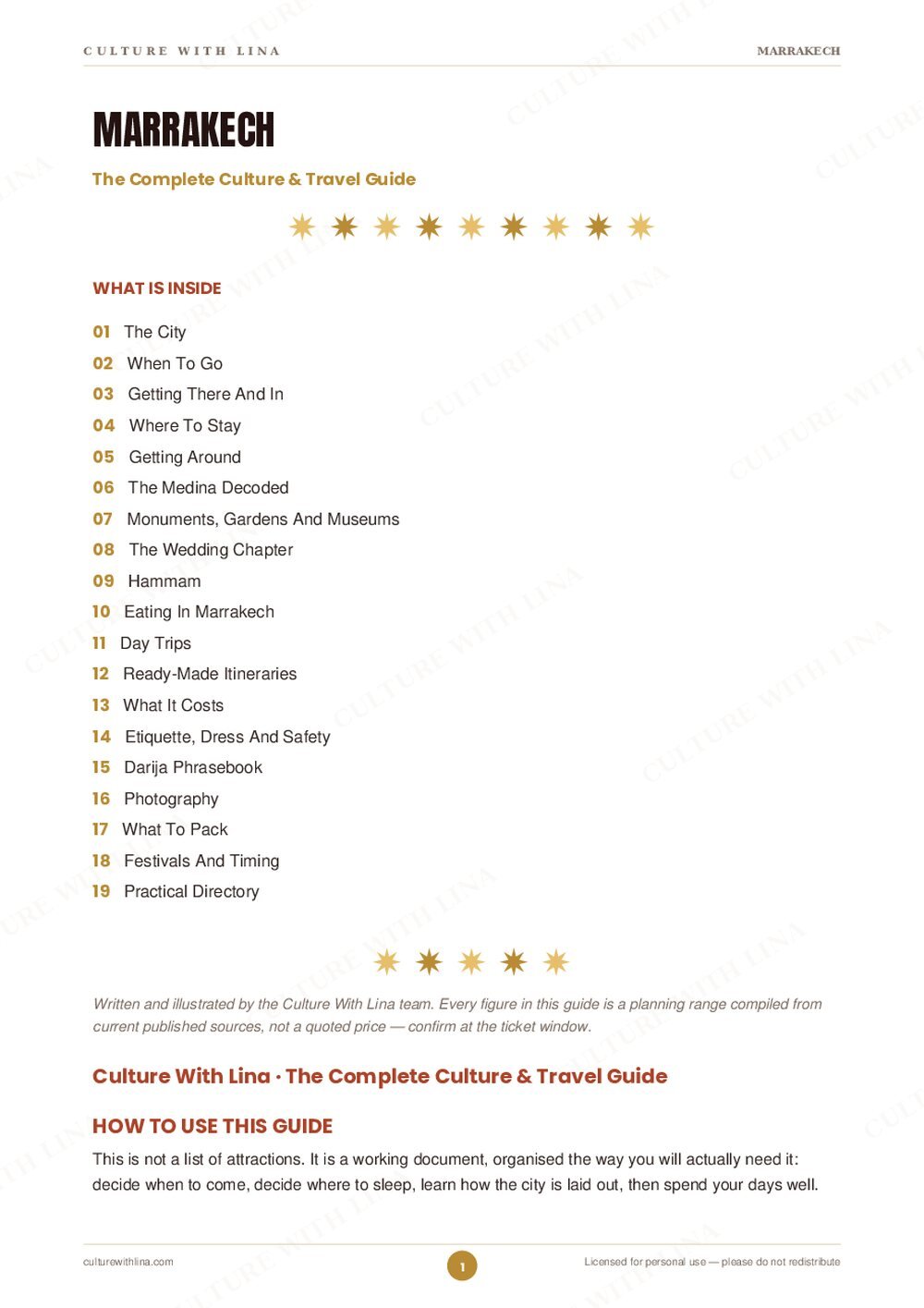
What this Marrakech travel guide actually covers
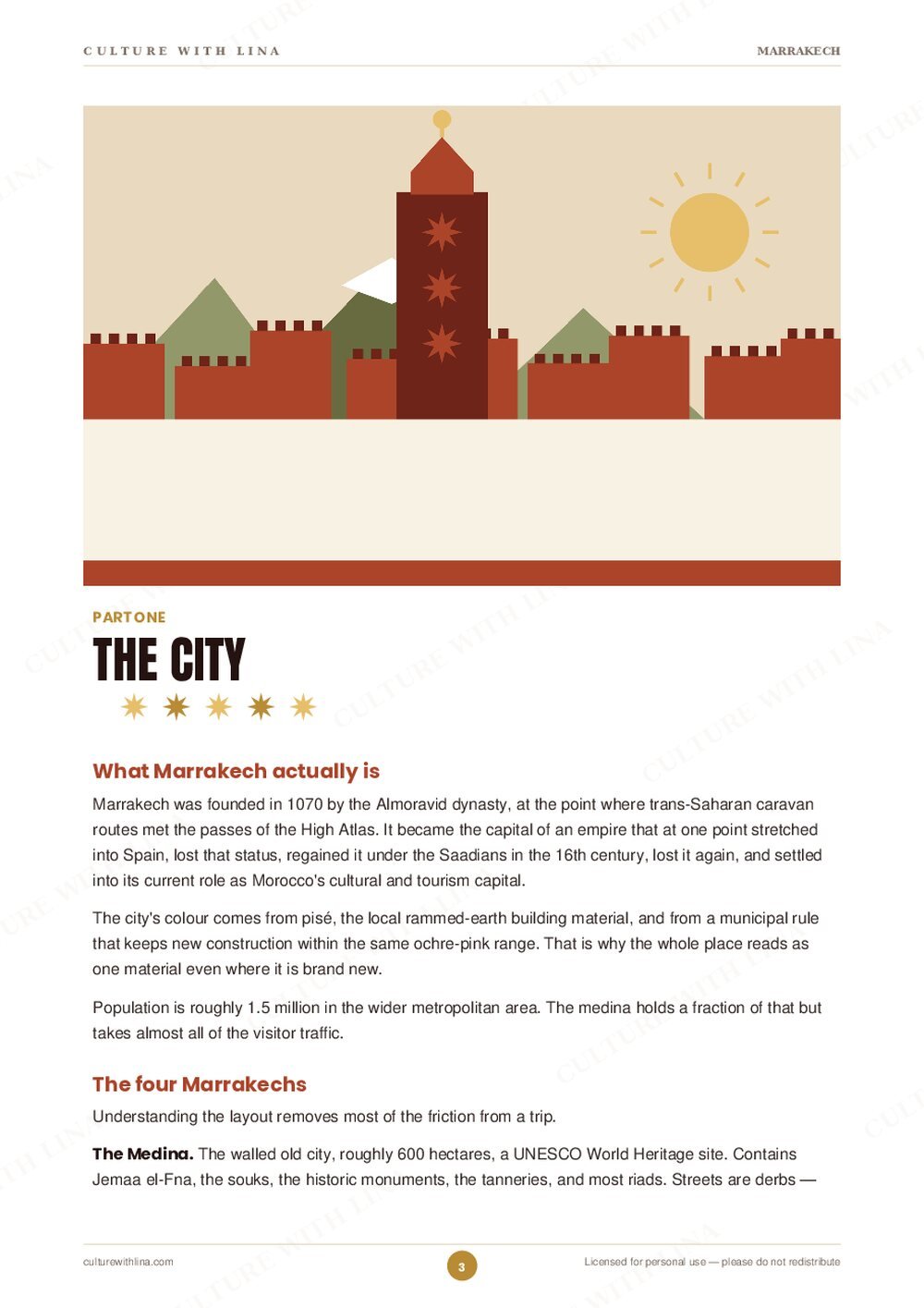
Founded in 1070 by the Almoravids, Marrakech was an imperial capital and a caravan terminus, and it still feels like two cities stitched together. The medina is the walled old town — pink pisé walls, no street grid, donkey carts, and every monument you came for. Gueliz, the colonial-era new town, has the boulevards, the galleries and the restaurants Marrakchis actually book for a birthday.
The part nobody expects: the High Atlas rises directly to the south, and from December to April those peaks are snow-covered and visible from any rooftop on a clear morning.
Five things worth your time
- Ben Youssef Madrasa — a 14th-century Quranic college, reopened in 2022, and the finest single interior in the city. Go at opening, before the reflection pool fills with other people’s phones.
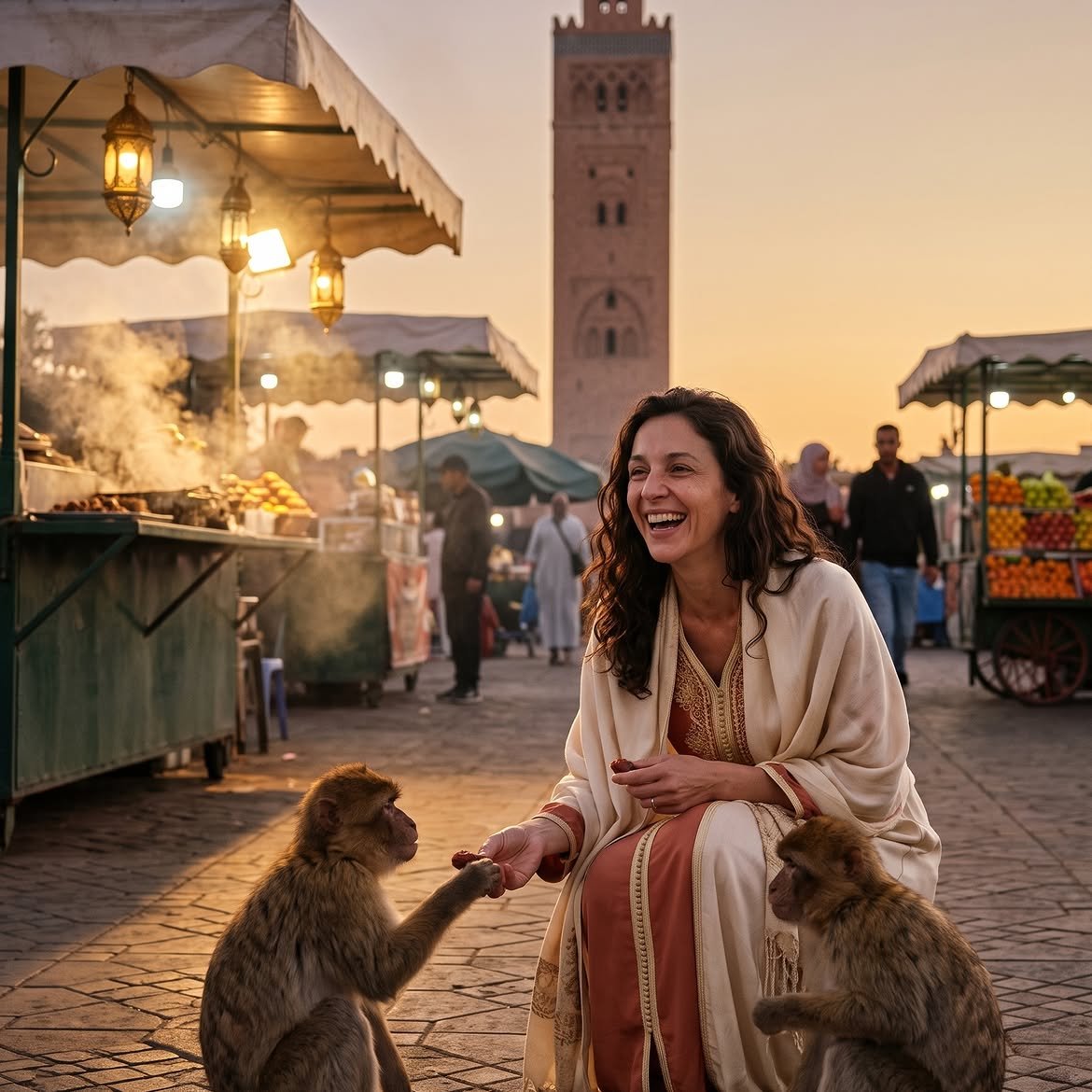
- Jemaa el-Fna at dusk, not at noon. By day it is a tourist funnel. From about 6pm the food stalls assemble and it becomes a real gathering place again.
- Bahia Palace — the best place in Marrakech to understand how wealthy Moroccan families actually lived.
- Jardin Majorelle — the cobalt garden Yves Saint Laurent saved from demolition. Book online several days ahead; the street queue is real.
- One hammam. Not a spa massage. Steam, black olive soap, a kessa glove, and someone removing a layer of you that you did not know was there.
Three things nobody tells you
- Your riad will be impossible to find, and that is normal. Medina addresses are derbs, not streets, and mapping apps give up about forty metres from the door. Ask the riad to meet you at the nearest landmark. Every riad does this.
- Petits taxis must use the meter. Say “compteur” before you get in, or agree the fare first.
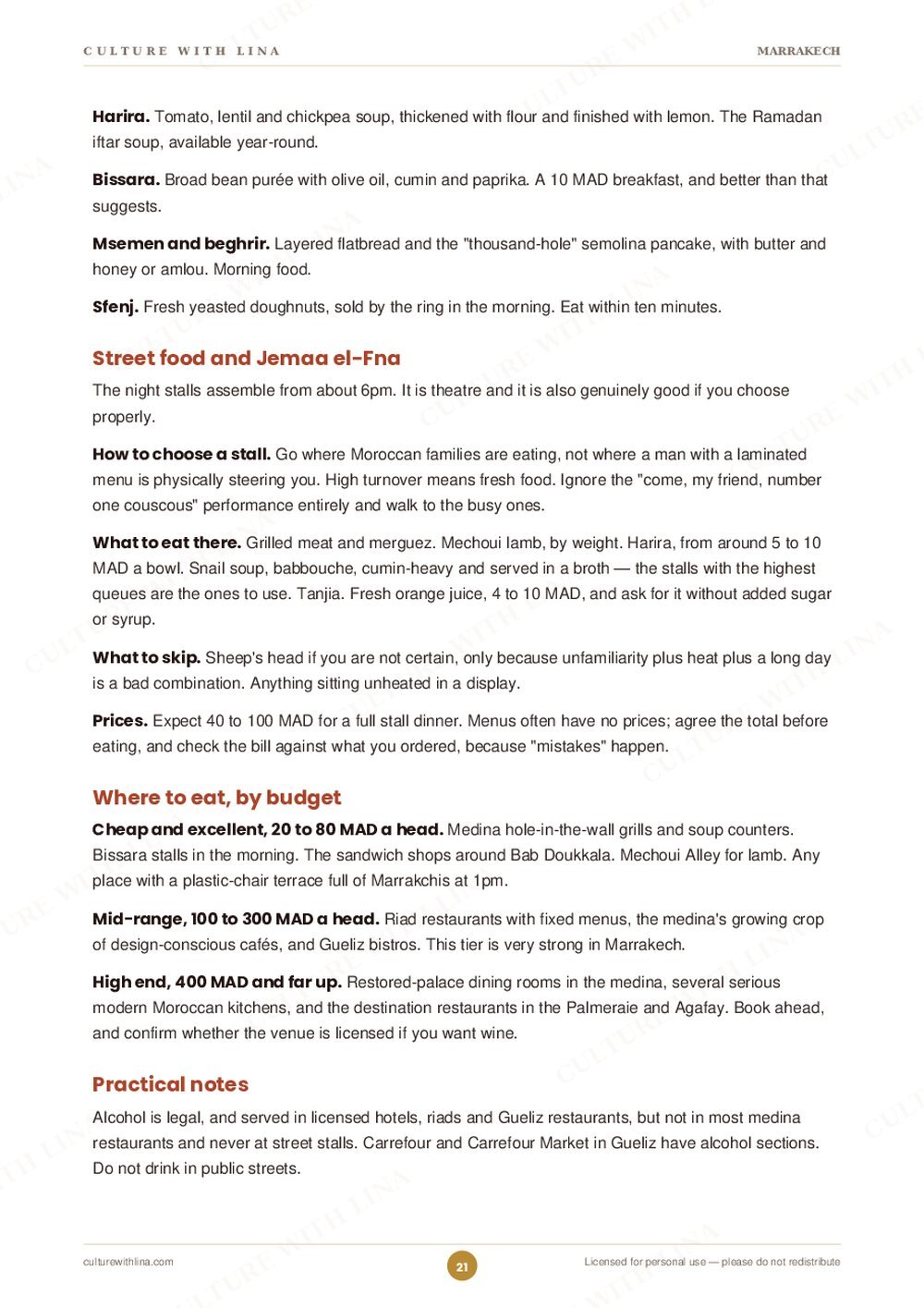
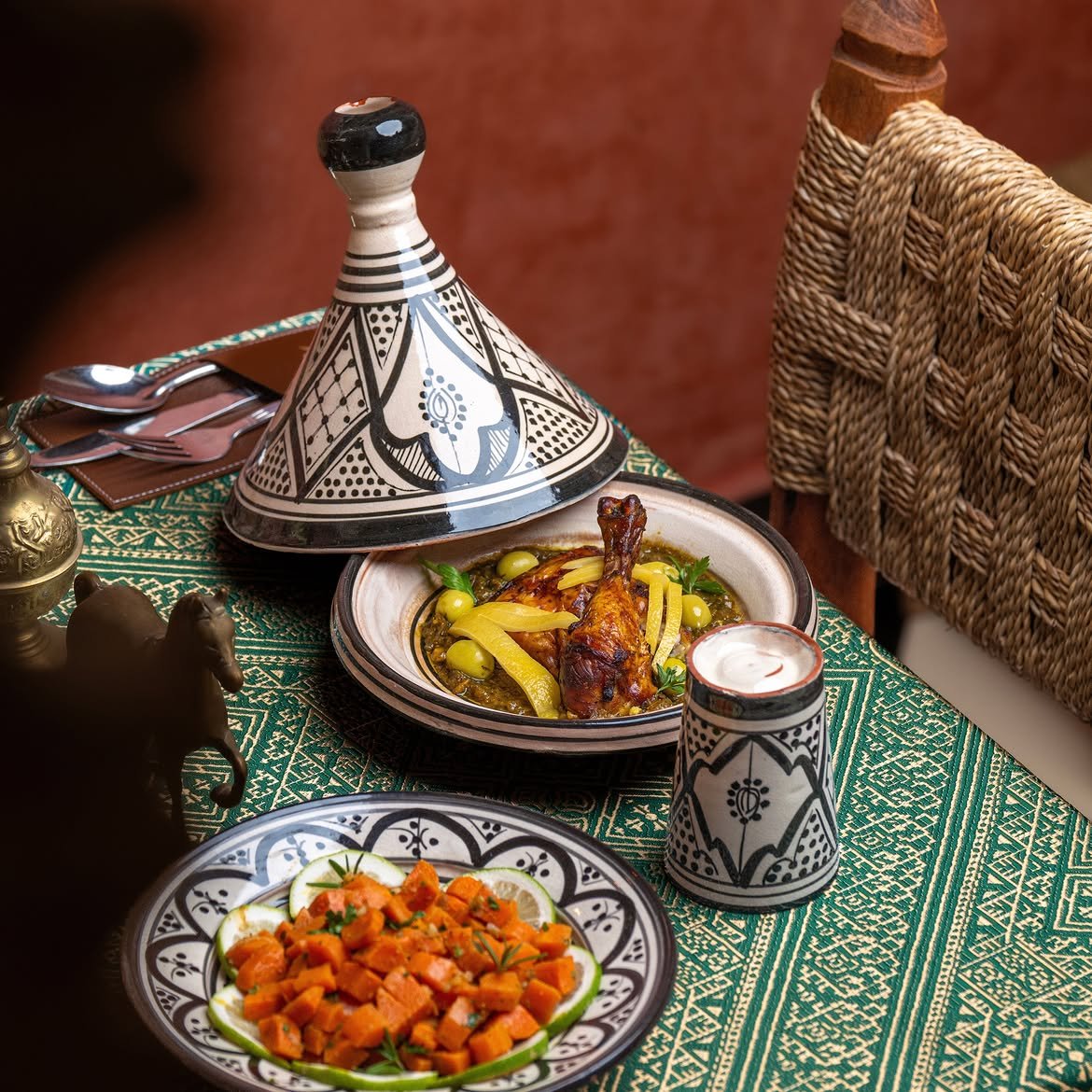
- Tanjia is the Marrakech dish, not tagine. Beef or lamb sealed in a clay urn and cooked in the ashes of a hammam furnace. Order it once.
A wedding in Marrakech: the henna night
Watch the film
A wedding in Marrakech: the henna night
Henna drawn slowly onto open palms, dates and mint tea passed around, and the drums starting up in the courtyard. This is the night the Marrakech guide's wedding chapter is built on — the henna sitting untouched for an hour, the neggafa running the room, and the amariya still to come.
Filmed for the Culture With Lina series. Follow @culturewithlina for the rest.
Henna drawn slowly onto open palms, dates and mint tea passed around, and the drums starting up in the courtyard. It is the part of a Moroccan wedding outsiders find most beautiful, and the part that is hardest to read about honestly.
The bride’s hands and feet are painted freehand, and the paste has to sit untouched for one to two hours — so she cannot eat, cannot answer her phone, and can do nothing but sit and be talked at by everyone she loves.
Running the whole night is the neggafa, the wedding’s director and stylist, who supplies and changes the bride through five to seven outfits and choreographs every entrance. At the peak the bride is carried in on the amariya, a raised palanquin on four men’s shoulders, while Dakka Marrakchia — the city’s own percussion tradition — goes to double time and the older women let out the youyou.
That is one night of seven. The guide’s wedding chapter walks through all of them, plus what to wear, what to give, and how to behave if you are ever invited.
What is inside the guide
40 pages, 19 chapters, one A4 portrait PDF.
- When to go — month by month, including what Ramadan and high summer actually do to a trip
- Where to sleep — riad versus hotel, by medina neighbourhood, across three budget tiers
- The souks — how the sections are laid out, and a bargaining script with the exact opening counter
- What you are buying — how to tell a real rug from a tourist rug, and real saffron from dyed safflower
- The monuments — where each one is, what it costs, and the hour to arrive
- Hammams — public, mid-range and hotel, and what happens in each
- Food — tanjia, and the dishes that never make it onto a tourist menu
- Day trips — honest driving times, and the truth about Agafay
- Itineraries — 2, 3 and 5 days, already built
- Budgets — broken down for backpacker, mid-range and comfortable
- Scams, by name — including the tannery hustle and the square henna routine
- Solo female travel — what to expect and what to ignore
- The wedding chapter — all seven parts, the neggafa, the amariya, Dakka Marrakchia
- Darija phrasebook, photography hours, packing list and the festival calendar
Who it is for
- First-time visitors who want more than the four monuments
- Anyone nervous about the souks, the hassle or the bargaining
- Travellers who came for the culture, not the pool
- Repeat visitors who want the food chapter and a sharper itinerary
Why this is not another listicle
It is editorially curated research, written to be useful rather than flattering. Overrated things are called overrated. No business paid to be in here.
Format and delivery
Instant PDF download. 40 pages, 19 chapters, A4 portrait — sized to read comfortably on a phone and to print at home. No app, no login. Download links never expire, and updated editions are free for buyers. Licensed for personal use.
Common questions
How current is the information?
Entry fees, taxi fares and accommodation ranges come from current published sources and are given as realistic planning ranges, not fixed quotes. Monument prices change without notice, so confirm on the day. Buyers get updated editions free.
Do I need it if I have already booked?
The after-you-land chapters are where it saves the most: the bargaining script, the taxi meter rule, the right hour for each monument, and how to sidestep the tannery and square-henna routines that catch most first-timers.
Is it just for first-timers?
No. Repeat visitors go straight to the food chapter, the day trips with honest driving times, and the wedding section — neggafa, amariya, Dakka Marrakchia — in more depth than any guidebook gives it.
Read more from Marrakech
- Lost in the Marrakech Medina, On Purpose
- Inside a Moroccan Wedding: the Amariya, the Negafa and Seven Kaftans
- Mint Tea, Tagines and Msemen
Wear the series
Take Marrakech home
Tees, hoodies and totes from the Culture With Lina shop. Printed and shipped worldwide.
The Wanderer Tee
Soft cotton tee with the Culture With Lina wordmark. The one that goes in the carry-on.
Culture Club Hoodie
Heavyweight hoodie in cream and olive. Built for early flights and cold medina mornings.
Coco Tote
Canvas tote with Coco on the front. Holds a laptop, a camera and far too much argan oil.
Morocco, you have a special kind of magic
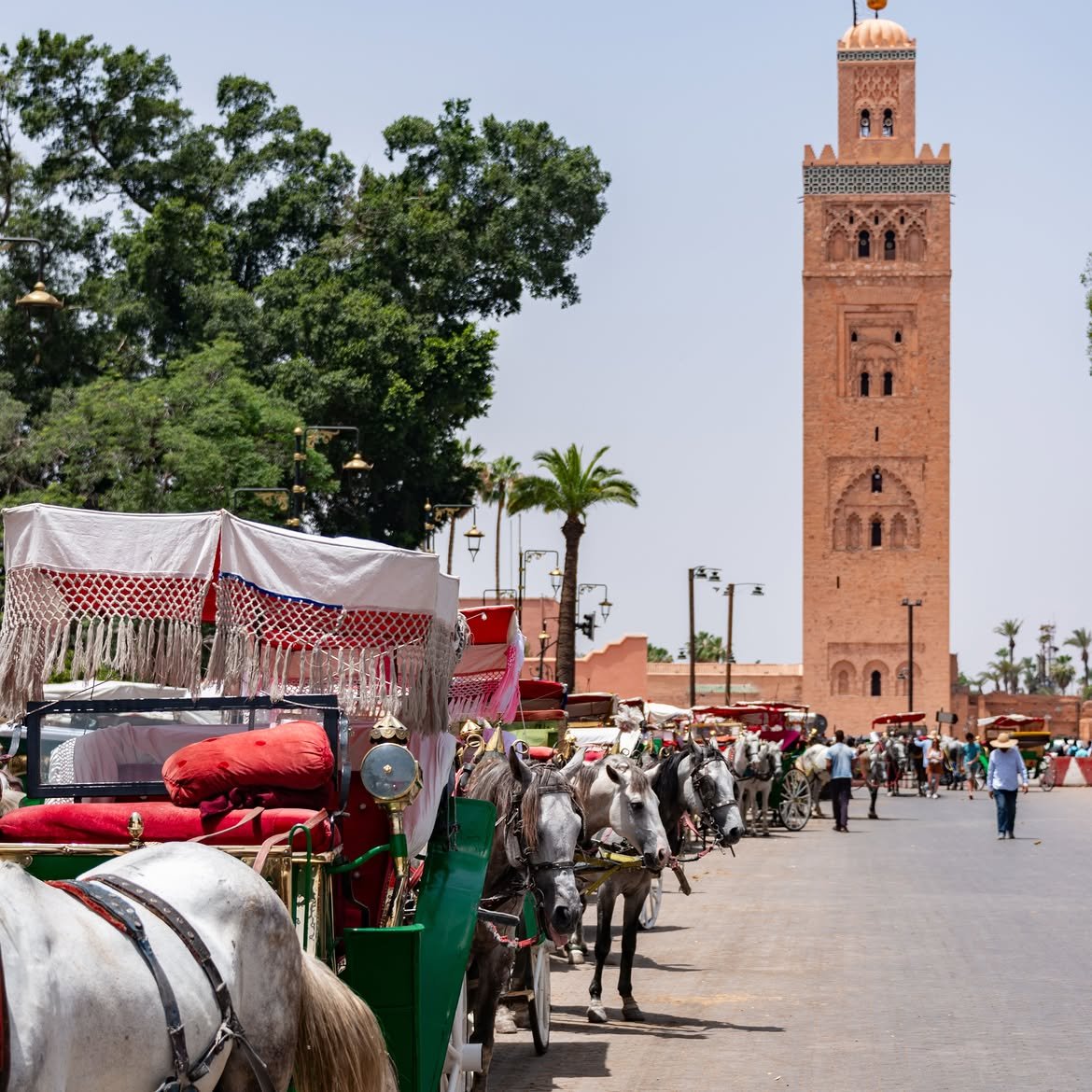
A few memories from the Moroccan journey — the souk with its currents rather than aisles, mint tea poured from a height, the Koutoubia holding the skyline, and the hour when the pisé walls stop being pink and start being gold.
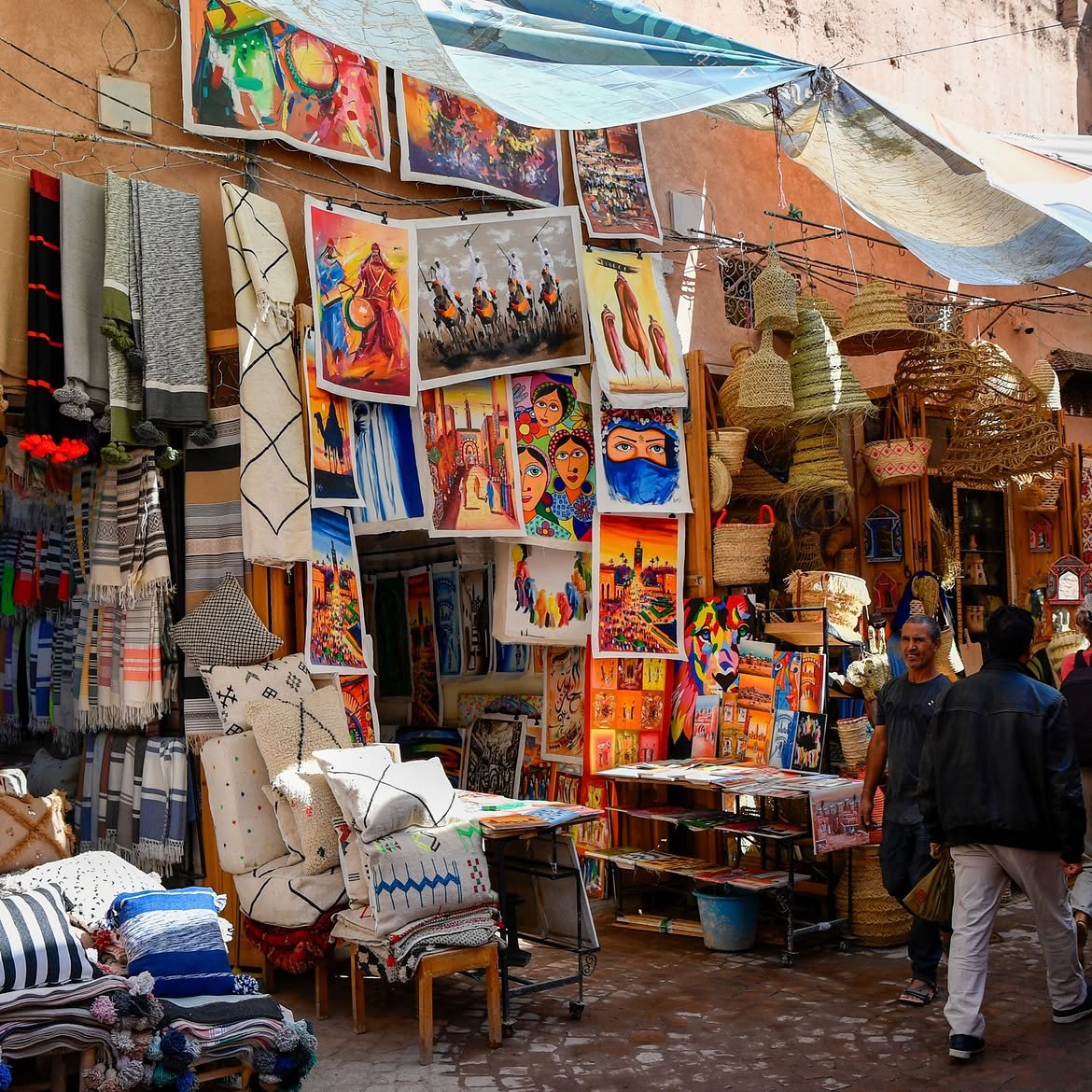
Also a carousel on Instagram and TikTok. More in Lost in the Marrakech Medina (On Purpose).
Reviews
There are no reviews yet.