The best advice I got about Marrakech came from a riad owner on my first morning: “You will get lost. Decide now that it is the point.”
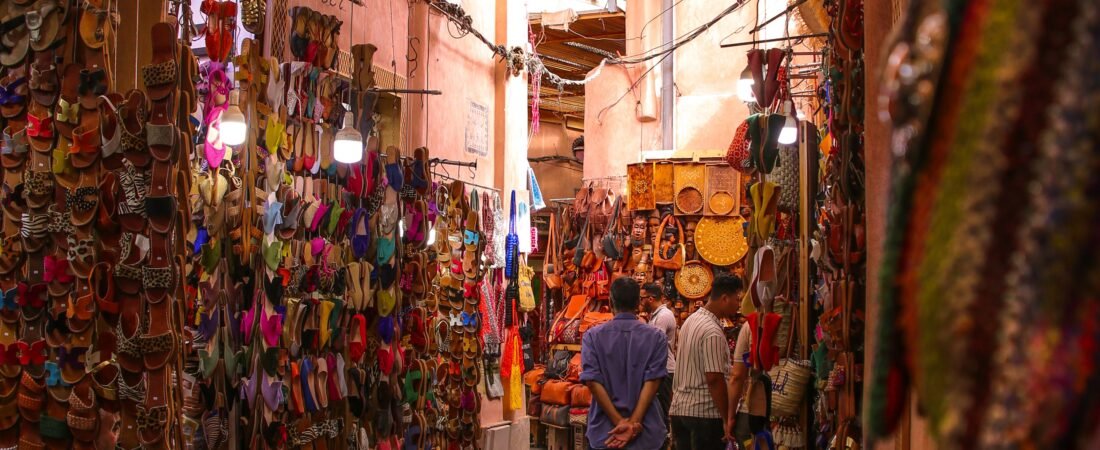
The medina, the walled old city founded almost a thousand years ago, is a maze of some of the most alive streets anywhere: souks roofed with slatted wood that stripes everything in light, donkey carts with right of way, the smell of cedar shavings, leather, orange blossom and grilling meat in rotation, and around every third corner, a doorway into somewhere beautiful.
Jemaa el-Fnaa: the main square, twice a day
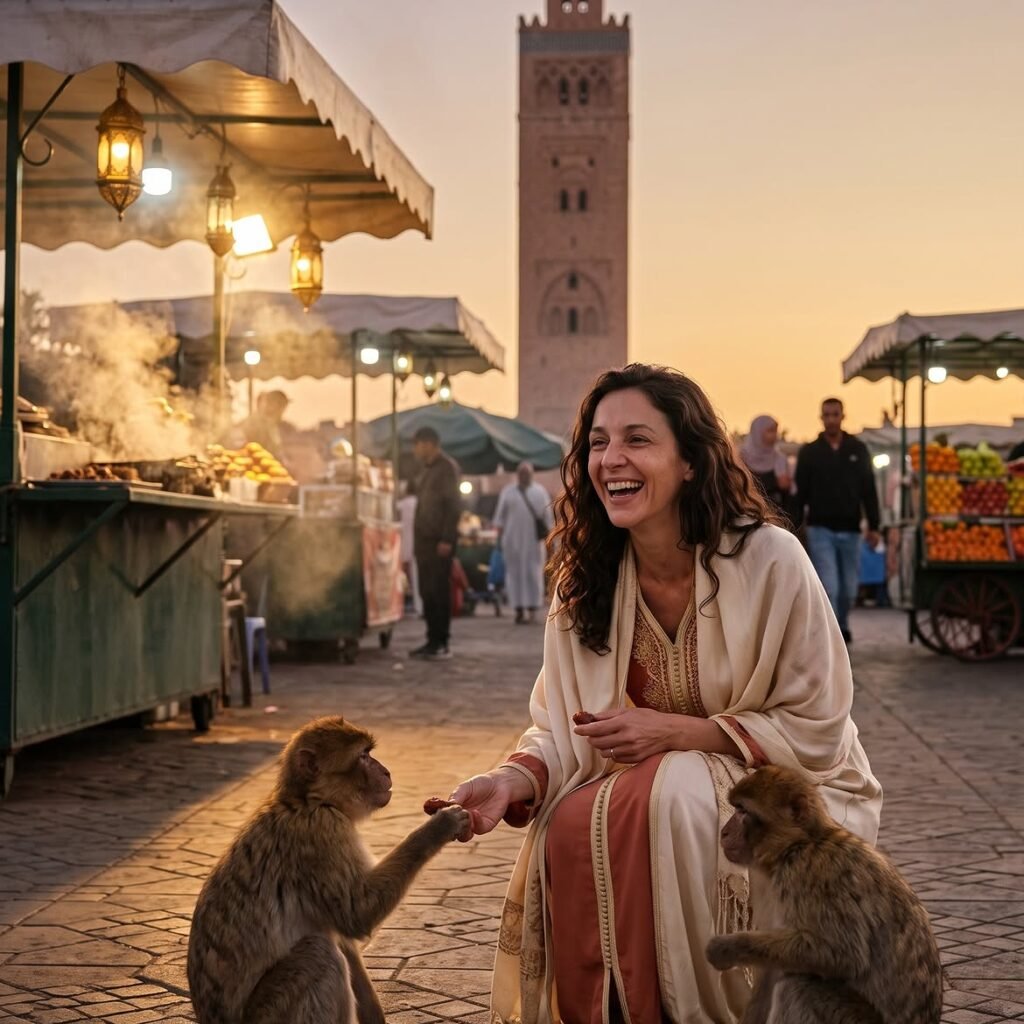
Visit the great square twice, because it is two different places. By day it idles: orange juice stalls, snake charmers (keep your distance and know that photos cost money), henna artists and water sellers in fringed hats. At dusk it transforms into the spectacle it has been for centuries: dozens of food stalls assemble from nowhere under lamplight and smoke, and the square fills with storytellers, musicians, and half the city out for the evening. Take it in from a rooftop café with a mint tea first, then dive in and eat at whichever grill stall is fullest of locals.
The souks, and the art of the haggle
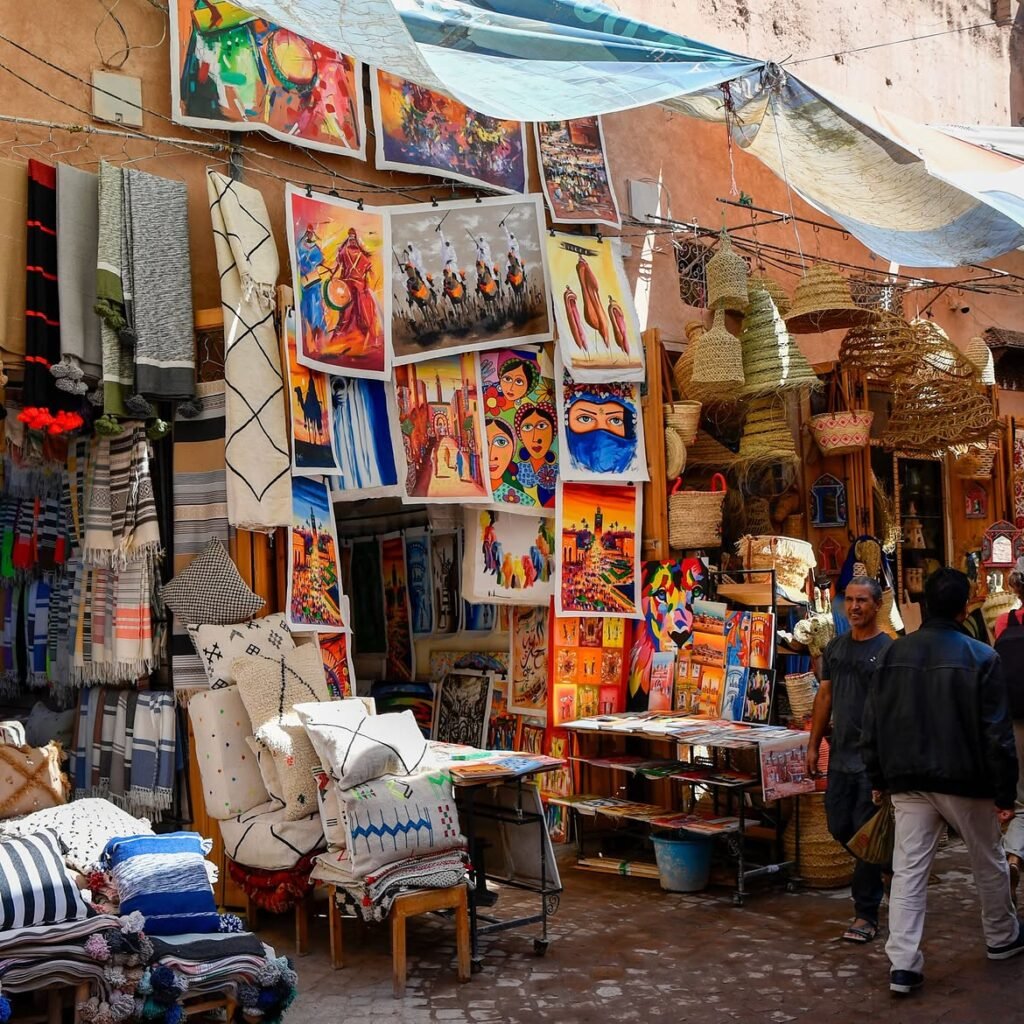
North of the square, the souks run in loose guild territories: leather, lamps, spices, carpets, metalwork. Two rules made my shopping happy. First, bargaining is a social ritual, not combat: start around a third of the opening price, keep it warm and funny, walk away if the number will not come to you (this is often when it does). Second, buy things where they are made; the medina still has working workshops, and watching a lantern being hammered out is worth more than the lantern.
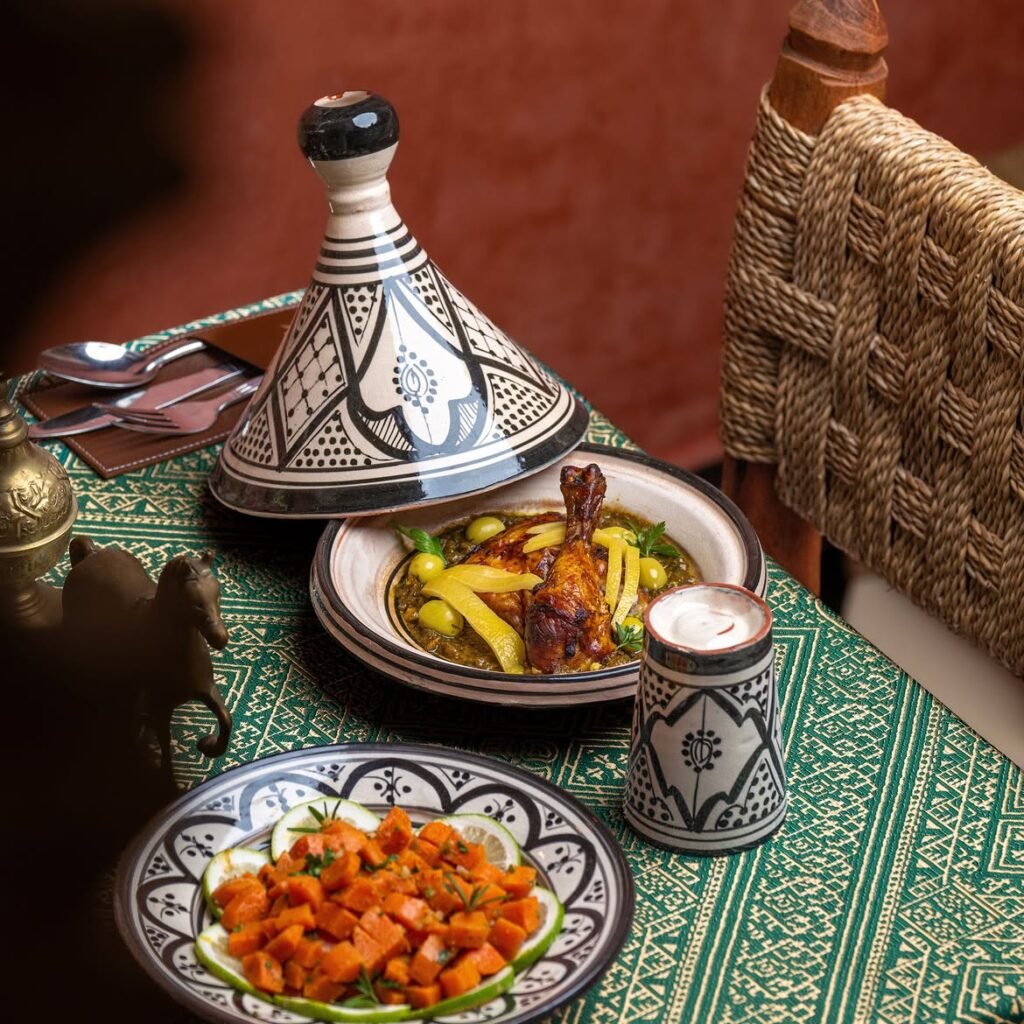
What came home with me: a leather pouf, argan oil from a cooperative, a ceramic tagine I absolutely did not have luggage space for, and an amount of cumin that raised questions at the airport.
Doorways worth finding
- Ben Youssef Madrasa, a 16th-century Quranic school and the most beautiful building in the city: a courtyard of carved cedar, stucco lace, and zellij tilework that will fill your camera roll.
- Bahia Palace, room after room of painted ceilings built for a 19th-century grand vizier.
- Le Jardin Secret, a restored riad garden right in the medina when you need ten quiet minutes.
- Jardin Majorelle, outside the walls: the cobalt-blue garden saved by Yves Saint Laurent. Book the first slot online or share it with the whole internet.
- And the tanneries if your nose is brave. The mint sprig they hand you is not decorative.
Stay in a riad
A riad, a traditional house turned inward around a courtyard, is the single best decision you can make here. From a chaotic alley you step through a plain door into a world of fountains, tiles, and rooftop breakfast. Mine cost less than a bland chain hotel and I still think about the msemen (flaky pancakes) with honey every time I make regular toast.
Honest notes
- Unofficial “guides” who insist a street is closed and offer to lead you: it is not closed. A polite, firm “la, shukran” (no, thank you) on repeat works.
- Dress modestly, shoulders and knees, out of respect and for cooler comfort.
- Cash rules the souks; small notes are gold.
- Google Maps half-works in the medina. Landmark navigation (and surrender) works better.
Planning your visit
The kind months are October to April, when days are warm and evenings ask for a light jacket. High summer is a different proposition: the medina regularly bakes past 40°C, and even the cats surrender by noon. Deep winter means bright days and surprisingly cold nights, because riads are built to shed heat, not hold it; pack one warm layer more than seems reasonable.
Three to four nights is the sweet spot: enough to get lost, found, and lost again on purpose, with room for a day trip toward the Atlas foothills or the coast at Essaouira. Morocco stretches almost any budget. Street food and taxis cost very little, a lovely riad generally costs less than a comparable European boutique hotel, and the range between a simple guesthouse and a palatial one is wide, so decide which nights deserve the splurge.
Marrakech’s airport sits absurdly close, just outside the walls, with direct flights from much of Europe. Agree the taxi fare before you get in, or have your riad arrange a pickup, which is worth it at least on arrival: many riads are unreachable by car, and a person who knows the alleys beats any app.
Etiquette worth knowing
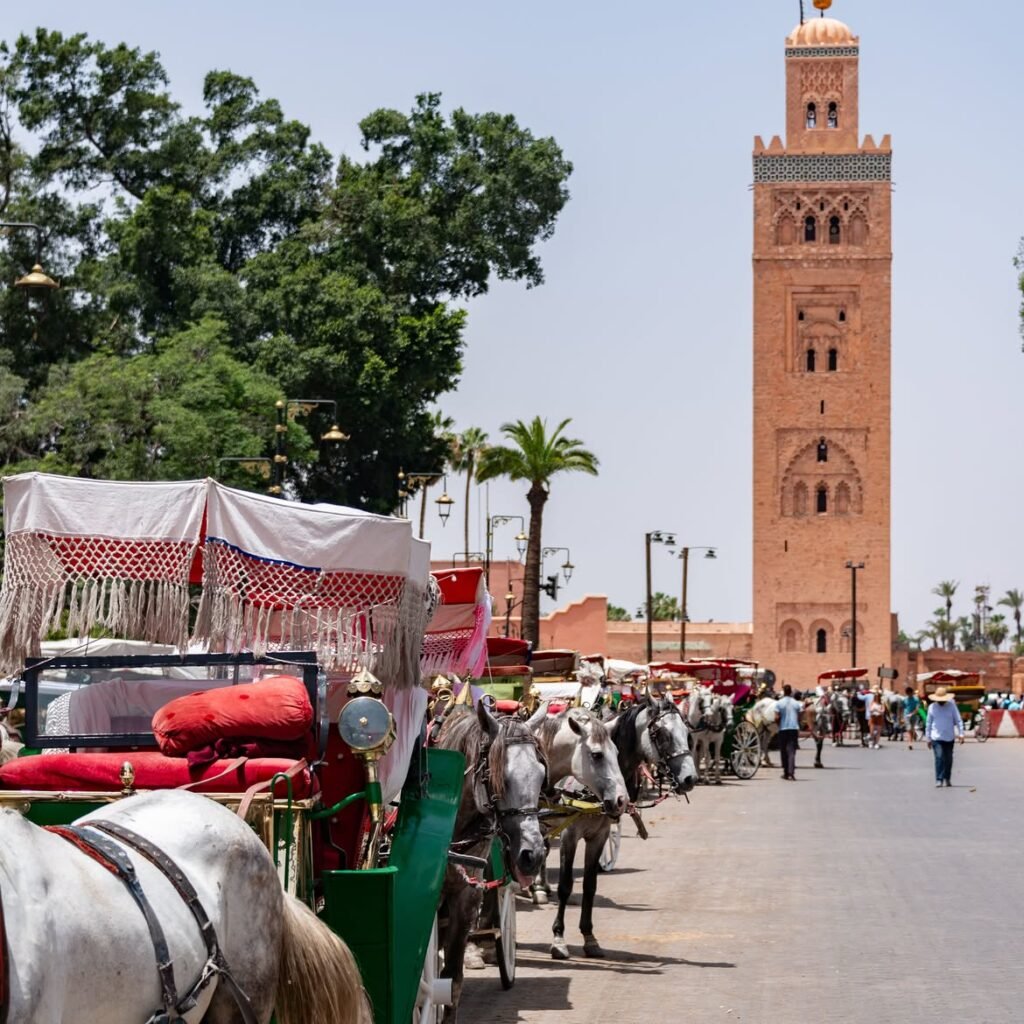
A few habits smooth everything. Ask before photographing people; some will decline, some will expect a coin, and a smile with a raised eyebrow and camera works in any language. Active mosques, including the great Koutoubia, are closed to non-Muslims, but its minaret is the city’s compass and best admired from the gardens around it anyway. On Fridays the pace slackens around midday prayers and some workshops shutter, so plan a garden or a long lunch. And learn two words at minimum: salam (hello) and shukran (thank you); both are small keys that open the city.
Insider tips
- Start the day on a rooftop: a café terrace over the square resets your mental map and your patience at the same time.
- Walk the souks at opening time, when shutters rattle up and the first sale of the day is said to carry good luck; it is the softest bargaining hour.
- Browse all week, buy on the last day, once you know the fair price of a lantern to the dirham.
- Try a hammam at least once: neighborhood ones are cheap and communal, hotel ones are spa-soft, and both return you to the street a new person.
And yes, this leg of the journey had a personal note: after months in Europe and Asia, hearing the call to prayer roll across the rooftops of a North African city at sunset, with Coco curled on a riad cushion like she owned the deed, felt like a homecoming of sorts. Morocco treats small dogs as minor royalty, which she found correct.
Questions I get asked most
Is the Marrakech medina safe?
Broadly, yes. The hustle is commerce, not menace, and serious trouble involving visitors is rare. Watch your bag in crowds, wave off unofficial guides, and stick to lit, busy lanes late at night.
How many days do I need?
Three to four covers the medina at a humane pace, with a day spare for the Majorelle garden and the new town, or a trip toward the mountains.
Should I hire a guide?
An official guide for your first morning is money well spent: you absorb the layout and the history, and you get pestered less while you do. After that, the best guide is getting lost.
Planning your trip? Try my free Travel Budget Calculator to plan your trip with confidence.
— Lina
Planning your medina days
Give the medina two or three days, in the kind seasons – March to May or September to November, when the light is golden and the heat negotiable. Sleep inside the walls at a riad: behind an anonymous door, a courtyard of orange trees and a rooftop breakfast reset whatever the souks took out of you the day before. Cash rules here – cards work in bigger shops and restaurants, but the stalls, the carts and the tips all speak dirhams, in small notes if you can manage it.
Navigating, haggling and saying no
The medina rewards surrender but keeps a few compass points: the Koutoubia minaret, the gates, the main artery streets – note yours when you leave the riad, and remember that offline maps work better here than the alleys deserve. Decline unofficial guides and helpful strangers redirecting you with a smile and a firm la, shukran – the medina is not closed, whatever you are told. In the souks, haggling is theatre both sides should enjoy: counter around a third of the opening price, climb slowly, and remember the merchant has played this game longer than you have been alive. Ask before photographing people or their stalls; a purchase buys goodwill everywhere.
My insider notes
When the sensory volume peaks, buy your exit: Le Jardin Secret hides two courtyard gardens of running water and shade in the medina’s middle, and any rooftop cafe turns chaos into panorama for the price of a mint tea. Sunset belongs to the terraces around Jemaa el-Fna as the food-stall smoke rises and the drums start. And one habit that changes everything: walk the same three lanes twice. The first pass you survive them; the second pass they start becoming yours.
Questions I am always asked
Will I really get lost?
Yes, and it is the point – the medina is a maze by design. You are never more than ten minutes from a landmark, and locals will point you out for nothing more than a smile.
Cash or card?
Cash, mostly, in small notes. Cards work at riads and proper restaurants, but the souks, the carts and the tips run on dirhams.
Is it safe at night?
The main arteries and Jemaa el-Fna stay busy and fine into the evening; the outer alleys empty out, so take the lit routes home or a petit taxi from the square, and keep your bag worn across you in crowds.
Keep exploring: the full Morocco destination guide, the blue stairs of Chefchaouen, and when to go and what it costs.
The film from this trip
Watch the film
A wedding in Marrakech: the henna night
Henna drawn slowly onto open palms, dates and mint tea passed around, and the drums starting up in the courtyard. This is the night the Marrakech guide's wedding chapter is built on — the henna sitting untouched for an hour, the neggafa running the room, and the amariya still to come.
Filmed for the Culture With Lina series. Follow @culturewithlina for the rest.
Morocco, you have a special kind of magic
A few memories from the Moroccan journey — the souk, the tea, the Koutoubia, and the hour when the whole city turns gold.
This set also ran as a carousel on Instagram and TikTok. Which one is your favourite?