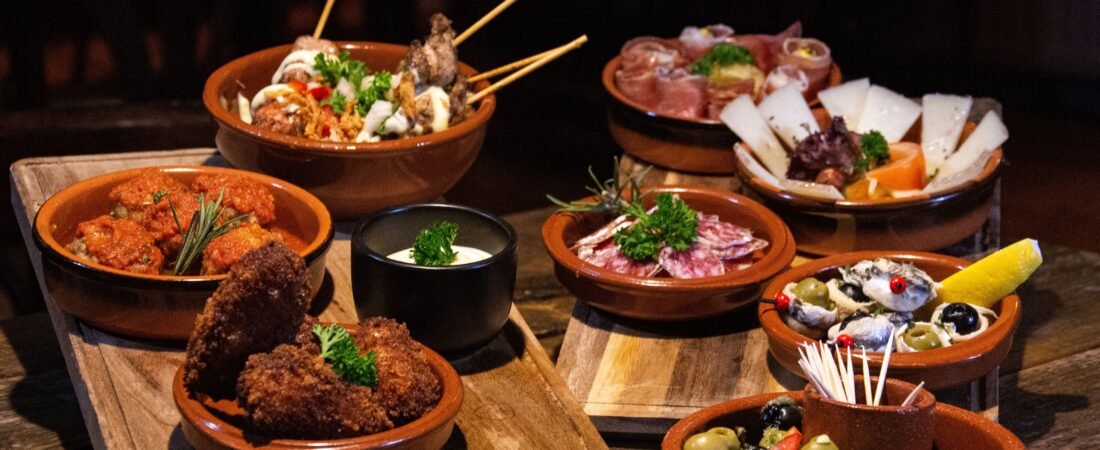
In Spain, eating is not a task to get through. It is the whole evening.
I learned to do it the Spanish way: small plates, good wine, and hours of conversation. You wander from bar to bar, ordering a few tapas at each, never rushing, never really deciding when dinner starts or ends. It is less about the food (though the food is incredible) and more about the rhythm of it. After a week I stopped checking the time at meals. After two weeks I stopped understanding why I ever had.
First, the schedule, because it will break you otherwise
Spain eats late. Lunch around 2 or 3pm, and it is the big meal of the day. Dinner rarely before 9pm; in Andalusia in summer, 10:30pm is normal and the terraces are full at midnight. Show up to a restaurant at 7pm and you will dine alone with the staff giving you gentle looks. The gap is what tapas were made for: a drink and a few bites at 8pm is not dinner, it is the bridge to dinner. Once you accept the schedule, everything makes sense.
A useful word: tapear, the verb for going out for tapas. The bar crawl where each stop involves two plates and one drink is a national art form.
What to order
Jamón ibérico. Cured ham from acorn-fed Iberian pigs, sliced paper thin, melting at body temperature. The best (jamón ibérico de bellota) is expensive and worth every céntimo. You will see whole legs hanging behind every bar. This is normal. You will start to find it comforting.
Patatas bravas. Crispy fried potatoes with a smoky, spicy sauce. Every bar claims theirs is the best. Testing this claim thoroughly is your duty as a visitor.
Gambas al ajillo. Prawns arriving still sizzling in a clay dish of garlic, olive oil, and chili. Bread for the oil is not optional.
Tortilla española. Thick potato omelette, served in wedges, ideally slightly runny in the middle (jugosa). A bar with a good tortilla is a bar you can trust with anything.
Tinto de verano. Red wine with lemon soda over ice: the local’s answer to sangria, cheaper and honestly better. Ordering it instead of sangria quietly marks you as someone who has done homework.
Also worthy: boquerones (vinegar-cured anchovies), salmorejo (a thick cold tomato cream from Córdoba), croquetas of any description, and pimientos de padrón, small green peppers where roughly one in ten is spicy. Russian roulette, but delicious.
How to tapear properly
- Stand at the bar. It is livelier, and in some places slightly cheaper than table service.
- Order two or three things, not ten. The whole point is moving on. Each bar does one or two things brilliantly; locals know which, so order what you see on every table.
- In Granada, and a few Andalusian towns, tapas still come free with every drink. Order a caña (small beer) and food simply appears. Civilization, perfected.
- Sunday evenings and Mondays, many places close. Plan accordingly.
Where the tapas trail leads
Every region does this differently, and that is half the fun. Andalusia (Seville, Granada, Córdoba) is the classic southern version: standing room, sherry, unhurried nights. Madrid is the great all-rounder, where every region of Spain seems to keep an embassy in bar form. And up north, San Sebastián and Bilbao serve pintxos, the Basque cousin: little constructions on bread lined up along the bar, often speared with a toothpick, in streets so dense with bars you can visit five in a hundred meters. The vocabulary changes; the rhythm does not. My own loyalty, for the record, remains with a slow Seville evening when the heat finally lifts and the whole city exhales onto its terraces.
Planning a tapas trip
When to go. Spring and autumn are ideal nearly everywhere: warm enough for terraces, cool enough to enjoy a crowded bar. High summer in Andalusia is fierce, and the late-night schedule exists partly because of it. Winter has its own rewards, when the stews and croquetas come into their own.
How long. You can learn the rhythm in a weekend. A week lets you compare cities, and comparing is the point.
What it costs. Tapas remain one of Europe’s great food bargains. Individual plates generally cost a few euros each, and a full evening of wandering, drinks included, usually lands well under what a single sit-down dinner costs in most of Western Europe. Granada’s free-tapas tradition shrinks the bill further still. The luxurious end (that bellota jamón) will happily absorb whatever you offer it, but nobody needs to spend much to eat magnificently.
A note on origins. Nobody fully agrees on where tapas began. The tidy legend says the tapa, the “lid”, started as a slice of bread or ham laid over a glass to keep the flies out, and the competing stories only multiply from there. Whatever the truth, the culture it produced (eating as socializing, dinner as something you do across an entire neighborhood) is the real inheritance.
Small courtesies that go a long way
Spanish bars run on an etiquette that is invisible until you learn it. Greet the room, or at least the bartender, when you walk in; a friendly “buenas” costs nothing and buys a great deal. You almost always pay at the end rather than per round; the bartender is keeping your tab in their head, and it is a point of pride. Tipping is modest: rounding up or leaving small coins is plenty. In some gloriously old-school bars, napkins and olive pits go straight on the floor; if the floor is littered, that is a compliment to the kitchen, not a hygiene crisis. When in doubt, do what the regulars do, slightly slower.
Coco became a tapas-terrace legend. Spaniards adore dogs, terraces welcome them, and no fewer than four bartenders brought her water bowls without being asked. She has strong opinions on jamón now. They are favorable.
Frequently asked questions
What is the difference between tapas and pintxos?
Tapas are small shared plates found all over Spain; pintxos are the Basque version, usually individual bites built on bread and priced per piece. The spirit (grazing, wandering, talking) is identical.
Do restaurants in Spain really not serve dinner until 9pm?
Mostly, yes. Kitchens commonly open for dinner around 8 or 8:30pm and fill up after 9. Tapas bars are your bridge across the hungry hours in between.
Is it rude to eat tapas standing at the bar?
Quite the opposite. The bar is the best seat in the house, and in some places table service costs slightly more. Standing is exactly how the locals do it.
Heading to Spain? Try my free Travel Budget Calculator to plan your trip with confidence.
— Lina