The short version
The Sahara is the one Moroccan destination that is not a place you look at. It is a place you stand in, and it does most of the work. Marrakech and Fes reward attention; the desert rewards stillness, which is a harder thing to plan for.
It is also the destination most often got wrong. Two of the three days most people spend on it are spent in a minibus.
What the Sahara actually is
Roughly 9.2 million square kilometres across eleven countries, of which only about a fifth is sand. The rest is rock plateau, gravel plain and mountain — which is why the postcard dunes are places you travel to rather than places you stumble into.
Morocco holds the north-western corner, and the dunes travellers actually reach are two ergs — seas of sand. They are not interchangeable, and choosing wrongly is the single most common reason people come home underwhelmed.
Erg Chebbi or Erg Chigaga
- Erg Chebbi — near Merzouga, in the east. The tall dunes, some around 150 metres, with tarmac almost to the sand. You can be on a camel twenty minutes after parking. Busier, easier, and the source of most photographs you have seen.
- Erg Chigaga — past M’Hamid, in the south. Lower dunes, a far wider field, and about 40 kilometres of piste that needs a 4×4 and two hours. Fewer camps, genuine emptiness, and a horizon that frequently has nothing on it at all.
Short trip or first visit: Chebbi. Four days or more, or you have been before: Chigaga.
Watch the film
A wedding in the dunes: camels at sunset and dancing under the stars
Somewhere past the last paved road, the dunes were set for a wedding. Guests arriving by camel as the sun went down, bread baked in the ashes, mint tea poured from a height, and a circle dancing around a fire under a sky with no town to compete with it.
Filmed for the Culture With Lina series. Follow @culturewithlina for the rest.
A wedding in the sand
Where a Fassi wedding runs on Andalusian nuba and a Marrakech one on Dakka Marrakchia percussion, a Saharan wedding runs on hand drums, a bendir and clapping that is somehow always in time. There is no venue and no seating plan — a ring of black wool tents pitched in the sand, carpets laid straight onto the dune, and a fire waiting to be lit.
It is a deliberate choice rather than a picturesque accident. Out at the sand there is room for everyone, the ground is free, and the setting needs no decoration. The cost is that everything has to be carried in: tents, carpets, cushions, pots, flour, tea, the animals, the drums. There is no caterer past the last paved road, so the whole thing runs on families lending, cooking, carrying and driving guests out.
The arrival
There is no car park and no door, so arrival is staggered across the last hours of daylight — and it is the most photogenic part of the night. Some guests come by four-wheel drive, bumping over the final stretch of piste. Others come the old way, in a string of camels with children doubled up. You see them long before they reach you: a line on the ridge, black against an orange sky, moving at the pace the desert insists on.
Then greetings, done person by person and at length, hands to hearts, the same questions asked of each family in turn. Tea before anything else, poured for as long as people keep arriving. And shoes off at the edge of the carpets — the carpets are the room, and once you step onto them you are indoors.
The fire and the circle
The fire is the whole architecture of the night: the kitchen, the light, the heat once the temperature drops, and the thing everyone arranges themselves around. Dough goes into the ground under embers and hot sand and is dug out later as khobz rmad, ash bread, knocked clean and torn apart. Then harira, then tagines carried out of the tents, eaten from communal dishes with bread.
Then the drums come out, and the skins are warmed over the fire so they tighten and hold pitch — the tuning is done in front of you and is part of it. The circle forms shoulder to shoulder, a slow collective step with clapping on the off-beat. It builds, accelerates, breaks and reforms with different people in it. The high trilling ululation from the women marks arrivals and high points; it is punctuation, not performance.
The ceremony itself is quiet, close and almost private. The noise comes afterwards, once the temperature drops and the fire stops being decorative. The circle loosens somewhere in the small hours and people drift back towards the tents talking quietly, while a few stay out by the embers until the sky goes grey. In the morning the carpets come up, the tents come down, and the dune looks exactly as it did before.
If you are invited
- Bring something useful. Sugar, tea, oil, dates, or a contribution to the household. Out here practical gifts land better than ornamental ones.
- Bring warm layers, then one more. The swing between afternoon and three in the morning can exceed 30°C, and the whole celebration is outdoors.
- Arrive in daylight. Finding a camp on a dune after dark is genuinely hard and the tracks are unmarked.
- Take the first glass of tea. Refusing it reads as refusing the welcome.
- Ask before photographing anyone. The dunes are yours to photograph; faces are not.
- Put the phone down for one set. The drums and the dark do not photograph well and do not need to.
- Leave nothing. Cigarette ends, caps, tissue — all of it goes out with you. There is no collection here and wind moves everything.
Real wedding, or camp entertainment?
Worth knowing the difference. Many camps run drumming and dancing for guests in the evening — that is hospitality, it is often very good, and the staff genuinely play. It is not a wedding. An actual family wedding is not a scheduled activity and is not sold as an excursion; if you are at one, it is because somebody invited you. Be sceptical of any operator advertising a guaranteed “traditional Berber wedding” as part of a tour.
Five things worth your time
- A night at camp, not a day trip. The day trip gives you sand. The night gives you the temperature drop, the fire, the drums and the sky — which is the entire point.
- Khamlia. A village a few kilometres from Merzouga where Gnawa groups play music with direct roots in Mali. One of the most worthwhile hours near the dunes, and almost nobody on a three-day tour sees it.
- Rissani market. Monday, Thursday and Sunday. Dates, donkeys and no performance for visitors whatsoever.
- Sunrise from the dune behind camp. Climb it the evening before so you know the route. It is far harder than it looks.
- Twenty minutes alone with no phone. The silence is the thing no camera has ever carried home, and it is free.
Three things nobody tells you
- The drive is genuinely long. Marrakech to Merzouga is nine to eleven hours, and that is with a good driver. Break it at Aït Ben Haddou or the Dades gorge rather than attempting it in a day.
- Everyone underpacks warm clothing. The swing between afternoon and 3am can exceed 30°C. In winter the nights approach freezing.
- Summer is a risk, not a discomfort. June to September regularly reaches 45–50°C in the deep erg. Many camps simply close.
When to go
October to April. The best window is October to November and March to April — warm days, cool nights, thin crowds. December to February brings cold nights and the clearest skies of the year.
A moment in the Sahara
Eight frames from a few days past the last paved road — the caravan on the ridge at golden hour, mint tea poured from a height, kasbah walls, and the fire once the temperature turns. Some places are not just meant to be visited. They are meant to be felt.
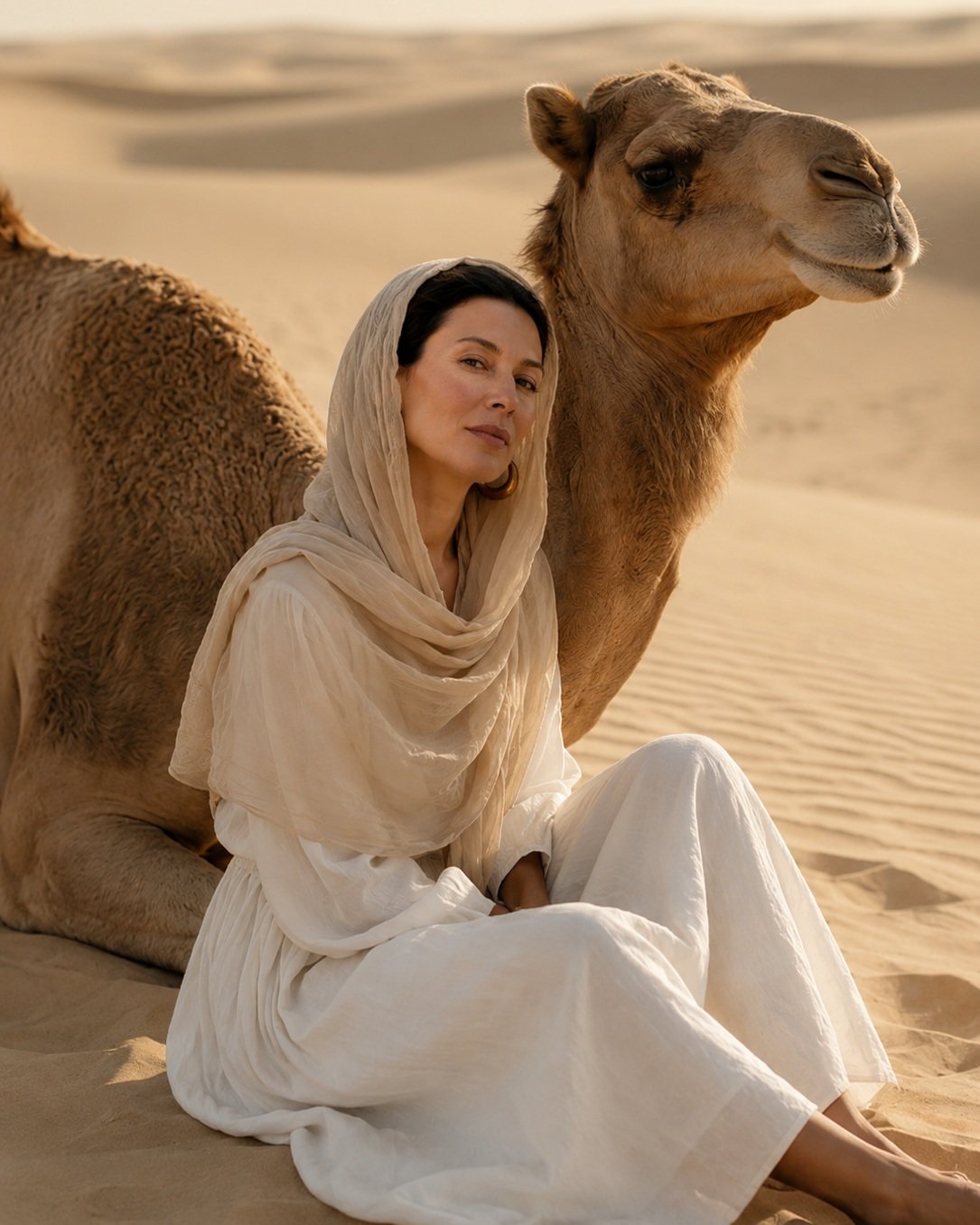
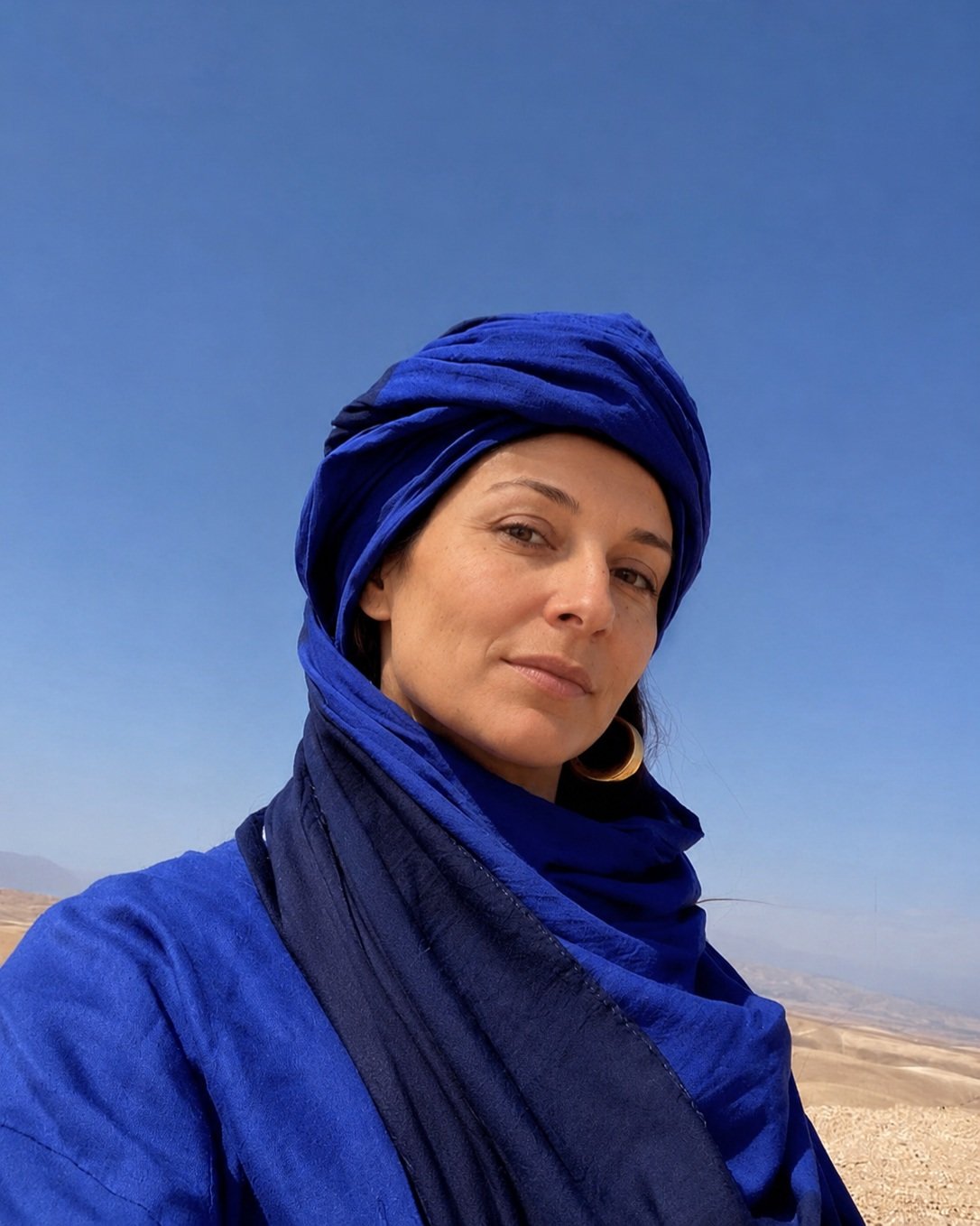
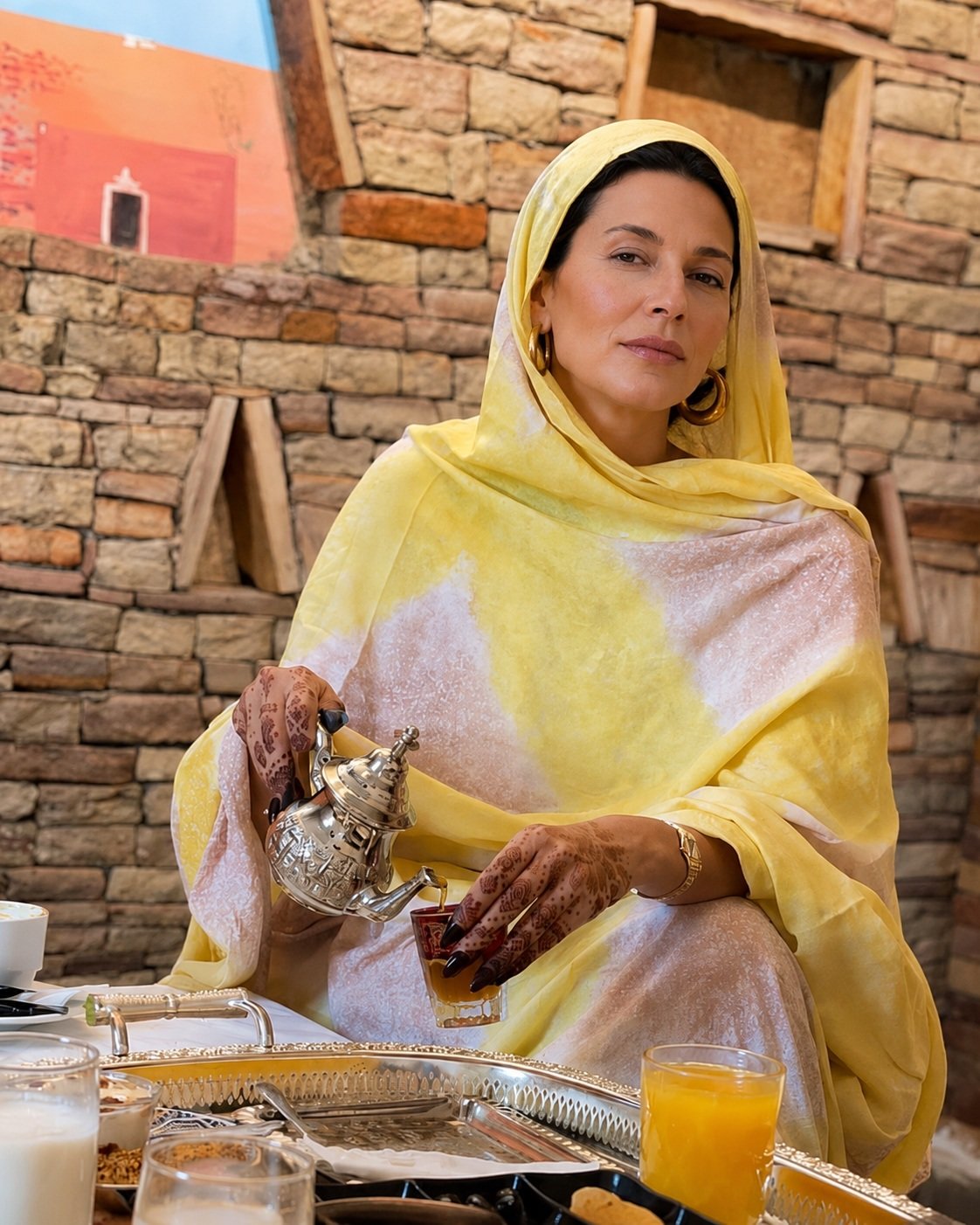
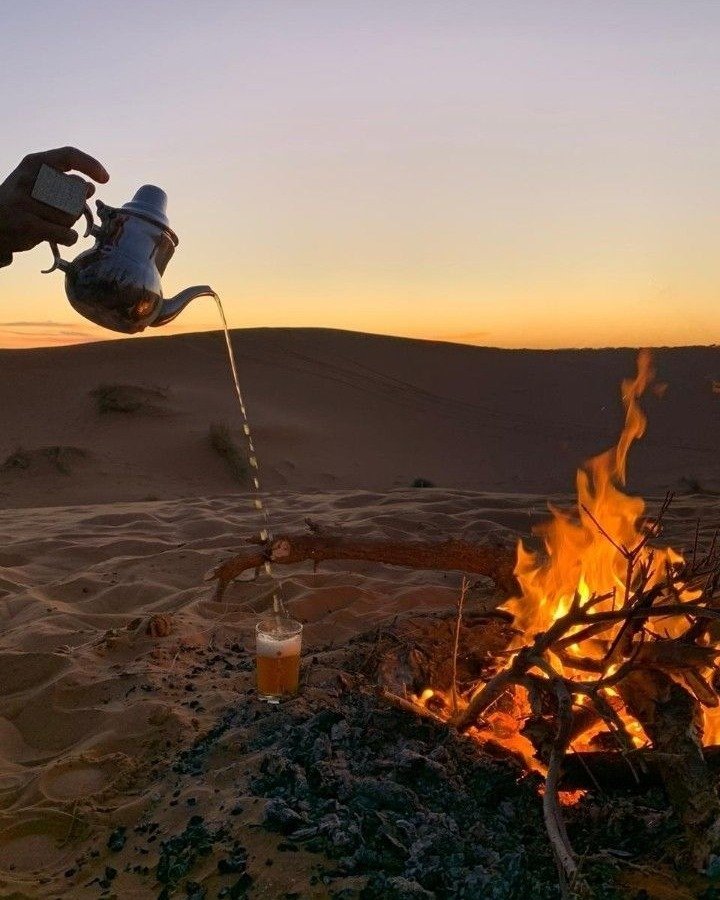
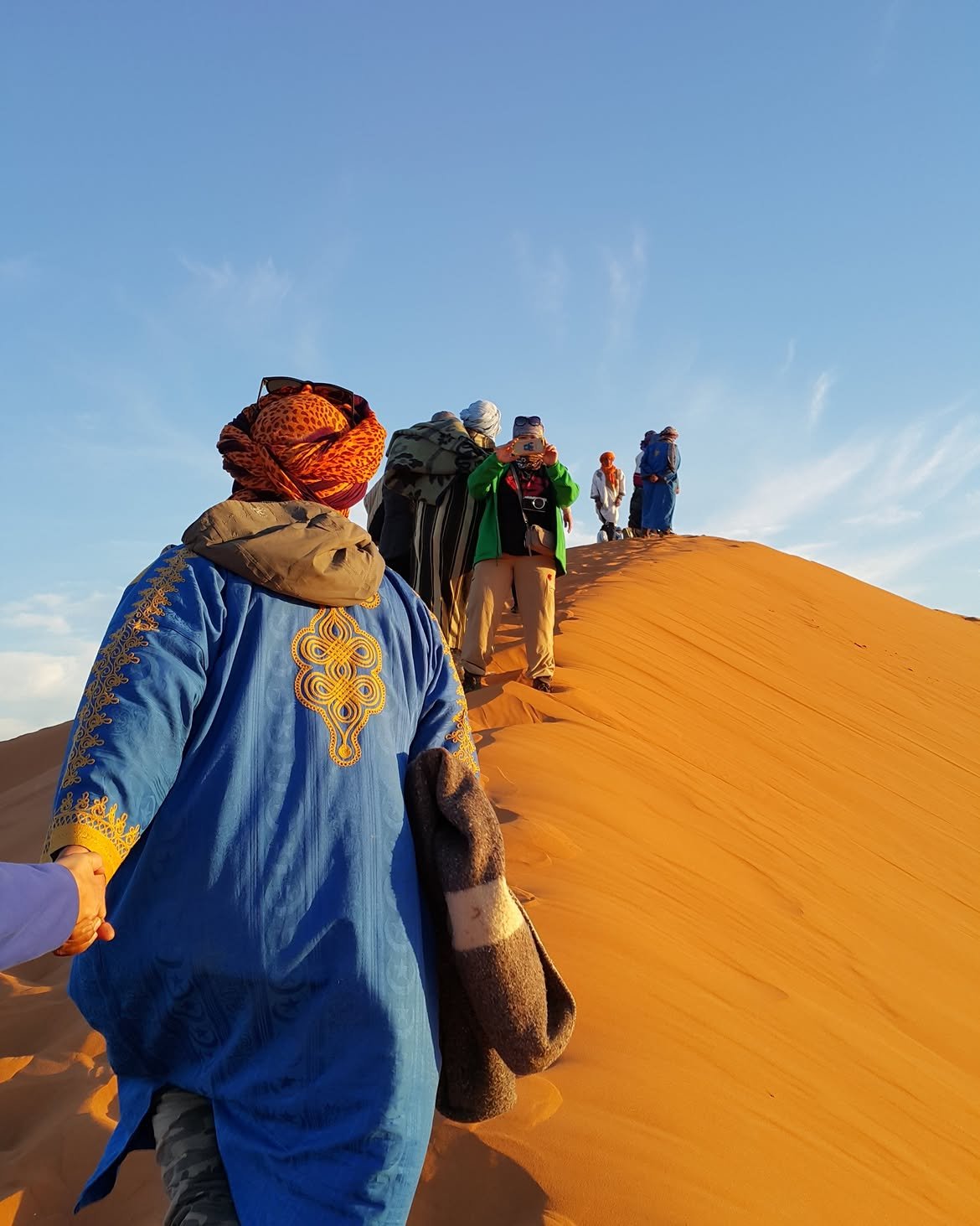
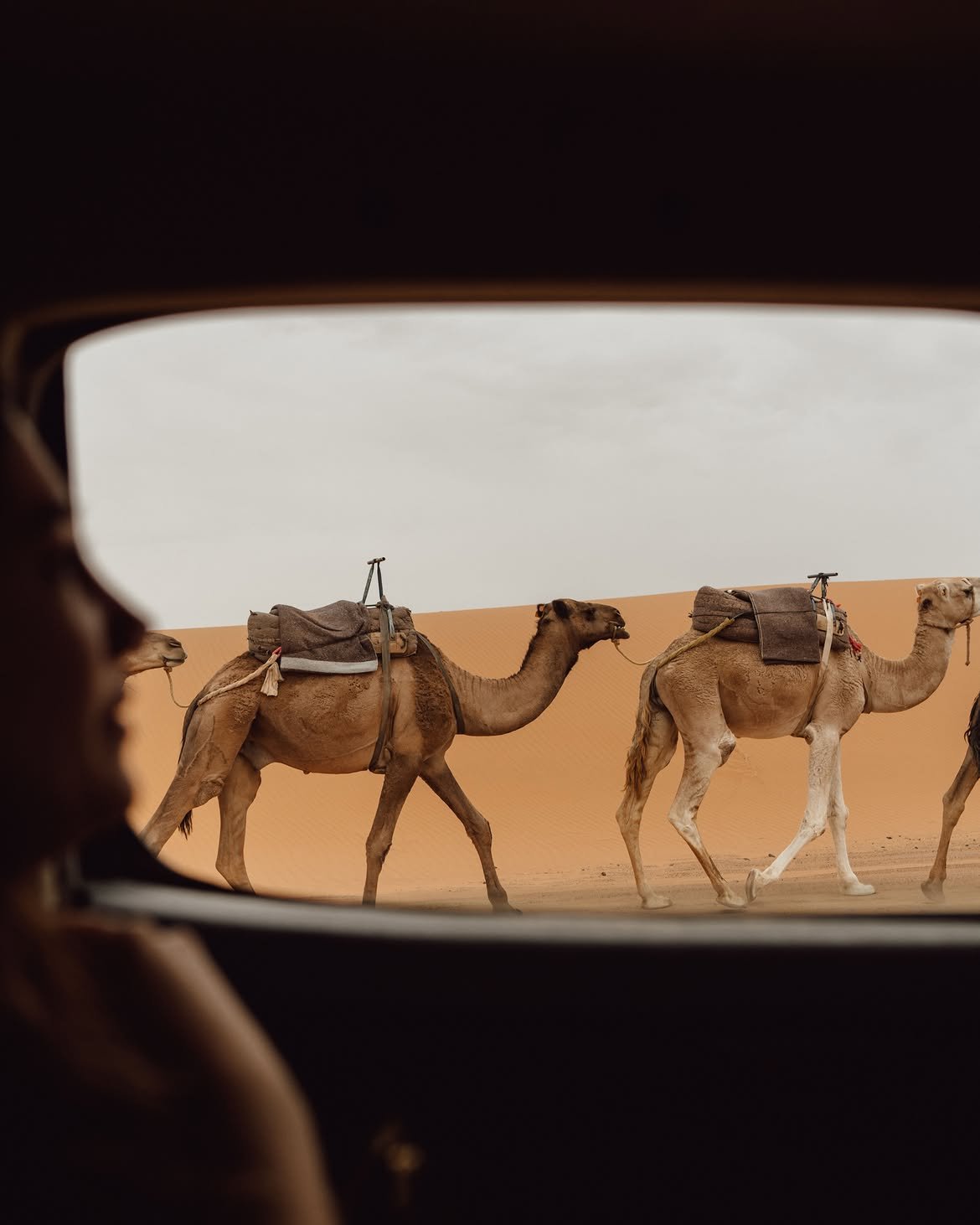
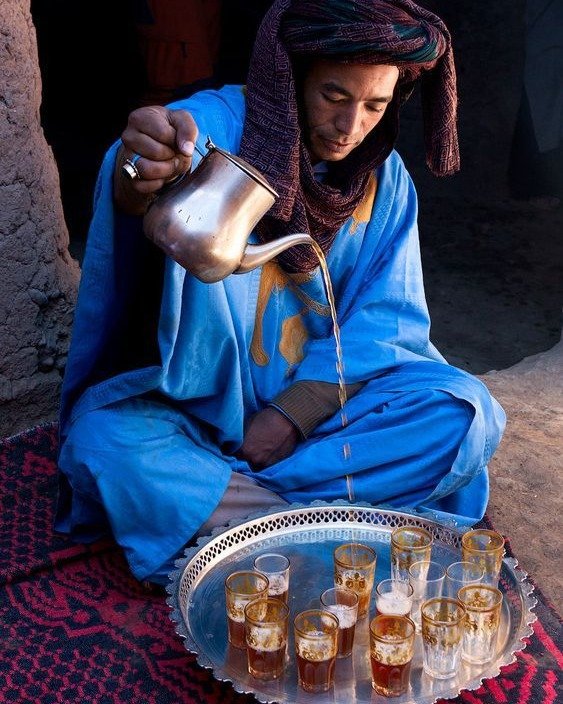
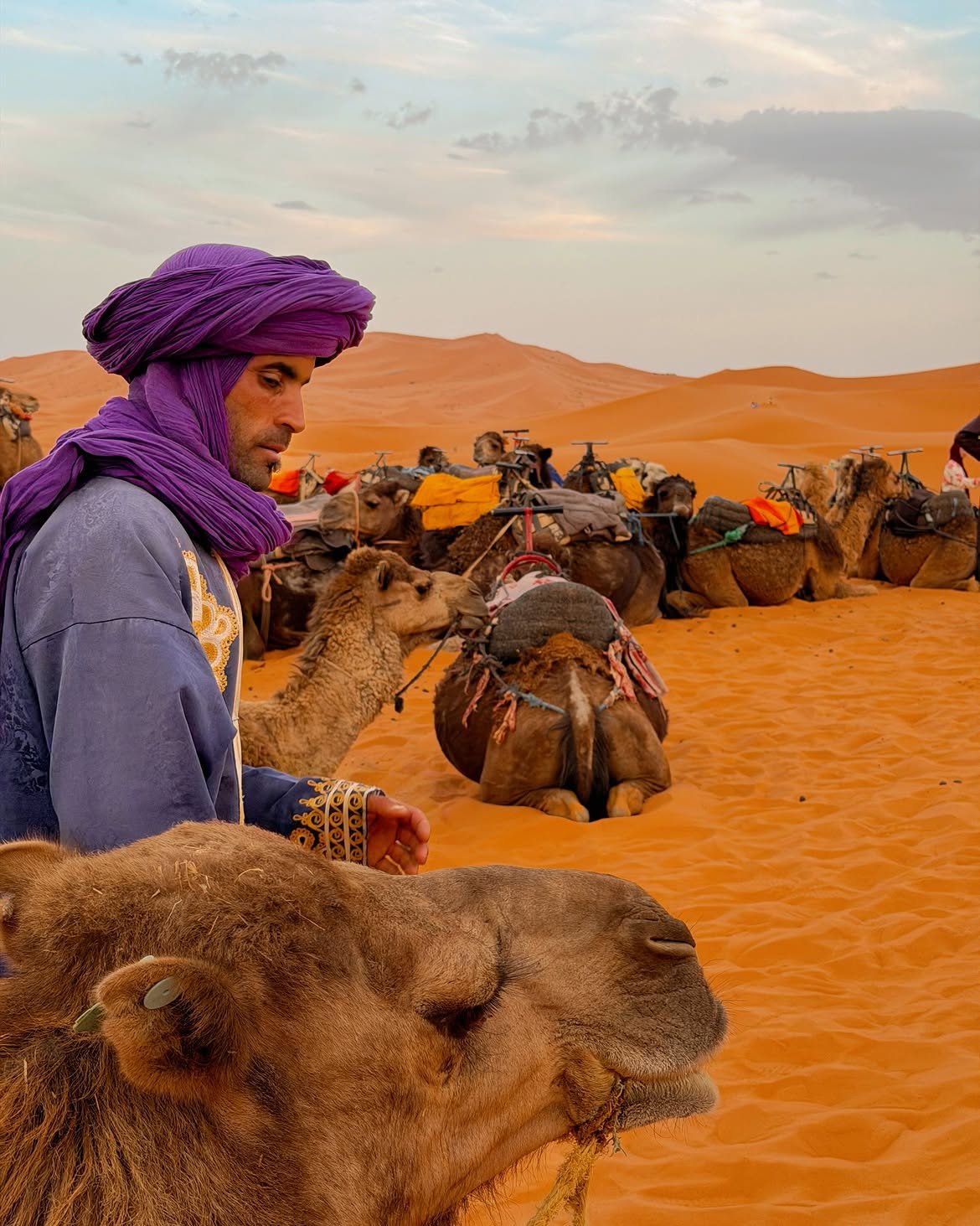
The full set, with what photographs always leave out, is in A Moment in the Sahara. It also ran as a carousel on Instagram and TikTok.
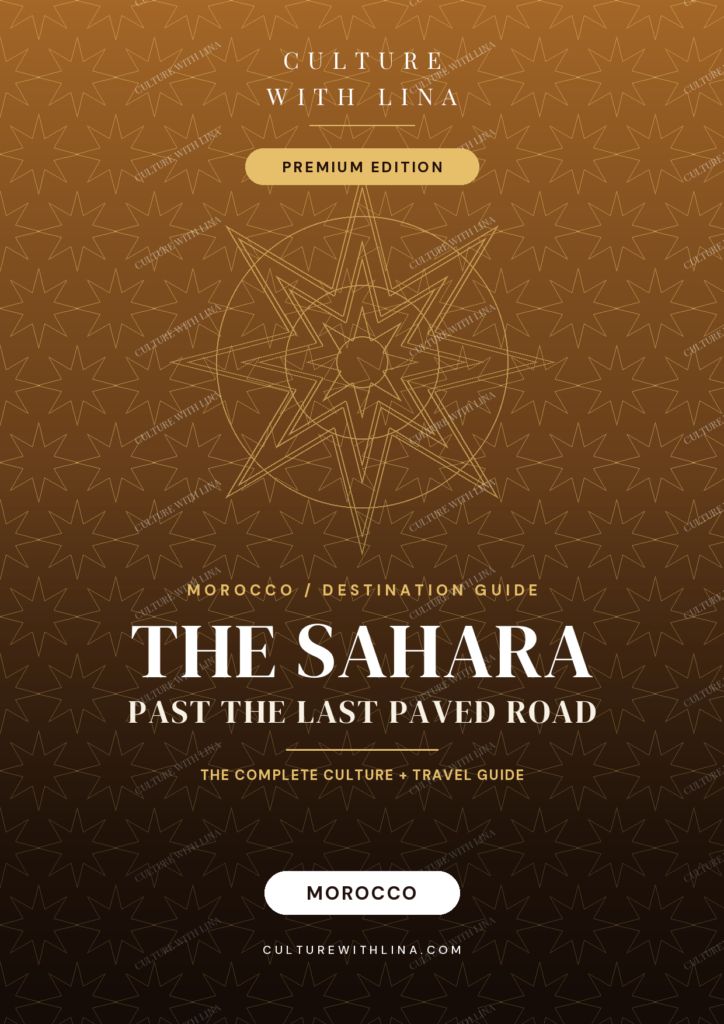
The guide to this place
The Sahara — Past the Last Paved Road & A Wedding in the Dunes | Culture & Events Guide
A desert guide and a complete guide to a wedding in the dunes, in one book. 30 pages, eleven chapters, eleven original illustrations. Part One decides your trip: which of the two Moroccan ergs, honest drive times, three camp tiers with real numbers, and how to time a night so you get the sky. Part Two is the wedding held past the last paved road — no venue, no seating plan, no address — from the arrival over the sand to the circle around the fire. Part Three is who lives here, camel welfare, three scams by name, and the full cost table.Instant PDF download. Written to be read before you go and carried on your phone once you are there.
- Erg Chebbi or Erg Chigaga — choosing wrongly shapes the whole trip
- Honest drive times, and why the three-day tour is mostly minibus
- Three camp tiers with real numbers, and a night hour by hour
- Four chapters on the wedding in the dunes, from arrival to the circle
- Ten rules for being a guest past the last paved road
- Camel welfare, three scams by name, and where your money actually lands
Instant PDF download. Licensed for personal use.
Read next
- A Wedding in the Sahara — camels at sunset, bread in the ashes, and dancing until the stars came out.
- A Moment in the Sahara — eight frames from past the last paved road, and what photographs always leave out.
- The Sahara — Past the Last Paved Road & A Wedding in the Dunes — the complete 30-page illustrated guide: real drive times, camp prices, night-sky timing, three itineraries, and four chapters on the wedding.