The short version
Essaouira is the antidote to Marrakech, and almost everyone works that out a day too late. They give the town an afternoon, realise it has a completely different nervous system, and spend the drive back wishing they had booked two nights.
Whitewash and cobalt instead of ochre and terracotta. A grid instead of a maze. Sea fog instead of desert heat. And a wind that never fully stops.
What Essaouira actually is
Unlike every other Moroccan medina, this one was designed. In the 1760s Sultan Sidi Mohammed ben Abdallah decided Morocco needed one controlled Atlantic trade port and hired a French engineer trained in the school of Vauban to build it from scratch. That is why Essaouira has bastions, artillery platforms and straight avenues where other cities have alleys that grew over centuries.
For a century it was Morocco’s main link to Europe, handling caravan trade arriving from Timbuktu, with a large and commercially powerful Jewish community in the Mellah. The medina became a UNESCO World Heritage site in 2001.
Five things worth your time
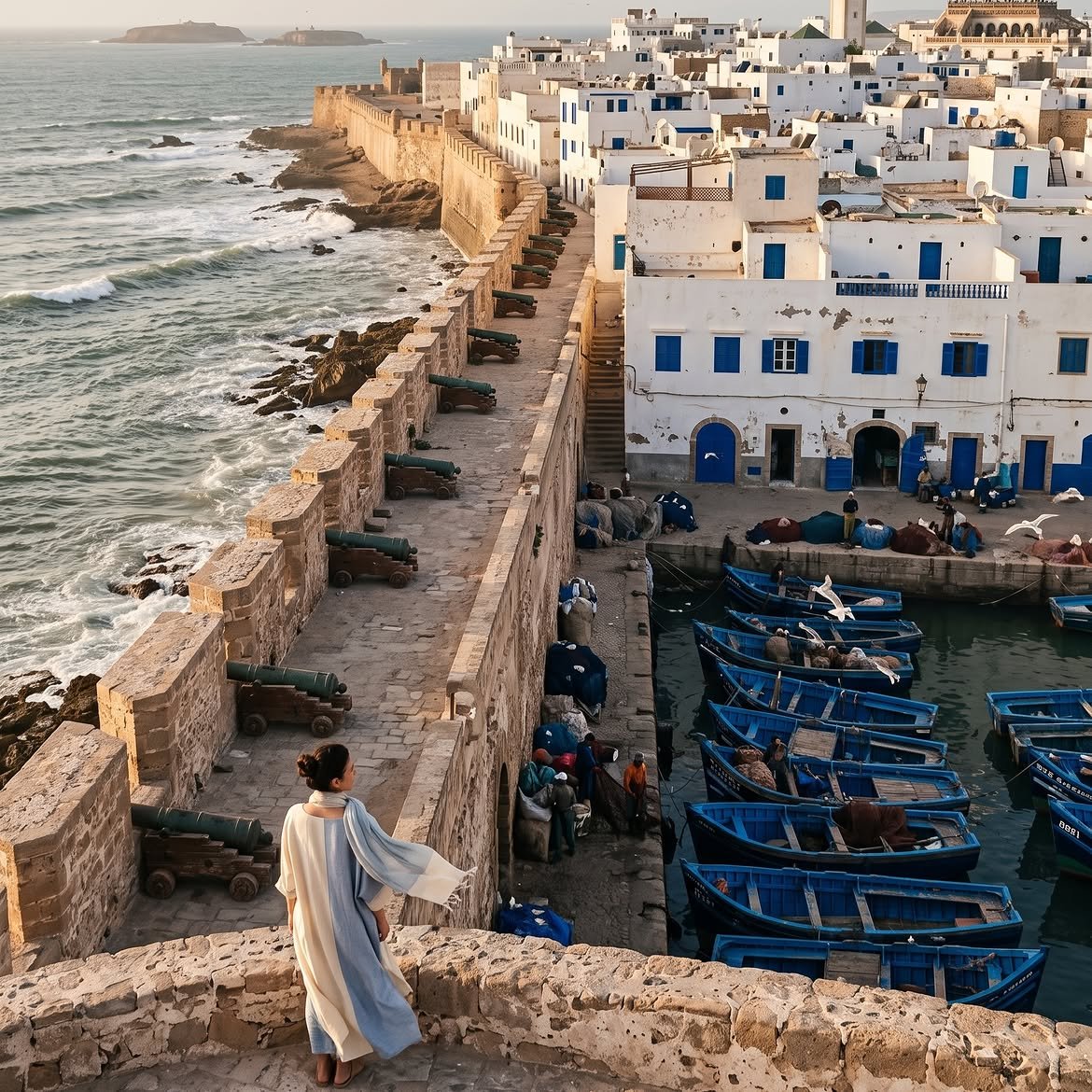
- Skala de la Ville — the sea rampart, lined with 18th-century bronze cannons, with the waves hitting the base directly. Free, and best in the last hour before sunset.
- The port, between 8am and 11am. Blue wooden boats unloading, nets being repaired, an industrial quantity of gulls. Free, and the most alive place in town.
- The thuya workshops under the ramparts, where the city’s signature marquetry is cut and inlaid by hand.
- The Mellah and Bayt Dakira — the old Jewish quarter, still partly ruined, and one of the most thoughtful small museums in Morocco.
- A windsurf or kitesurf lesson. The bay is a world-class flat-water spot, protected enough for a first day.
Watch the film
A night in Essaouira: when the wind drops
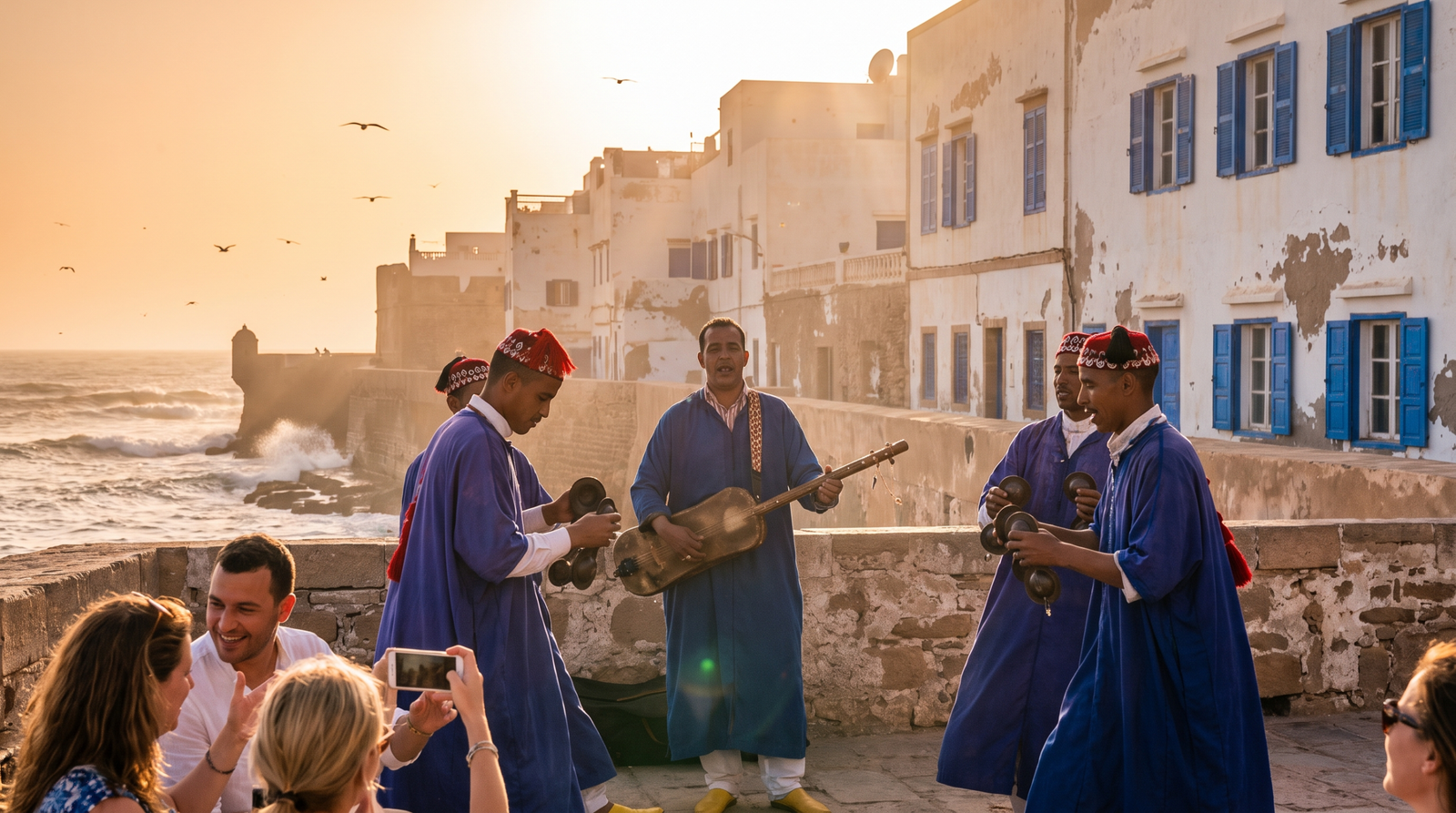
The Atlantic wind finally drops, the blue-and-white medina glows, and somewhere behind a wall the qraqeb start up. This is the night the Essaouira guide's gnawa chapter is built on — the guembri laying down the bass figure, the iron castanets going to double time, and the ululation cutting over it all.
Filmed for the Culture With Lina series. Follow @culturewithlina for the rest.
Gnawa, and why this town sounds different
Essaouira is the capital of gnawa music, and that is not a tourism slogan. Gnawa was carried north by sub-Saharan West Africans, many of them enslaved, and blended with Moroccan Sufism. The core instruments are the guembri, a three-stringed bass lute with a camel-skin body, and the qraqeb, heavy iron castanets that produce the relentless double-time clatter you hear all over town. UNESCO added gnawa to its Intangible Cultural Heritage list in 2019.
At a wedding here, gnawa replaces the inland drums entirely. The Essaouira film in the series was shot at exactly that moment — the qraqeb going to double time, a dancer breaking out of the line to spin his tasselled cap, and the ululation cutting over the Atlantic wind.
One thing worth knowing before someone offers to sell you access: a lila is a private, all-night healing ritual held in a family’s home, not a show. What is legitimately available to a visitor is performance — squares, cafes and festival stages — and that is real music played by real maalems.
Three things nobody tells you
- The wind is the weather. The Alizes blow hardest from April to September and peak in the afternoons. Perfect if you came to sail, sandblasting if you came to lie on a beach. September and October are the sweet spot.
- Agree the price before the fish is weighed. The port grills are the best thing to eat in town and the one place visitors reliably get overcharged. Ask the price per kilo, watch it weighed, agree the total before it hits the coals.
- The Hendrix story is not true. “Castles Made of Sand” came out two years before he visited. Enjoy the ruin at Diabat anyway.
The guide to this city
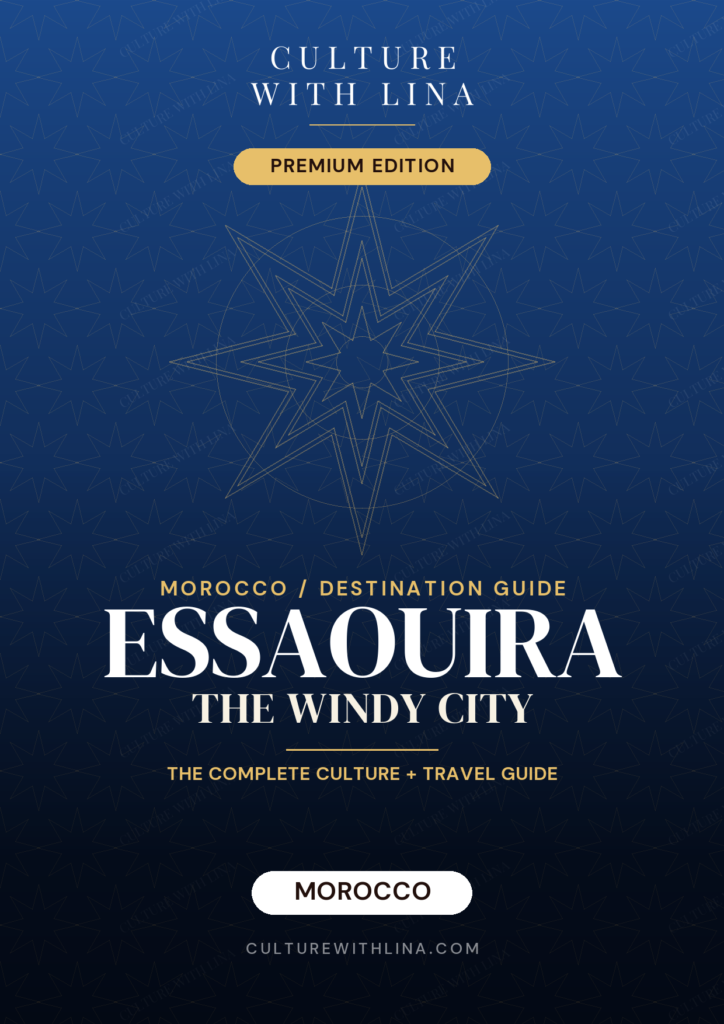
Essaouira — The Windy City | Culture & Travel Guide
An Essaouira travel guide in 37 illustrated pages. The wind season month by month, how to judge real thuya marquetry, the port-grill price rule, and gnawa as wedding music.
- The wind season month by month, and when to actually come
- How to judge real thuya marquetry from stained offcuts
- The port-grill rule that stops you being overcharged
- Windsurf and kitesurf schools, rates and which spot suits which level
- Gnawa at a wedding, and how to spot a fake lila
Instant PDF download. Licensed for personal use.
Read more from Essaouira
- Essaouira & the Gnaoua: Atlantic Wind and the Slowest Blue Town in Morocco
- Inside a Moroccan Wedding: the Amariya, the Negafa and Seven Kaftans
Wear the series
Take Essaouira home
Tees, hoodies and totes from the Culture With Lina shop. Printed and shipped worldwide.
The Wanderer Tee
Soft cotton tee with the Culture With Lina wordmark. The one that goes in the carry-on.
Culture Club Hoodie
Heavyweight hoodie in cream and olive. Built for early flights and cold medina mornings.
Coco Tote
Canvas tote with Coco on the front. Holds a laptop, a camera and far too much argan oil.
Morocco, you have a special kind of magic
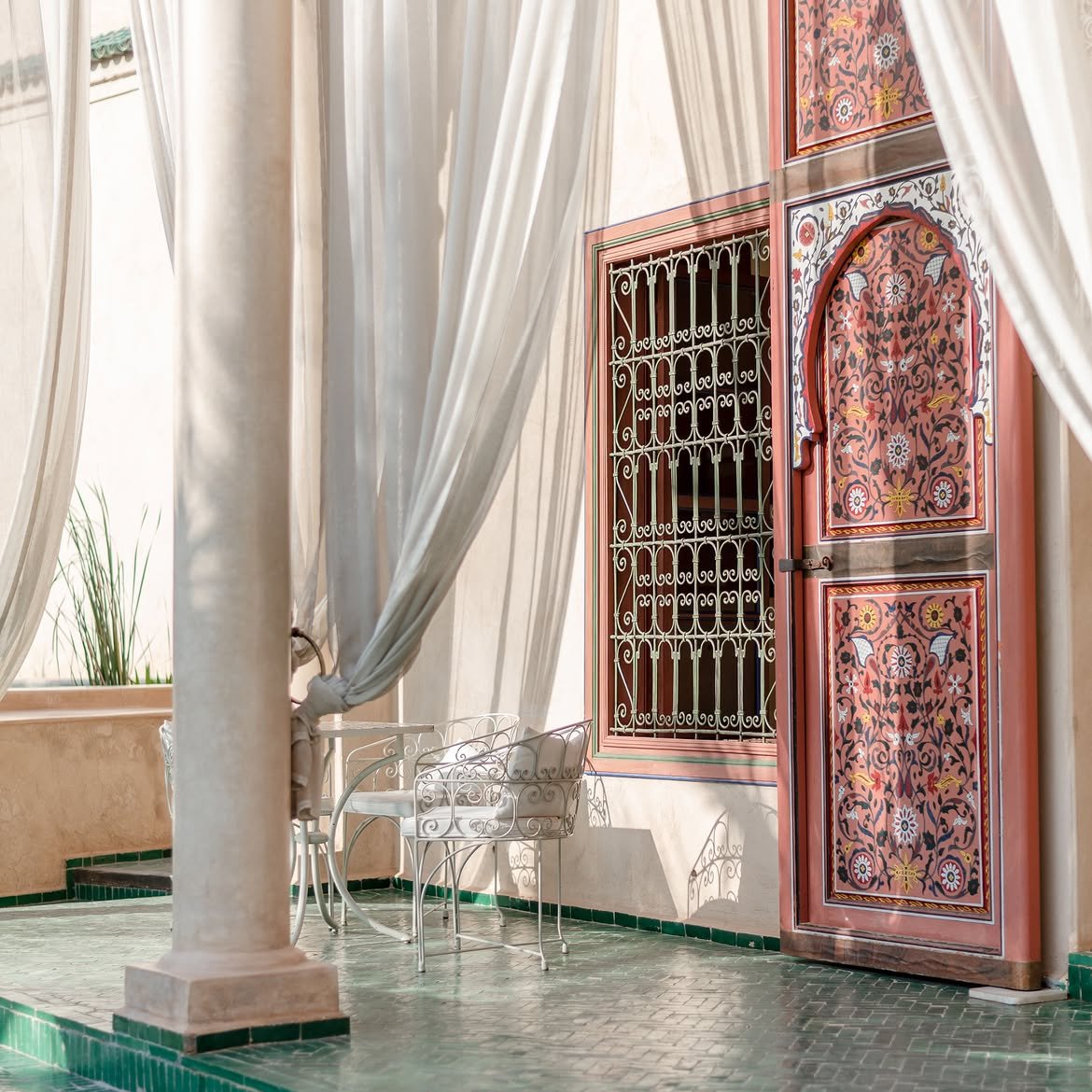
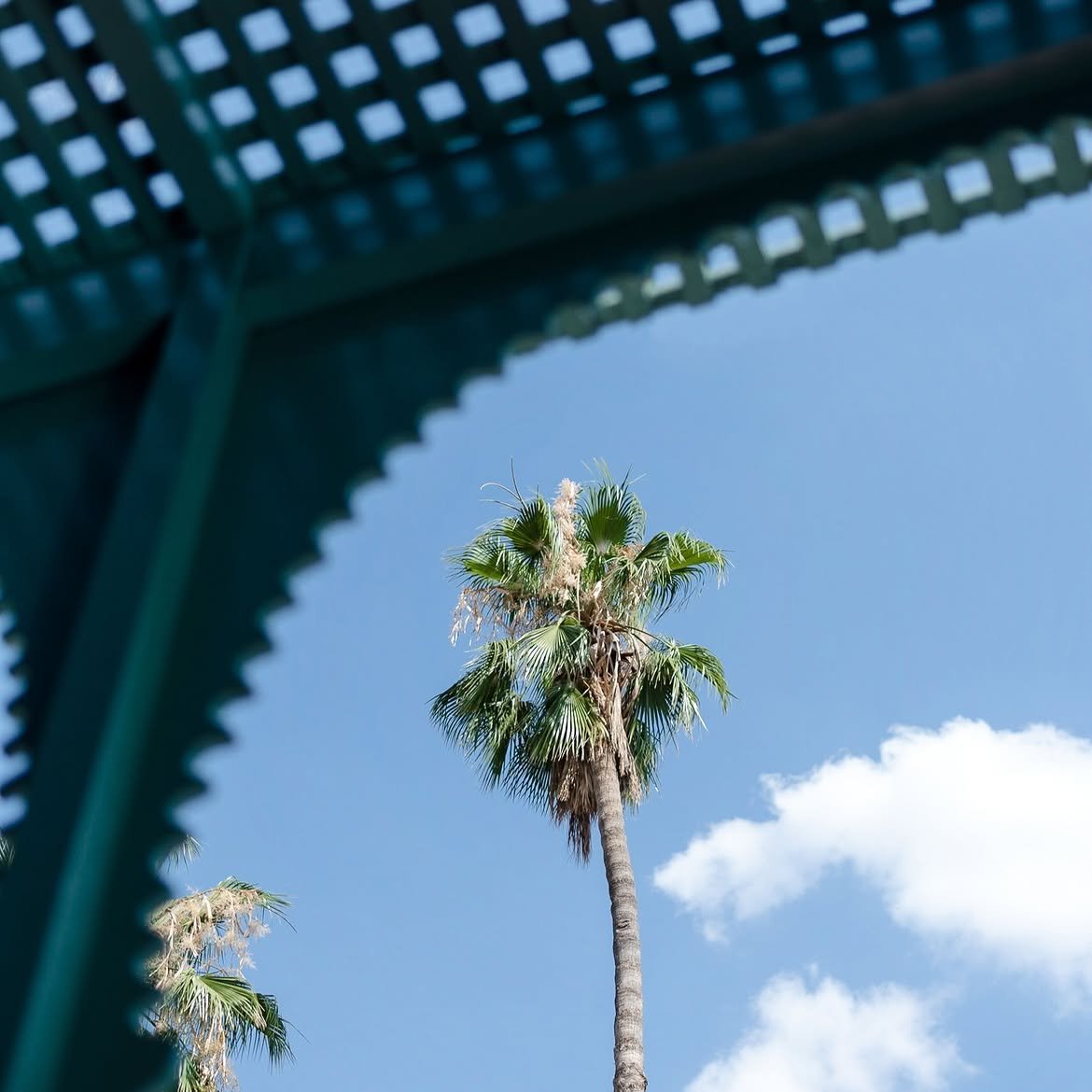
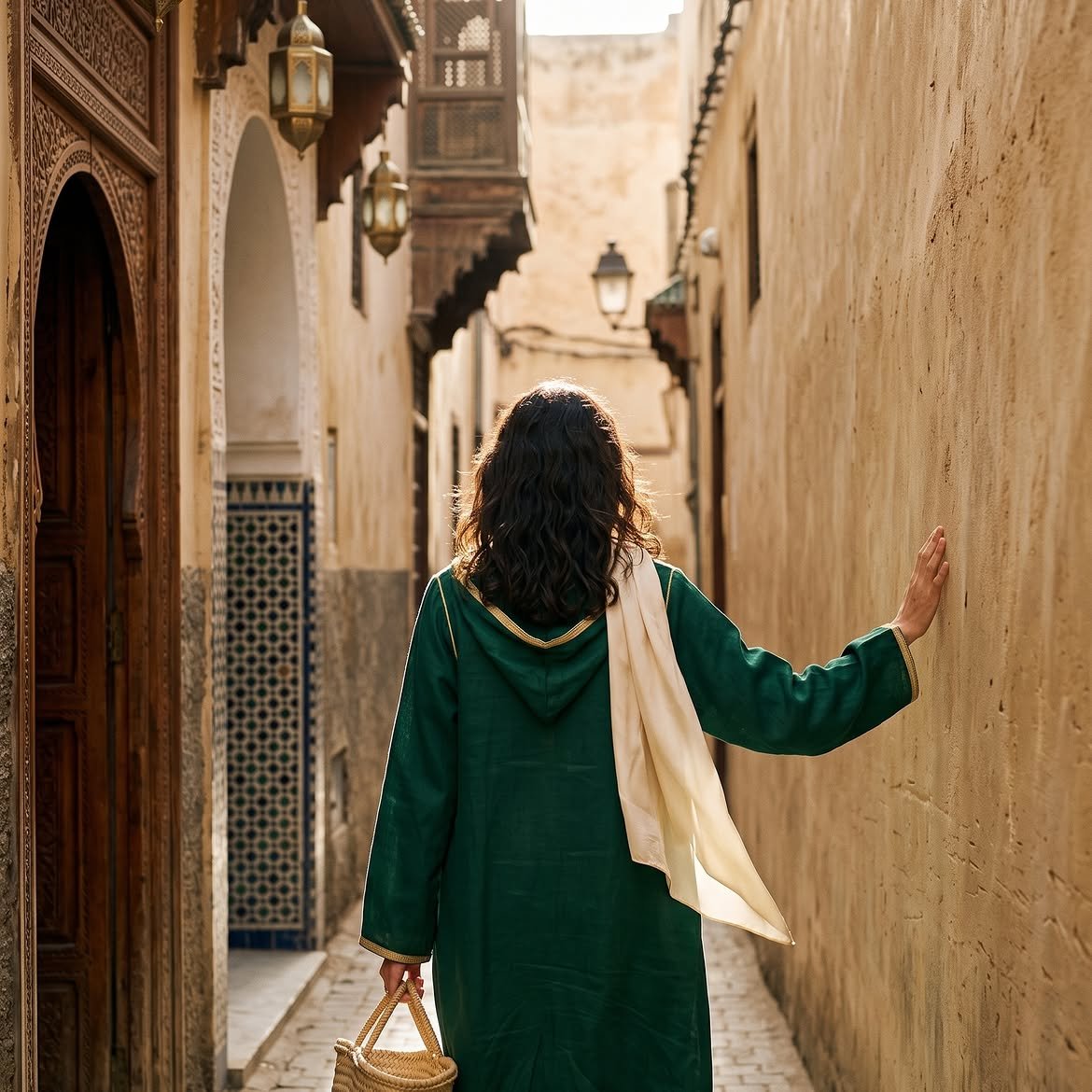
A few frames from Essaouira — indigo shutters against whitewash, cloth hanging where a door should be, the grid of the medina, and the Atlantic sitting behind all of it.
More in Essaouira: Gnaoua, Atlantic Wind and the Slowest Blue Town in Morocco.