Somewhere past the last paved road, the dunes were set for a wedding. No venue, no seating plan, no address you could give a taxi. Just a ring of black wool tents pitched in the sand, carpets laid straight onto the dune, and a fire waiting to be lit.
Watch the film
A wedding in the dunes: camels at sunset and dancing under the stars
Erg Chebbi, Morocco — a Saharan wedding from sunset to starlight. Guests arriving by camel as the sun went down, bread baked in the ashes, mint tea poured from a height, and a circle dancing around a fire under a sky with no town to compete with it.
Filmed for the Culture With Lina series. Follow @culturewithlina for the rest.
It started at sunset. The guests came by camel.
There is no discreet way to arrive at a desert wedding. You see the guests long before they reach you — a line of camels coming over the ridge, black against an orange sky, moving at the pace the desert insists on. It takes them twenty minutes to cross a distance you could see in ten seconds. Nobody hurries them.
Timing here is not a courtesy, it is physics. You marry at sunset because the sand has finally stopped being cruel. At three in the afternoon the dunes are an oven. By seven they are warm underfoot and the light turns everything — tents, faces, camel hide — the same shade of amber.
Bread over the fire, mint tea, and a bowl of dates
The bread is made in front of you and cooked in the sand. Dough is flattened by hand, buried under hot ash and embers, then pulled out, knocked clean and torn apart while it is still too hot to hold politely. It is called medfouna in some places, khobz rmad — ash bread — in others. It tastes faintly of smoke and slightly of the desert itself, which is the point.
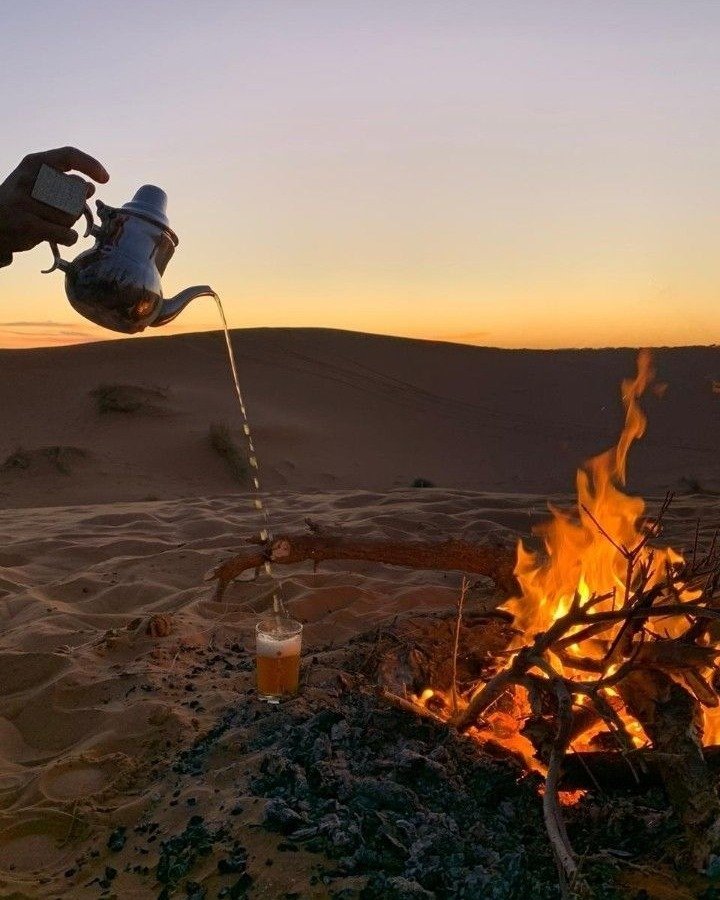
Then dates and mint tea, poured from a height into small glasses until it foams. Three glasses is the tradition, and each one is said to taste different — the first strong, the second sweeter, the third gentle. Refusing the first is close to refusing the invitation. I have never once managed to leave a Moroccan gathering after only one.
And then — the ring
It happened on a carpet, by firelight, with almost nobody watching. That surprised me. I had expected the ceremony to be the loud part and the celebration to follow. It was the other way around: the vows were quiet, close, almost private, and the noise came afterwards.
Saharan weddings are traditionally long affairs — several days in some families, with the bride’s side and the groom’s side hosting in turn, henna nights, and a procession that in the old days really did arrive on camelback because there was no other way to come. What I saw was a compressed, single-evening version of something that used to unfold across most of a week.
When night falls, the desert dances
Once the sun is gone the temperature drops fast, and the fire stops being decorative. Everyone moves in towards it. The drums start — hand drums, a bendir, clapping that is somehow always in time — and the circle begins to turn.
Nobody dances alone and nobody dances at anyone. It is a circle, not a stage. If you are standing near it you will be pulled in, and the only wrong move is refusing. I have no rhythm and it made no difference whatsoever.
And above all of it, the sky. This is the part no camera has ever managed for me. There is no town for fifty kilometres, no glow on the horizon, nothing competing. You look up and the stars are not points but layers, and you understand immediately why every desert culture built its calendar and its navigation on them.
If you want to see the Sahara like this
You will not be invited to a wedding — and you should not try to be. But the desert that hosts them is open to anyone willing to travel slowly.
- Go to Erg Chebbi or Erg Chigaga. Chebbi, near Merzouga, is easier to reach and has the taller dunes. Chigaga, out past M’Hamid, is harder, emptier and quieter.
- Stay overnight. A day trip gives you sand. A night gives you the temperature drop, the fire, the drums and the sky — which is the entire point.
- Go between October and April. Summer in the deep Sahara is genuinely dangerous, not merely uncomfortable.
- Bring layers. The swing between afternoon and 3am is enormous. Everyone underpacks warm clothing for a desert. I did too.
- Ask before filming people. Especially at anything ceremonial. The dunes are yours to photograph. The faces are not.
The wedding ended long after I stopped keeping track of time. The fire burned down, the circle loosened, and people drifted back towards the tents talking quietly. In the morning the carpets came up, the tents came down, and the dune looked exactly as it had before — which somehow felt like the most Saharan detail of the whole night.
See also: A Moment in the Sahara — eight frames from past the last paved road.
The days around it
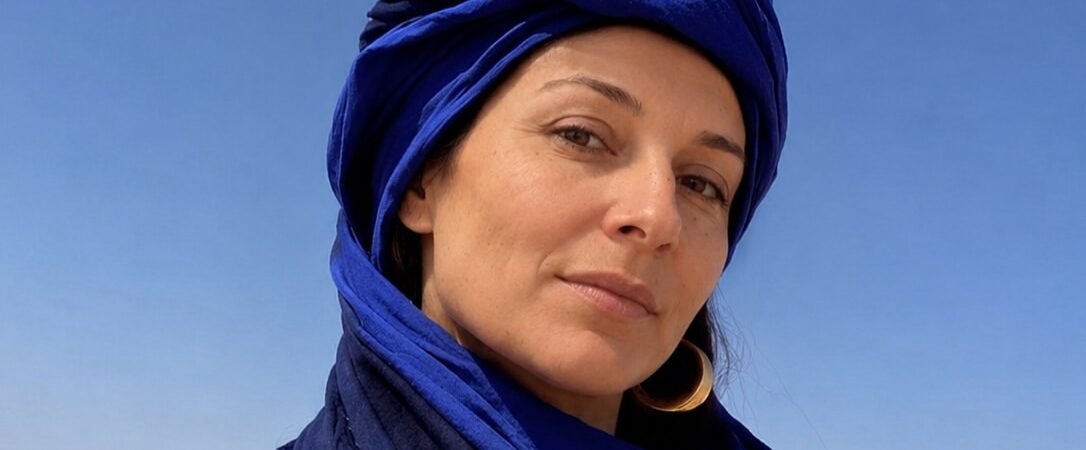
The wedding was one night. These are the days on either side of it — the caravan crossing at golden hour, tea by the fire, and the blue turban that turns out to be sun, wind and blown sand, solved.
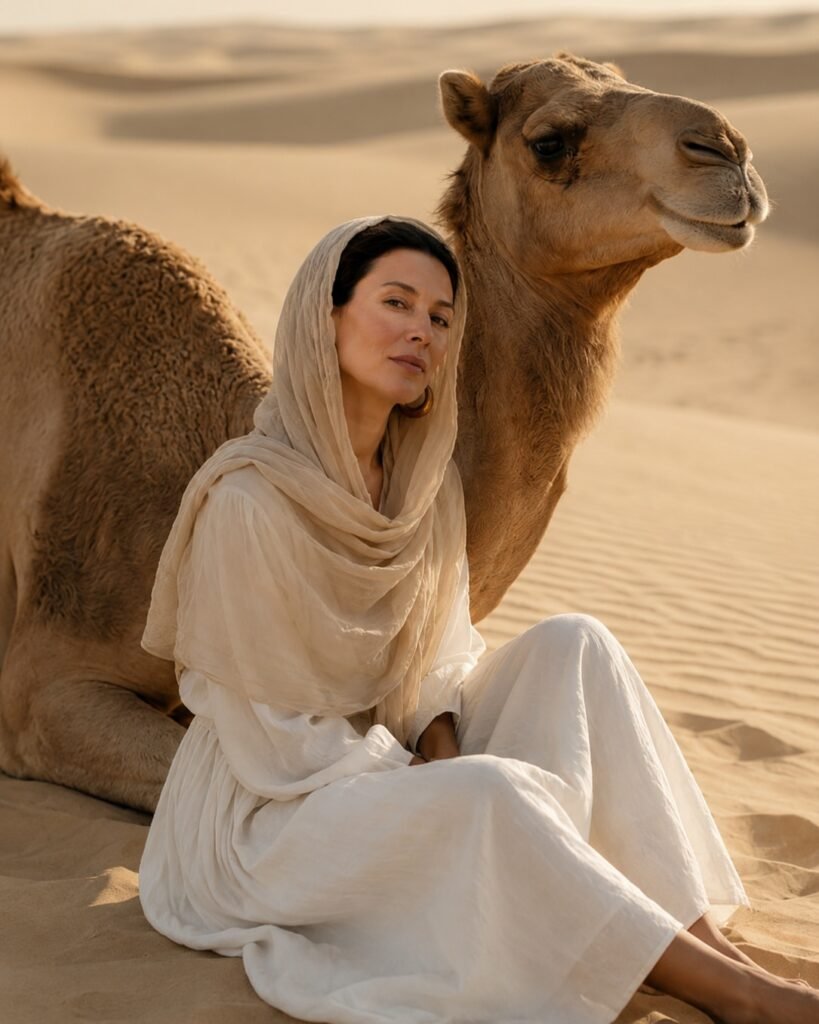
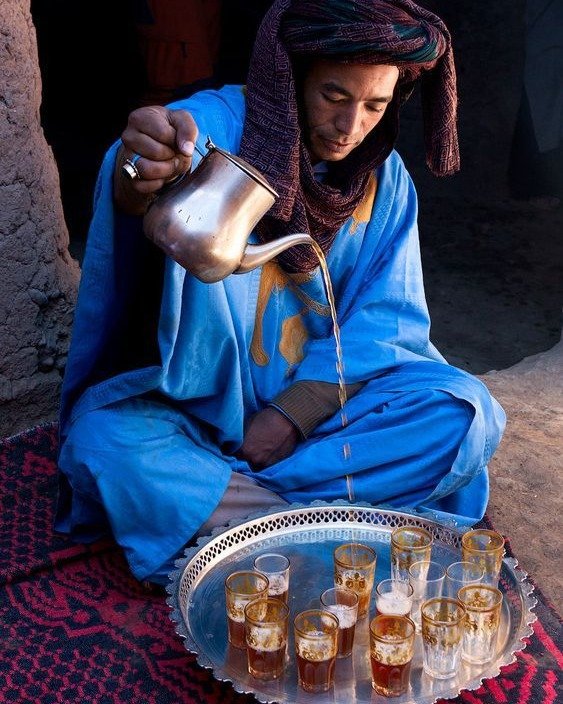
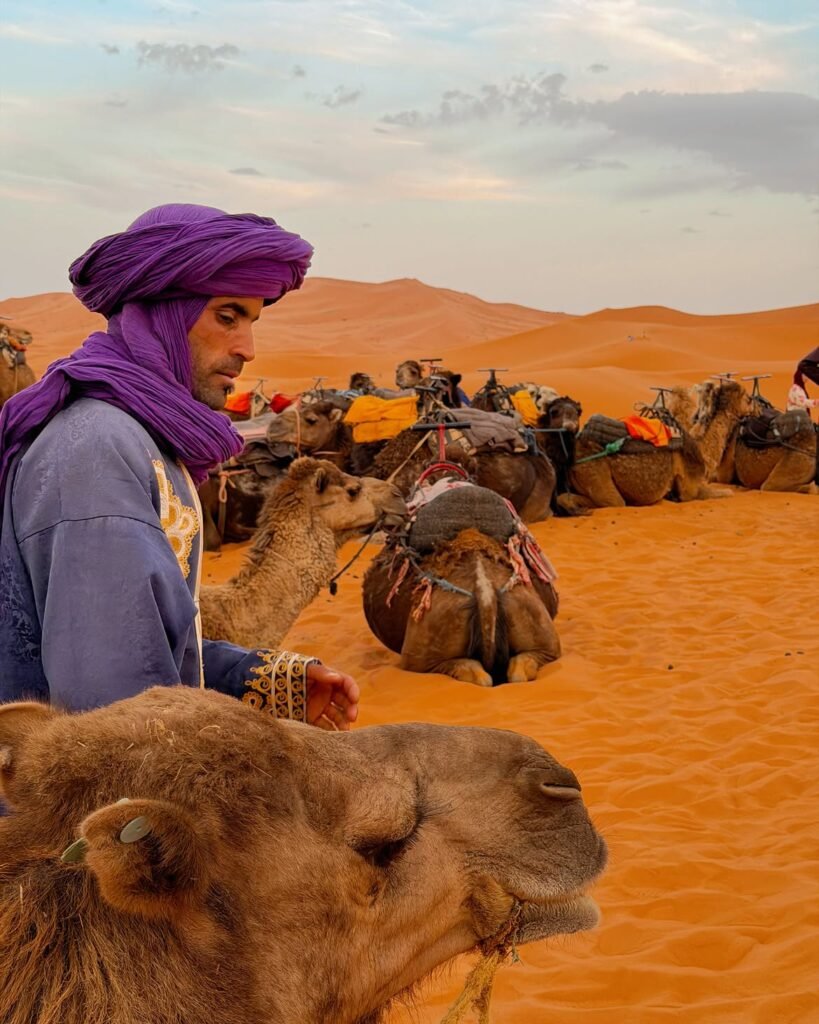
All eight frames, and the four things photographs always leave out, are in A Moment in the Sahara — also on Instagram and TikTok.