Money in Morocco is simple once you know a few rules, and confusing if you arrive expecting to pay by card everywhere. The country still runs largely on cash, the local currency cannot be bought freely abroad, and tipping is part of almost every service. This guide covers how to get dirhams, where cards work, how much cash to carry, what to tip, and the small habits that save you money and hassle.
The dirham: what you need to know first
Morocco’s currency is the dirham (MAD, often written DH or Dhs on menus and price tags). Notes come in 20, 50, 100 and 200 dirhams; coins in 1, 2, 5 and 10 dirhams, plus small santimat coins you will mostly receive as change. Exchange rates move, so check the current rate before you travel, but as a rough guide one euro or one US dollar buys around ten dirhams, which makes mental arithmetic easy.
The dirham is a closed currency. You generally cannot buy it before you leave home, and non-resident travellers are only allowed to take a small amount of cash dirhams in or out of the country (the limit has been set at 2,000 dirhams; check the current rule with Moroccan customs before you travel). In practice that means you get your money once you land, and you try to spend or change back what is left before you fly home.
Large amounts of foreign currency (equal to 100,000 dirhams or more) must be declared on arrival. Most travellers will never come close, but if you are carrying a lot of cash for a long trip, declare it and keep the form.
Getting dirhams: ATMs, exchange offices and banks
ATMs
Cash machines are the easiest option for most visitors. You will find them at airports, train stations, in every city’s new town and around the main medina gates, though they become scarce in small villages and in the desert. A few practical points:
- Withdrawal limits are lower than you may be used to. Many machines cap a single withdrawal at around 2,000 to 4,000 dirhams. If your bank charges a fixed fee per withdrawal, fewer, larger withdrawals cost less.
- Some local banks add their own fee for foreign cards, while others do not. Fees change, so read the screen before confirming.
- Always decline “conversion” at the machine. If the ATM offers to charge you in your home currency, choose to be charged in dirhams instead. The machine’s rate is almost always worse than your bank’s.
- Use machines attached to a bank branch during opening hours where possible. If a machine keeps your card, you can go inside and get it back the same day.
- Tell your bank you are travelling and carry a second card from a different bank in case one is blocked.
Exchange offices
Bureaux de change are common in cities and usually offer fair rates, often better than airport counters. Bring clean, undamaged notes in euros, pounds or dollars; torn or marked notes may be refused. Keep every exchange receipt. Banks and exchange offices may ask for them if you want to change dirhams back into foreign currency before you leave.
Hotels and riads
Many will change small amounts for guests, but the rate is usually poor. Fine for an emergency, not for your whole budget.
Where cards work, and where they don’t
Card payments are spreading, but Morocco is still a cash-first country. As a rule of thumb:
- Cards are usually accepted at mid-range and upmarket hotels, larger restaurants in the new towns, supermarkets and shopping centres, petrol stations on main roads, car hire desks, and ONCF train tickets bought online or at major stations.
- Cash is usually expected at souk stalls, small cafés and street food, petit taxis, local buses and grands taxis, hammams, guides you hire on the spot, and almost everything in rural areas.
- Riads vary. Some take cards for the room but want cash for extras like dinner or a hammam visit. Ask when you book. A few add a surcharge for card payment.
If you are travelling between cities by rail, our guide to travelling around Morocco by train explains how to buy tickets and which routes can be booked online.
How much cash to carry
There is no single right amount, but a sensible pattern is to carry enough cash for one or two days and leave the rest, plus a backup card, in your room safe. Keep it split: a small amount in an easy pocket for taxis, tips and snacks, and the rest somewhere less accessible.
Small notes and coins matter more than you might think. Taxi drivers, café waiters and stallholders often say they have no change for a 200-dirham note, and a pocket of 10s and 20s makes every small transaction smoother. Break large notes at supermarkets, petrol stations and bigger restaurants whenever you can.
Plan more cash for places where machines are rare. Desert trips, mountain villages and remote kasbahs may have no ATM at all. Before heading to the Sahara or the High Atlas, withdraw what you need in the last large town.
For an overall estimate of daily costs, our free travel budget calculator lets you set accommodation, food, transport and activities for a trip of any length.
Tipping: who and how much
Tipping is expected in Morocco for most services and is an important part of many people’s income. Amounts are modest, and it is fine to tip less for poor service. The figures below are commonly suggested starting points; adjust for the quality of the service and the type of place.
- Cafés: round up or leave a few dirhams.
- Restaurants: around 5 to 10 per cent, in cash even if you paid the bill by card. Check whether service is already included in upmarket places.
- Porters and riad staff who carry bags: around 10 to 20 dirhams per bag, more if they have carried luggage a long way through the medina.
- Licensed guides: often 100 to 200 dirhams or more for a half or full day, depending on group size and the quality of the tour.
- Drivers on multi-day tours: a daily amount at the end of the trip, usually agreed among the group.
- Hammam attendants: a small tip on top of the price if someone scrubs or washes you.
- Toilet attendants: a coin or two, so keep small change handy.
- Performers and people you photograph in squares such as Jemaa el-Fna will expect payment. Agree before you take the picture, or don’t take it.
Unofficial “guides” who attach themselves to you in the medina will also expect money. A polite, firm “no, thank you” early saves an awkward conversation later. Our free Marrakech guide and free Fes guide cover how to navigate each medina.
Prices, bargaining and taxis
Fixed prices are normal in supermarkets, chain shops, cafés and restaurants with menus. In souks, crafts and many guided activities, the first price is a starting point. Bargaining is expected, but keep it friendly: decide what an item is worth to you before you ask, make a reasonable offer, and walk away politely if you cannot agree. Do not start bargaining for something you have no intention of buying.
Petit taxis in cities are supposed to use the meter. In some cities drivers do; in others, especially around tourist areas, they prefer a fixed price. Ask for the meter (“le compteur”) before you get in, or agree a price first. Fares often increase at night. Grands taxis between towns run on fixed per-seat prices; ask your accommodation what the usual fare is.
Money during Ramadan and holidays
Banks and exchange offices shorten their hours during Ramadan and close on public and religious holidays, and ATMs in busy areas can run low on cash around Eid. Withdraw a little extra beforehand. Our practical guide to Ramadan in Morocco covers the other changes to daily life during the month.
Before you fly home
- Spend your coins on snacks or souvenirs; they cannot be changed back.
- Change larger dirham notes back at a bank or exchange office before you go through airport security, with your exchange receipts in hand. Not all offices will reconvert without them.
- Keep a little cash for the taxi to the airport and any last tips.
- Do not plan to sell leftover dirhams at home; most banks abroad will not buy them.
Quick checklist
- Tell your bank you are travelling and bring two cards from different banks
- Withdraw dirhams on arrival; decline conversion at the ATM
- Keep exchange receipts for reconverting money later
- Carry small notes and coins for taxis, tips and toilets
- Take enough cash before heading into the desert or mountains
- Agree prices or ask for the meter before taxis and photos
- Spend coins and change notes back before airport security
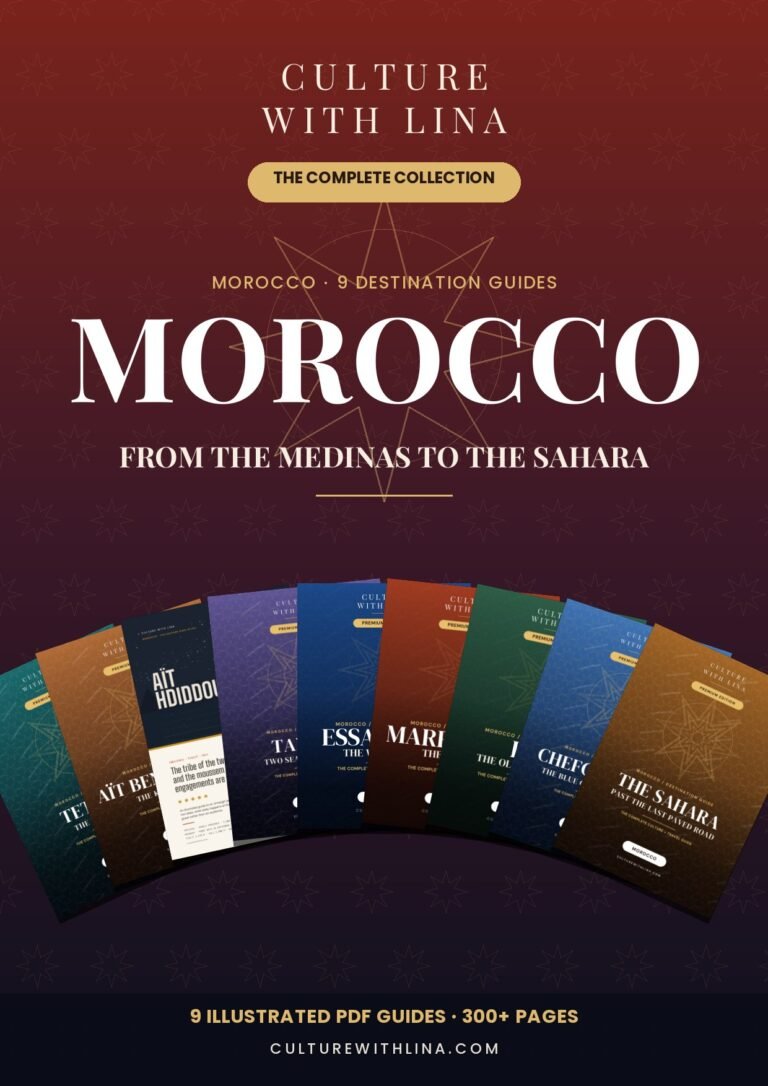
Planning the rest of the trip? The free Morocco destination guides cover each city and region, from Tangier to the Sahara.
Related: once you have cash in hand, read our guide to bargaining in Moroccan souks for typical prices and how haggling works.