
Description
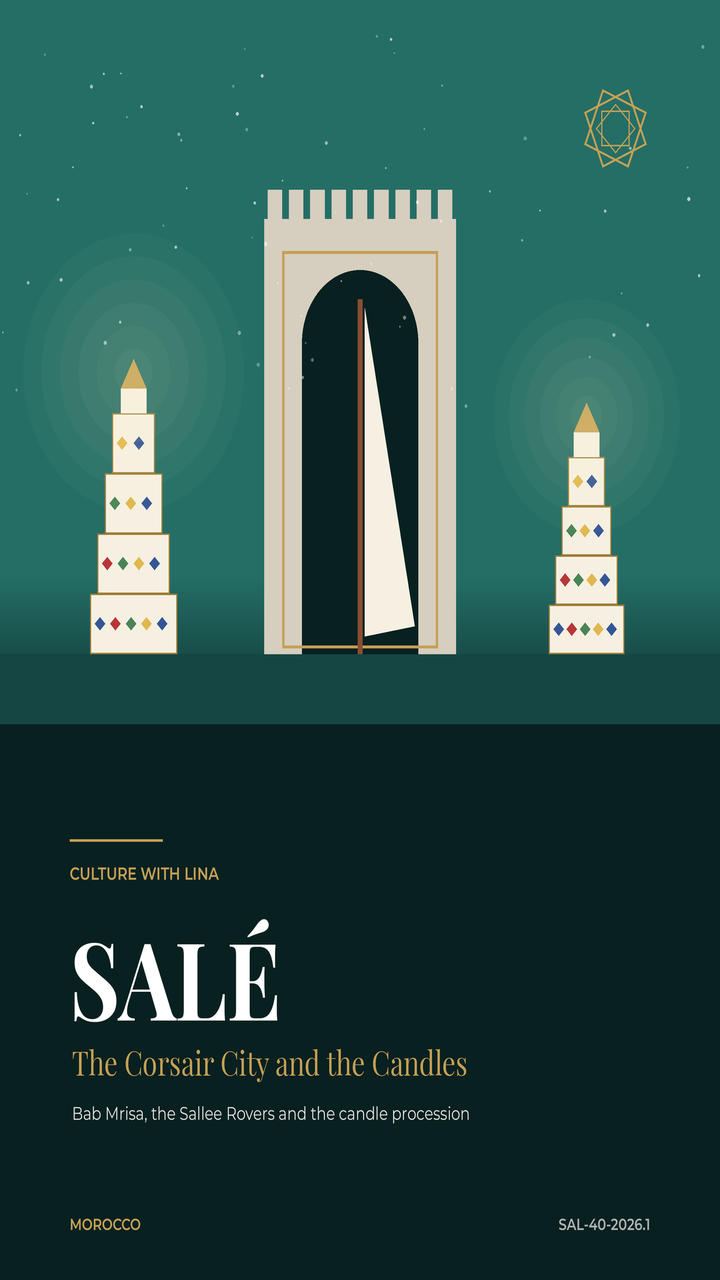
The city across the river from Rabat is the older one
Guidebooks give Salé a paragraph, usually inside the Rabat chapter, and the paragraph usually says it is a conservative dormitory town with a nice gate. Two things are wrong with that. Salé was a working town with its own rulers while Rabat was still a fortified camp being built on the opposite bank. And this small place produced the name that terrified Atlantic shipping for forty years.
Part One — The City Across the River
- The Other Bank — which city is older, what the river divided, and how recent an easy crossing is
- A City Founded from al-Andalus — the Banu Ashara, Ibn Tumart in 1121, and the Castilian raid of September 1260 that the whole city turns on
- Bab Mrisa — the gate ships sailed through: a canal, an arsenal and a fleet sheltered inside the walls
- The Medersa of Abu al-Hasan, 1342 — the best interior in Salé, and how to read zellij, plaster and cedar by height
- The Souks and the Embroidery — a medina with no tourist trade, and a stitch that belongs to this city
- The Cemetery Above the Sea — Sidi Ben Ashir, a hillside of white tombs, and how to read a marabout
Part Two — The Corsairs and the Candles
- The Republic of the Two Banks — Moriscos from Hornachos, a Diwan that elected a governor every May, and documents written in Spanish
- The Salé Rovers — Jan Janszoon, Newfoundland, Reykjavík in 1627, the Sack of Baltimore in 1631, and Lundy held for five years
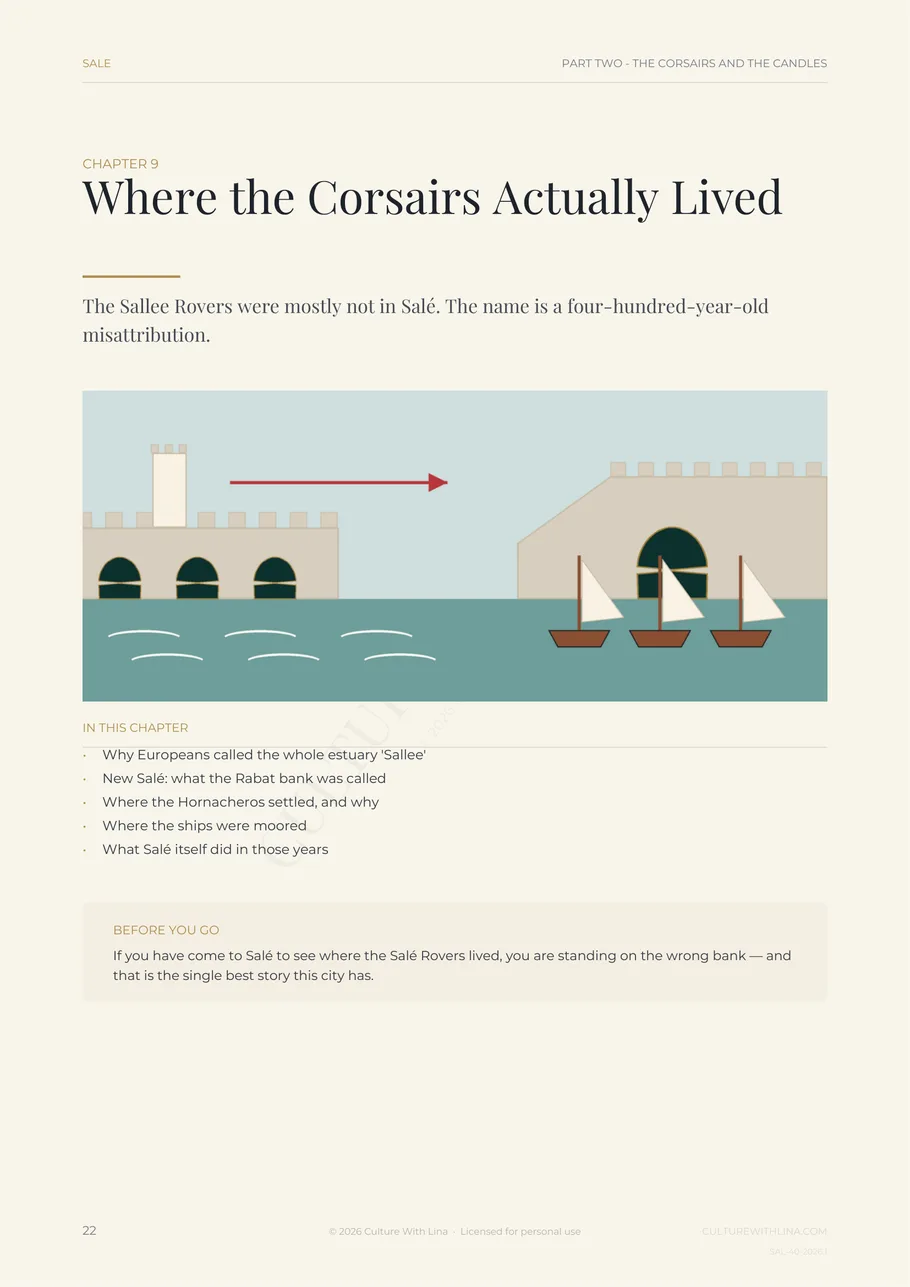
- Where the Corsairs Actually Lived — the four-hundred-year-old misattribution, and why you are standing on the wrong bank
- Sidi Abdallah ben Hassoun, 1515–1604 — a scholar from Fez, a sultan who remembered Istanbul, and a tradition kept in one city
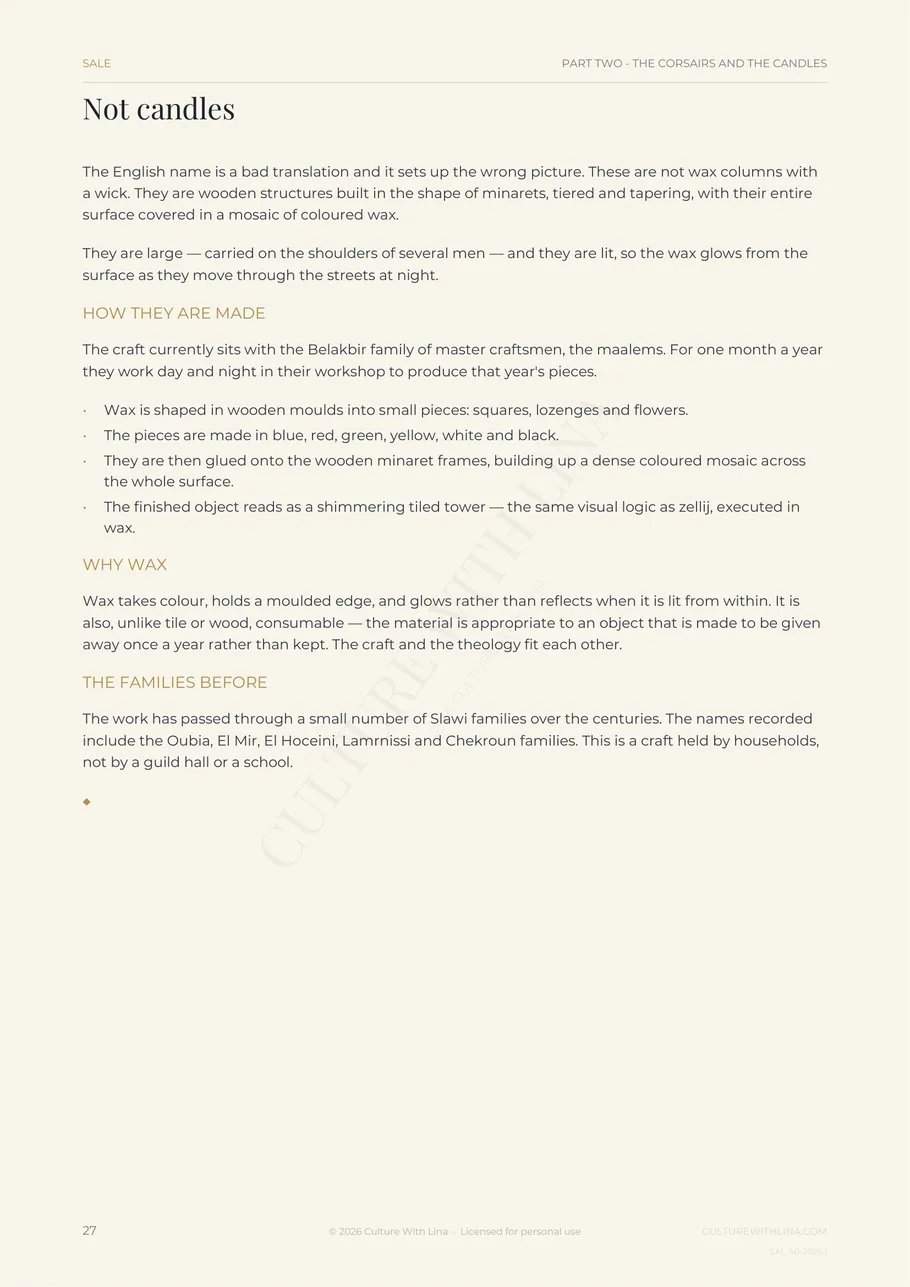
- The Candles — not candles: wax mosaics on wooden minarets, made by the Belakbir family over one month a year
- The Night Itself — after the Asr prayer on the eve of Mawlid, the order of the procession, the route, and where to stand
Part Three — Practical
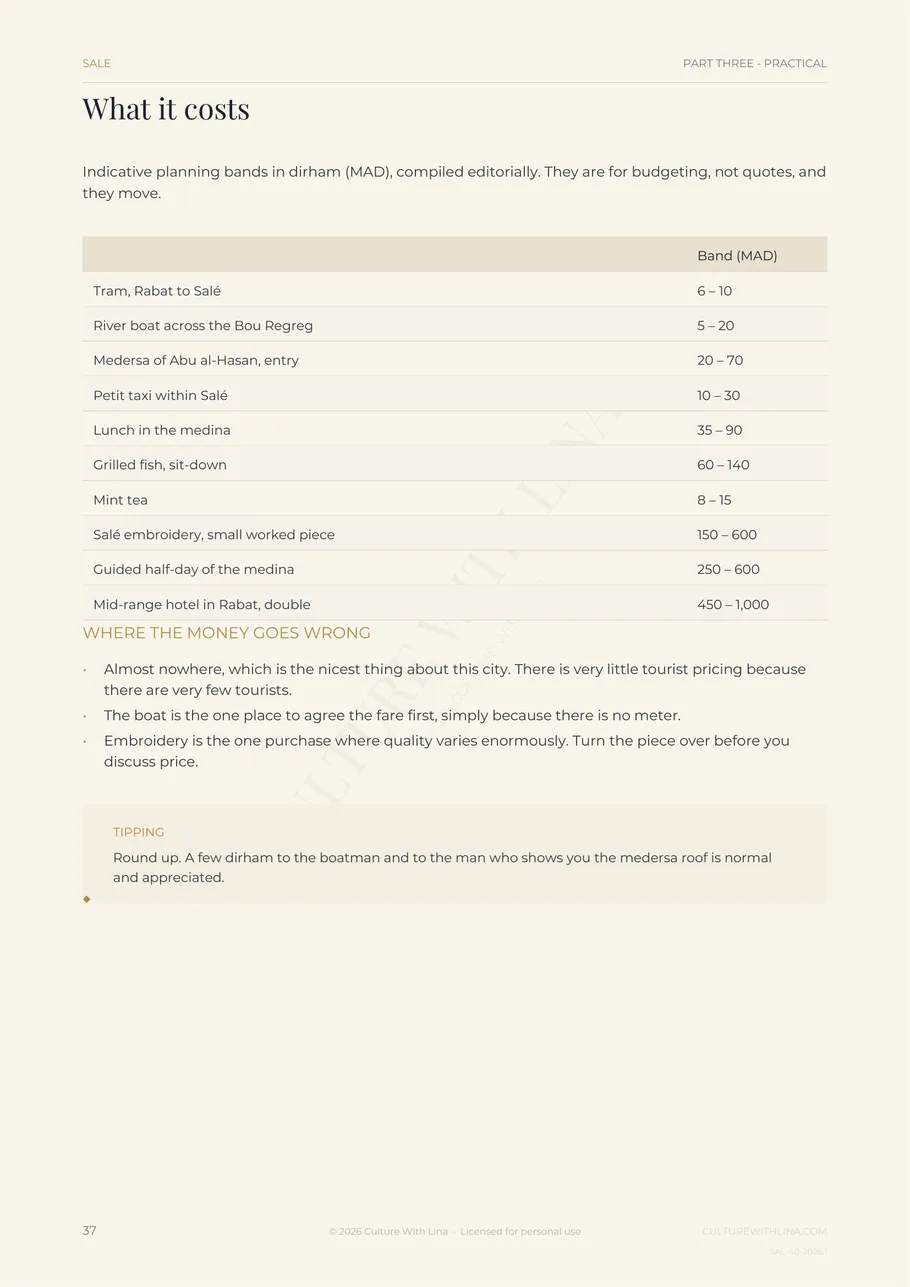
The tram, the river boats, why you will stay in Rabat, eating in a city that closes early, three itineraries including one that pairs the two banks, month-by-month timing, a full cost table in dirham and a glossary.
What it is
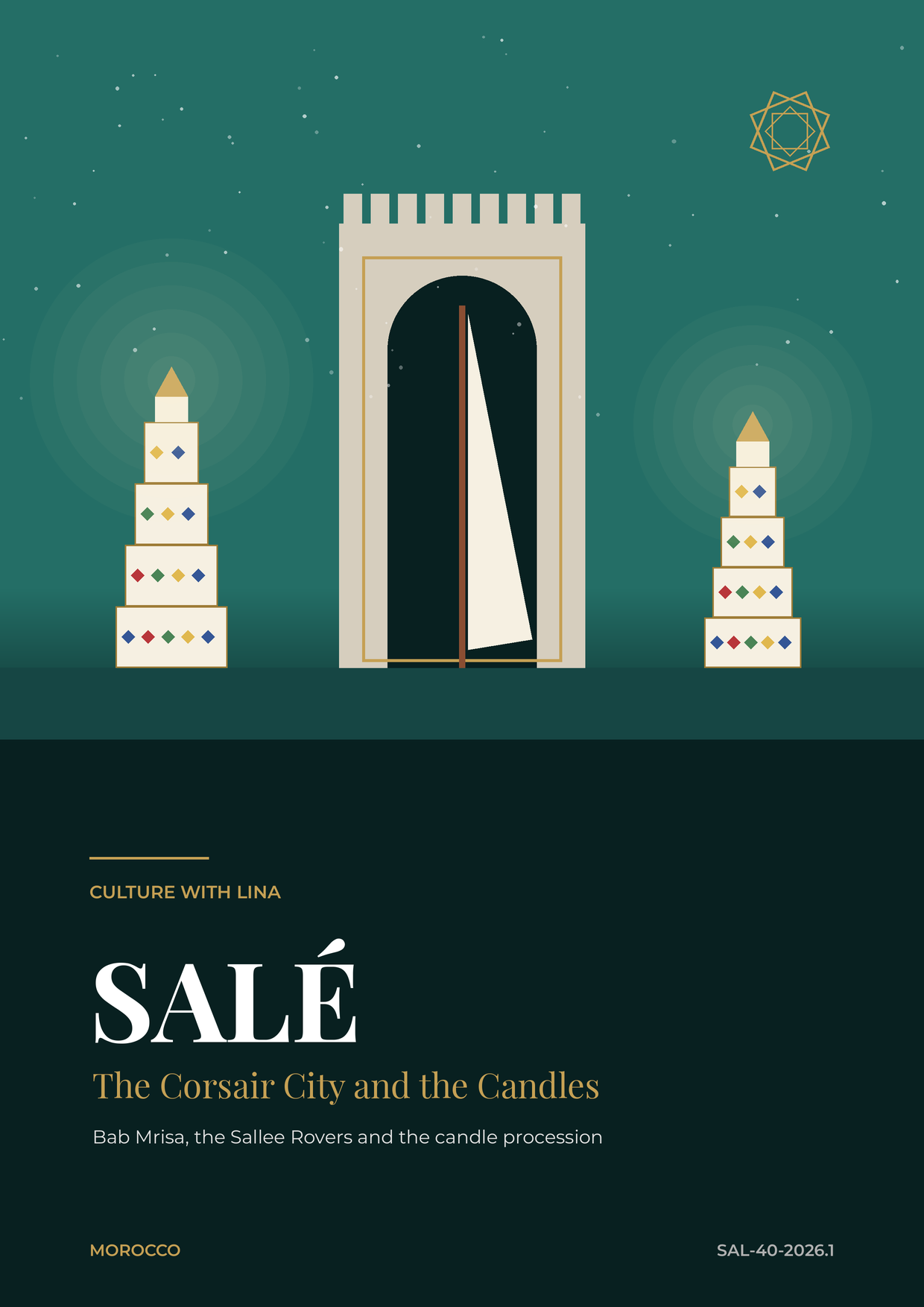
A 40-page A4 PDF with thirteen original illustrations, one per chapter. Instant download after checkout. Reads on a phone and prints at home.
Read as a pair with the Rabat guide: the two books describe one estuary from opposite banks. The moussem date moves every year with the Islamic calendar. Prices are indicative planning bands compiled editorially, not quotes.

Reviews
There are no reviews yet.