
Description
The city everyone drives past
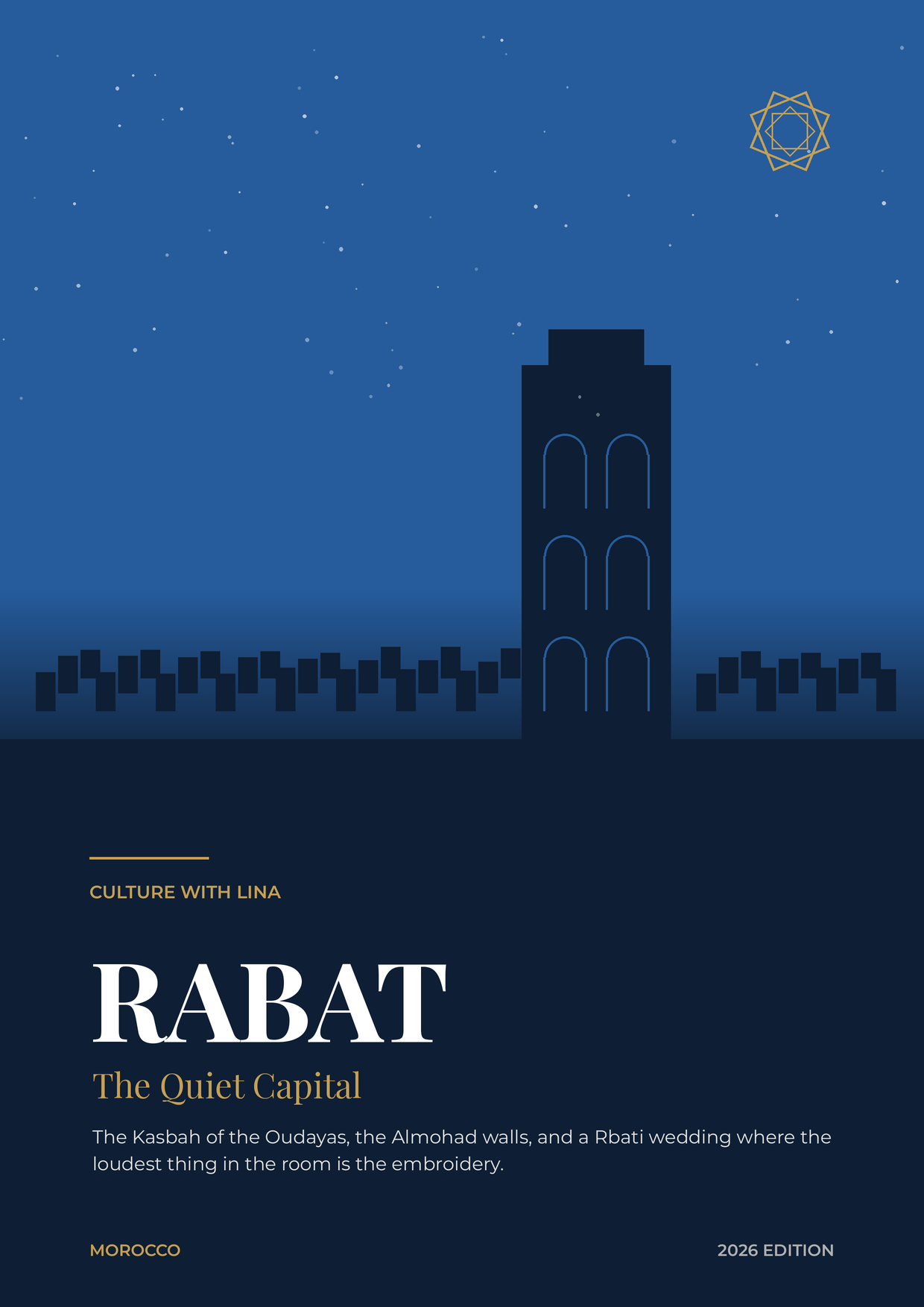
Rabat sits between Casablanca and Tangier on a line almost every visitor to Morocco travels, and almost every visitor travels straight through it. The train stops for four minutes. Most people stay on it.
That is the whole opportunity. Rabat has a UNESCO-listed medina you can cross in twenty minutes without once being followed, a twelfth-century kasbah painted blue and white above the Atlantic, the stump of what was meant to be the largest mosque in the world, and a Roman town with a Merinid necropolis built inside its walls and storks nesting on top of it.
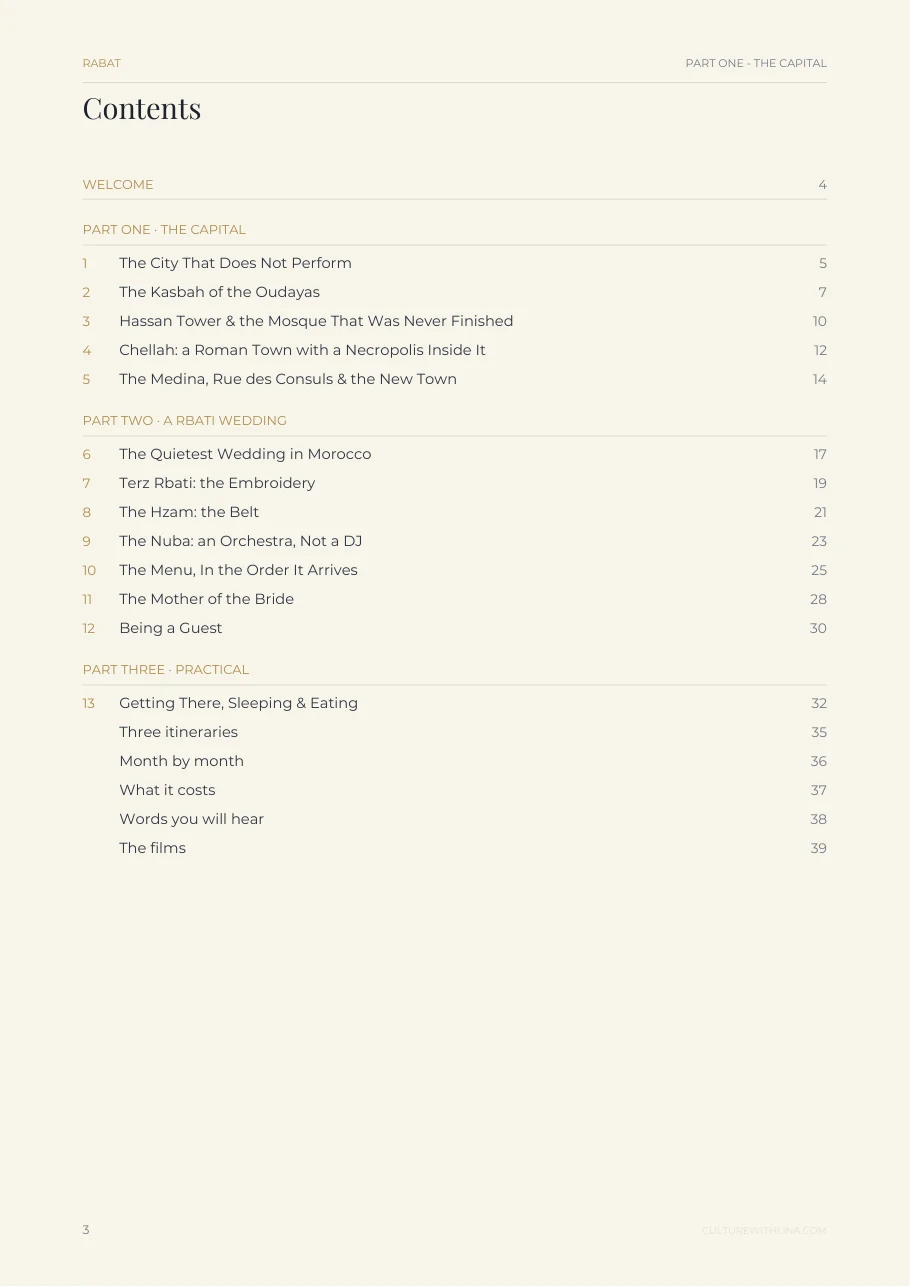
Part One — The Capital
- Why Rabat and not Fez — 1912, Lyautey, and a decision that stuck
- Ribat al-Fath, and the corsair Republic of Bou Regreg run by Morisco exiles
- Bab Oudaia: how to read the best Almohad gate anywhere, in three details
- Why the kasbah lanes are blue, and the honest answer about when they were painted
- Hassan Tower, the 348 columns, and the line in the stonework that is the year 1199
- Chellah: the Roman street grid, the Merinid necropolis, the storks and the eel pool
- Rue des Consuls, the Thursday carpet market, and what a Rbati carpet actually is
- The Ville Nouvelle, the Art Deco nobody mentions, and the capital still being built
Part Two — A Rbati Wedding
Seven chapters on the Moroccan wedding that never makes the reels, because it is quiet.
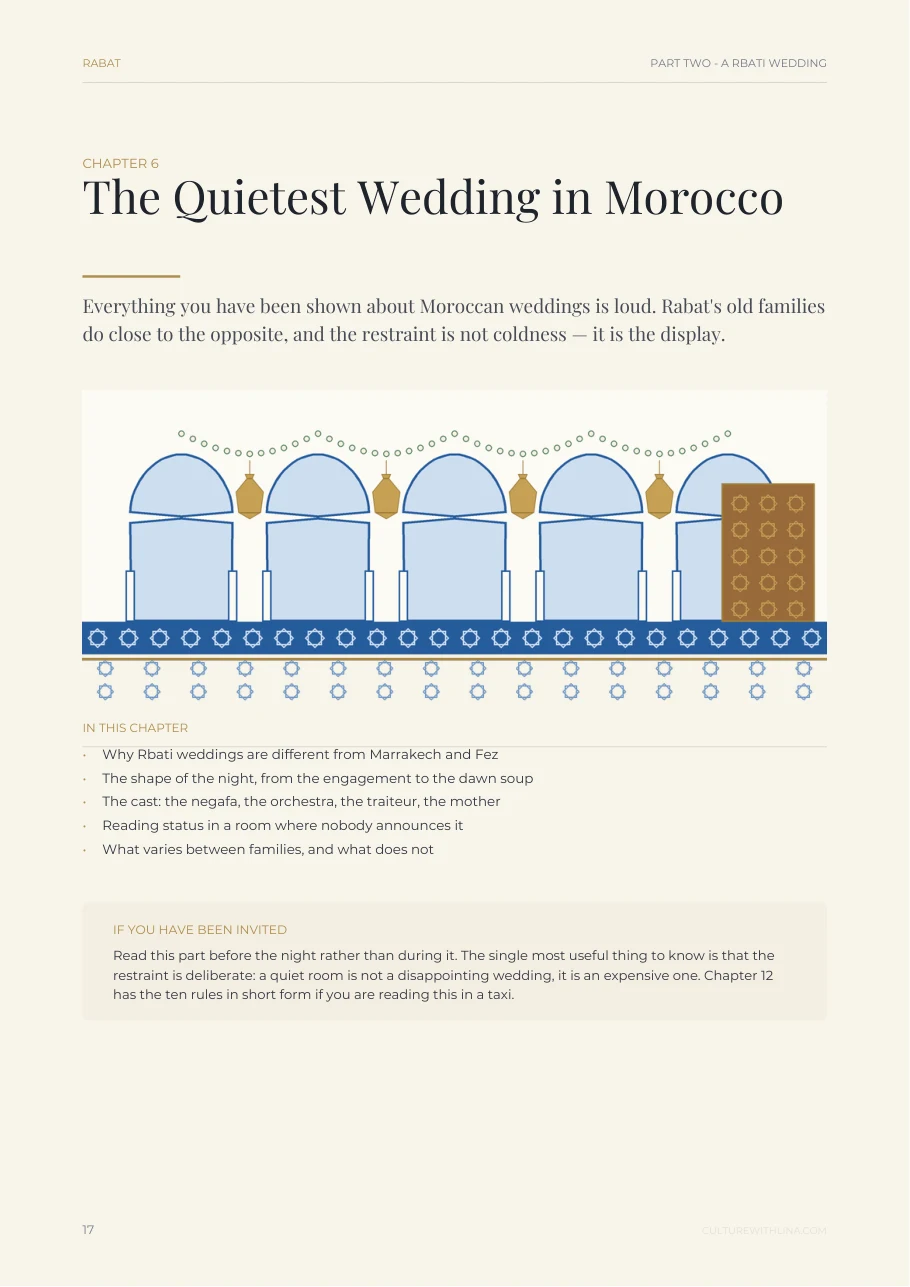
- The Quietest Wedding in Morocco — why restraint is the display, and the full shape of the night from the engagement to the dawn soup
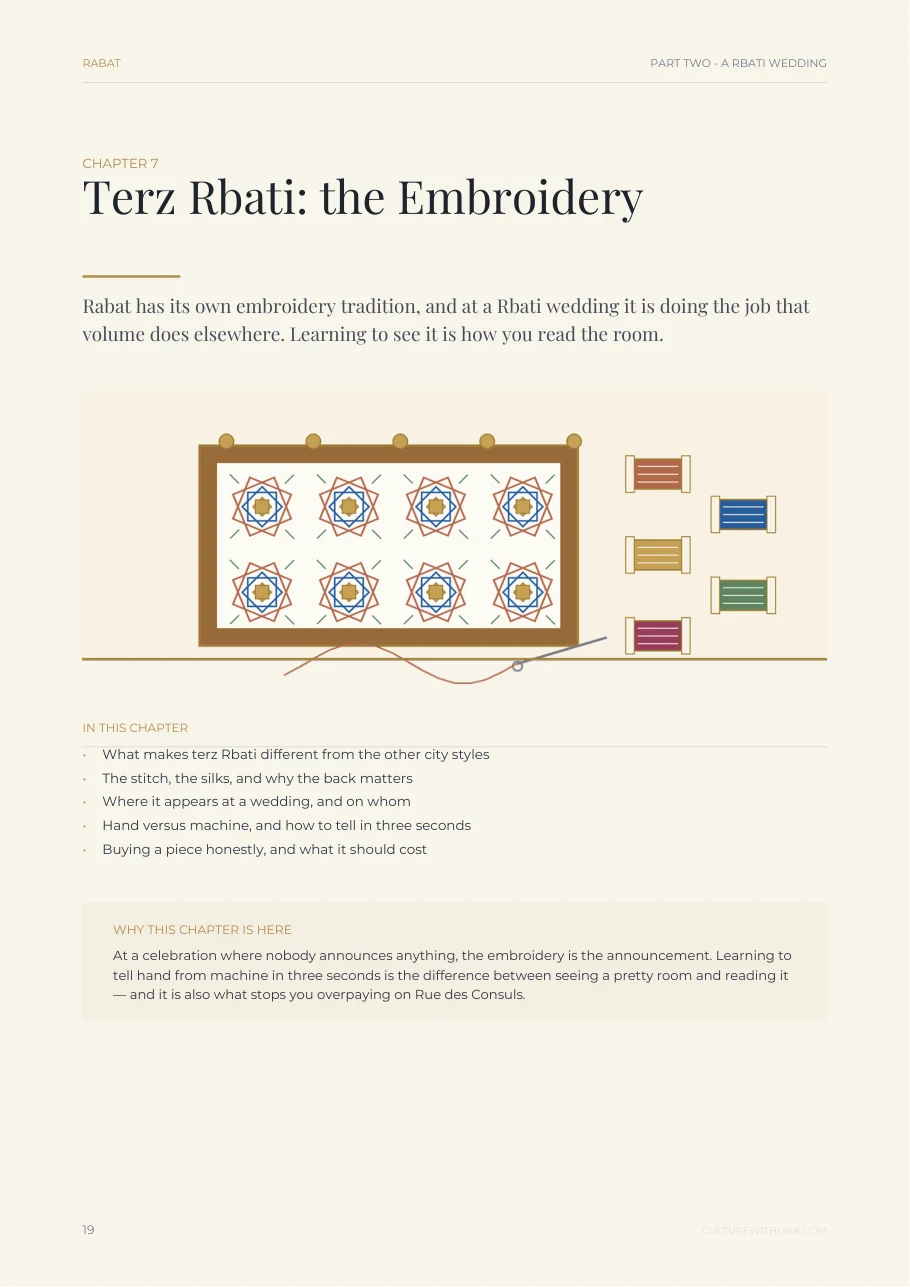
- Terz Rbati — Rabat’s polychrome embroidery tradition, where it appears on the night, and the three-second test for hand versus machine
- The Hzam — the woven gold belt, what mansouj means, why the belt and not the dress carries the status, and the four seconds in which it is fastened
- The Nuba — al-Âla, an orchestra instead of a DJ, the violin held upright on the knee, how to listen, and the single ululation that nobody joins
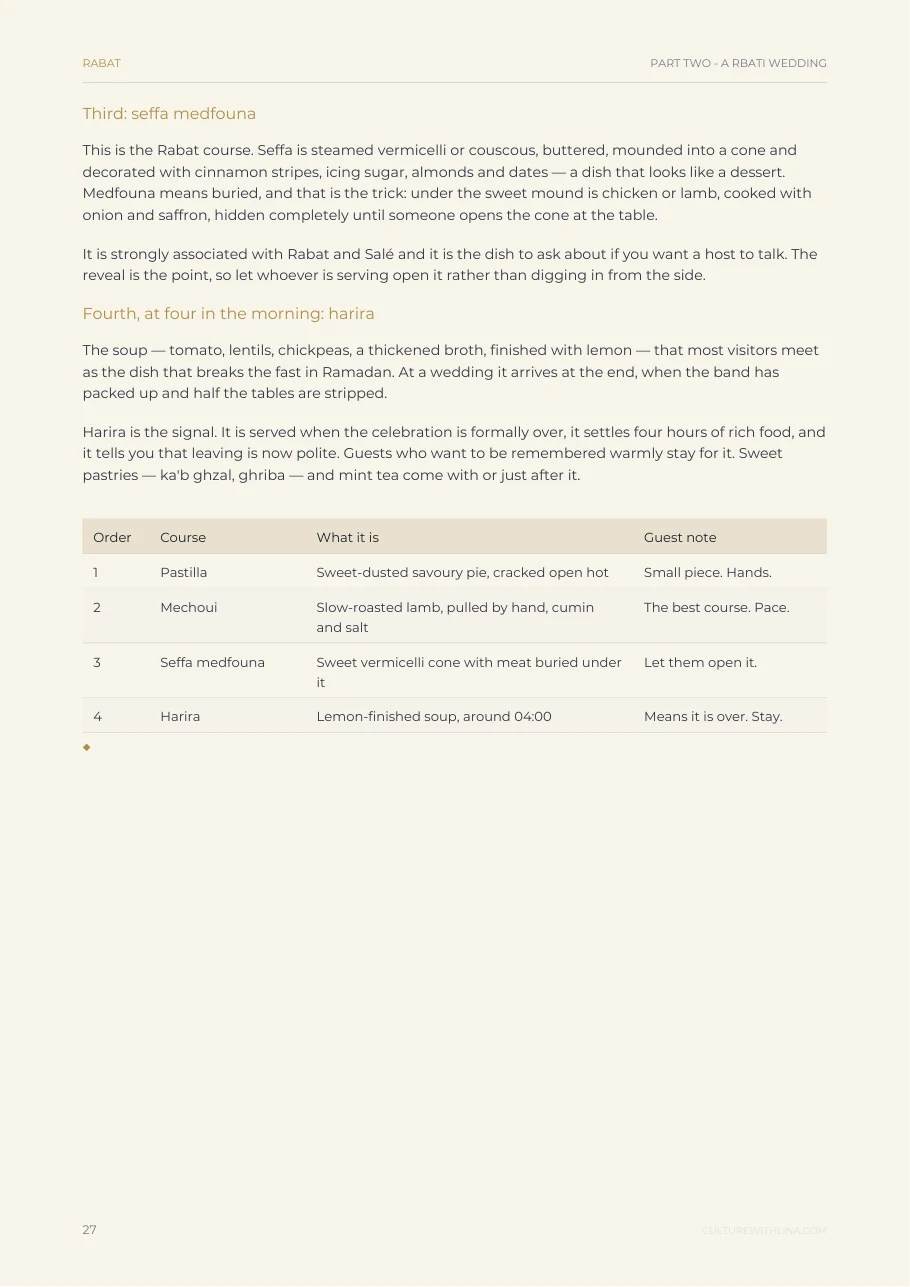
- The Menu, In Order — pastilla, mechoui, seffa medfouna, and harira at four in the morning. Why refusing food does not work, and what the soup signals
- The Mother of the Bride — the invisible manager, the service corridor, why she never faces the dance floor, and the shoes coming off at 4am
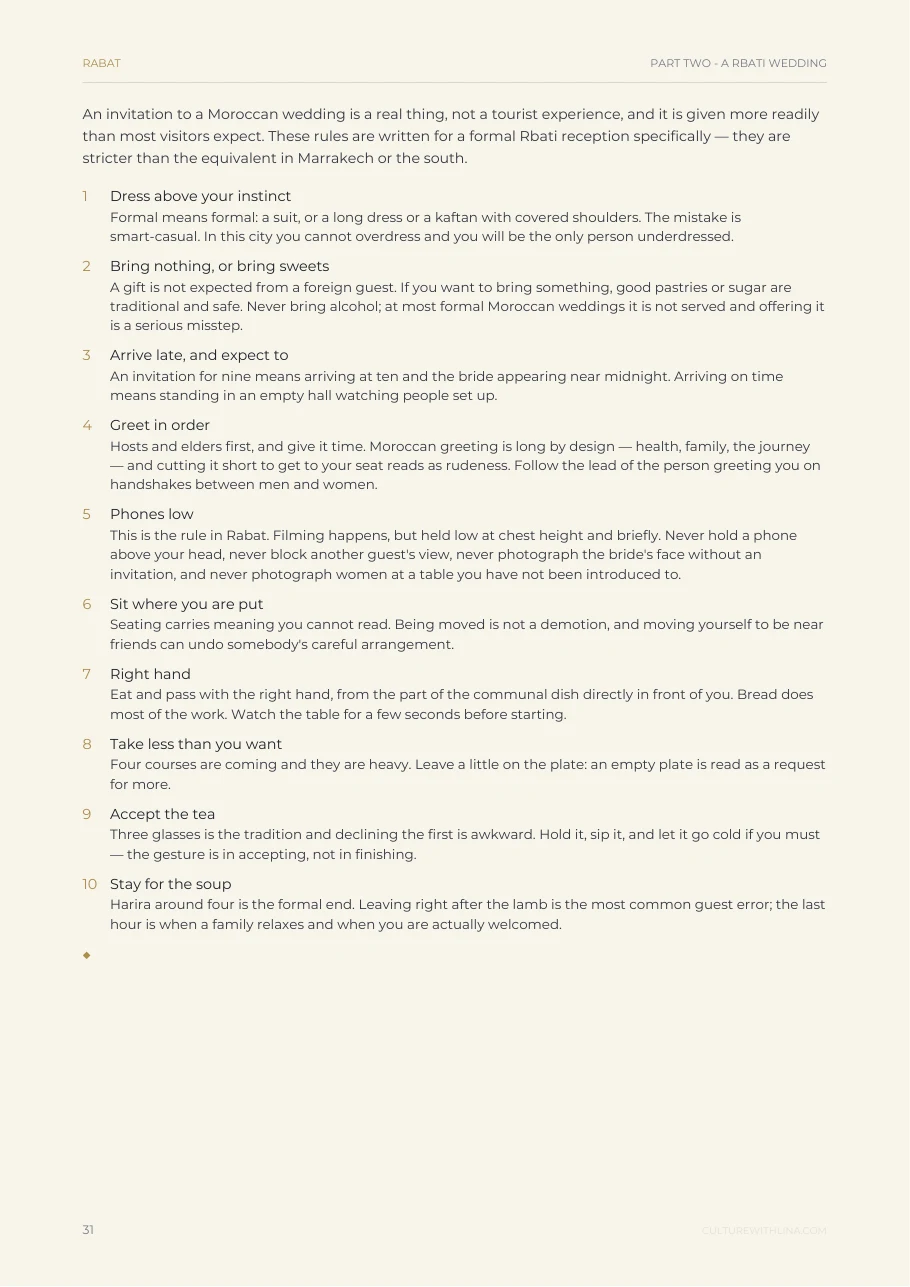
- Being a Guest — ten rules that decide how you are received
Part Three — Practical
Trains and the high-speed line, why not to hire a car, where to sleep in four districts, what to eat and where not to, three itineraries, month-by-month timing, a full cost table in dirham, and a glossary of every term in the book.
What it is
A 40-page A4 PDF with thirteen original illustrations, one per chapter, in the same series as the other Morocco guides. Instant download after checkout. Reads on a phone and prints at home.
A free sampler — the city opener and the wedding opener — is available on the site.
Wedding customs vary between families and between Rabat and Salé. Where practice differs the guide says so rather than inventing one correct version. Prices are indicative planning bands compiled editorially, not quotes.
Reviews
There are no reviews yet.