Ramadan changes the rhythm of Morocco more than any other time of year. Days are quieter and slower, evenings are louder and later, and the country’s food culture moves almost entirely to the hours after sunset. For a traveller, it can be one of the most rewarding times to visit, or a frustrating one, depending on whether you plan for it. This guide covers what actually changes, how to adjust your days, and how to be a considerate guest.
When is Ramadan?
Ramadan follows the Islamic lunar calendar, so it moves about eleven days earlier each year. In 2027 it is expected to begin around 8 February and end with Eid al-Fitr around 9 or 10 March. The exact start and end depend on the sighting of the new moon, which Morocco’s Ministry of Habous and Islamic Affairs announces the evening before, so dates can shift by a day. If your trip sits right at the edges, keep a day of flexibility.
One practical detail that catches visitors out: Morocco normally runs on GMT+1, but it switches its clocks back one hour to GMT for the month of Ramadan and returns afterwards. Check train times, tours and flights after the change, and make sure your phone has updated.
What changes during the day
Most Moroccans fast from dawn to sunset: no food, no water, no cigarettes. The effect on daily life is noticeable but not dramatic.
- Mornings start late. Many people sleep after the pre-dawn meal, so medinas and markets are slow to wake. Shops that normally open at nine may open at ten or eleven.
- Working hours shorten. Government offices, banks and many businesses run a reduced day, often finishing by mid-afternoon. Some museums and monuments also shorten their opening hours. Check before you go rather than relying on the usual times.
- Cafés and local restaurants close during daylight. In the big cities and tourist areas, plenty of places still serve visitors: hotel restaurants, riads, cafés in the new towns and places used to foreign guests. In small towns and rural areas, finding lunch can be hard, so carry snacks and water.
- The late afternoon gets tense. Traffic builds in the hour before sunset as everyone rushes home, and patience can wear thin after a long day without water. Avoid taxis and driving in that window if you can.
Eating and drinking as a visitor
Non-Muslim visitors are not expected to fast. Moroccan law penalises Muslims who openly break the fast in public, but it does not apply to foreign tourists. Even so, eating, drinking or smoking in the street during the day is widely seen as rude. The simple rule: eat and drink indoors, in your riad, a restaurant or out of sight. A discreet sip from a water bottle in the heat is generally understood; a sandwich eaten on a busy street is not.
Alcohol is harder to find. Many supermarkets stop selling it for the whole month, and some bars close. Licensed hotel bars and restaurants in the main cities often still serve non-Muslim guests, but do not count on it.
Iftar: the best part of the day
At sunset, the call to prayer signals the end of the fast, and the whole country sits down to eat at once. The streets empty completely for twenty or thirty minutes, which is an eerie, memorable sight in a normally crowded medina.
The Moroccan ftour (the local word for iftar) has a familiar shape. It usually starts with dates and milk or water, then harira, a tomato, lentil and chickpea soup that appears on almost every table during the month. Alongside come chebakia, flower-shaped pastries fried and soaked in honey and sesame; sellou, a dense mix of toasted flour, almonds and sesame; hard-boiled eggs; msemen and baghrir pancakes; and mint tea or coffee. A larger dinner often follows later in the evening.
Many riads and guesthouses offer ftour to guests during Ramadan, and some restaurants run set iftar menus. It is worth booking at least one. If a Moroccan family or host invites you to break the fast with them, accept if you can; it is a generous invitation and one of the most direct ways to understand the month.
The nights
After ftour, cities come alive. Families walk, cafés fill, shops reopen and markets stay busy until well past midnight. Mosques are full for the special evening prayers, tarawih, and in some neighbourhoods the crowd spills onto the pavement. In the last ten days, and especially on Laylat al-Qadr (usually observed on the night before the 27th day), the mosques are at their fullest and many children are dressed in traditional clothes for the occasion.
Before dawn, some neighbourhoods still have a nafar or ghaita player who walks the streets with a horn or drum to wake people for shour, the pre-dawn meal. If you are staying in an old medina, you may hear it around three or four in the morning.
Planning your days
- Do sights in the morning. From around ten until early afternoon is the most reliable window for monuments, museums and guided visits.
- Rest in the late afternoon. Everything slows down before sunset. It is a good time to be back at your accommodation.
- Go out after ftour. Evening walks in the medina, the main squares and the new-town boulevards show the city at its most social.
- Book transport with care. Trains and buses keep running, but drivers and guides may prefer to finish before sunset. Avoid journeys scheduled to arrive around ftour time.
- Expect some closures. A few smaller restaurants and shops close for the month or for days at a time, especially around Eid.
For city-specific timing, our Marrakech guide and Fes guide include ready-made itineraries you can shift earlier in the day.
Visiting mosques and religious sites
In Morocco, most mosques are closed to non-Muslims throughout the year, not just during Ramadan. The main exception is the Hassan II Mosque in Casablanca, which runs guided tours outside prayer times; tour hours are often reduced during Ramadan, so check the current schedule. Madrasas such as the Ben Youssef in Marrakech or the Bou Inania in Fes are open to visitors and are the best way to see religious architecture up close.
Dress and behaviour
Moroccan dress norms do not change officially during Ramadan, but people are more conscious of modesty during the month. Covering shoulders and knees is a good default for everyone, in cities as well as the countryside. Public displays of affection, already frowned upon, are best avoided entirely. Loud music in public during the day will also draw looks.
A few words go a long way. Ramadan mubarak or Ramadan karim are the usual greetings, and saying either to a shopkeeper or your host is always well received.
Eid al-Fitr
The end of Ramadan is marked by Eid al-Fitr, a public holiday that usually lasts one to two days in Morocco. Families gather, people wear new clothes and children receive small gifts or money. Many shops and restaurants close, especially on the first day, and transport between cities is crowded as people travel home. If you are moving between cities around Eid, book tickets in advance and expect fuller trains and buses.
Is Ramadan a good time to visit?
It depends on what you want from the trip. If you are hoping for long lunches, lively daytime cafés and nightlife with drinks, it is not the best month. If you are interested in how Moroccans actually live, want to experience the food and social life of the evenings, and do not mind a slower daily pace, it can be one of the most memorable times to go.
It is also worth planning the budget a little differently: set iftar menus and the occasional private driver to avoid rush-hour traffic can add up. Our free travel budget calculator can help you estimate costs for a trip of any length.
Quick checklist
- Confirm the expected dates and allow a day of flexibility at either end
- Remember the one-hour clock change to GMT for the month
- Plan sights for late morning and early afternoon
- Carry snacks and water, and eat and drink out of public view
- Book at least one ftour at your riad or a local restaurant
- Avoid road travel in the hour before sunset
- Check museum and monument hours before you go
- Book transport early if travelling around Eid
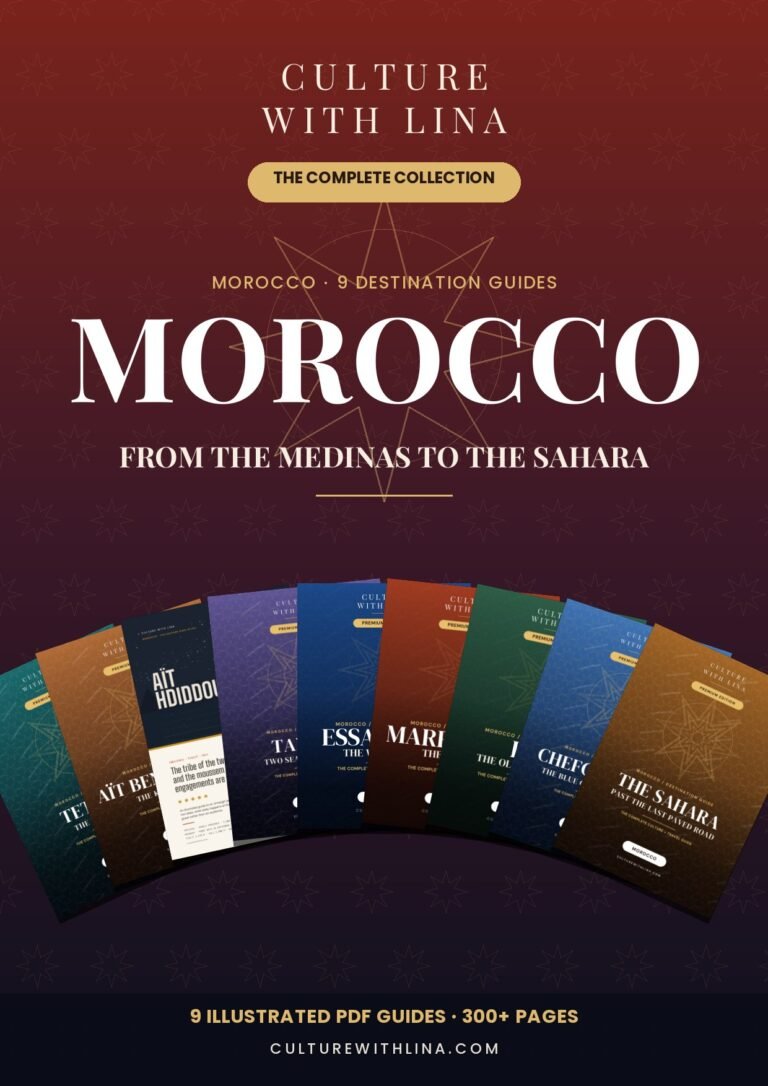
For more on Morocco’s cities and the celebrations that shape them, the Morocco collection brings all nine destination guides together.