
Description
Most travel writing about Casablanca is an apology
It says the city is modern, that the film was shot in Hollywood, that there is one mosque worth seeing, and that the real Morocco is three hours inland. It is right about the film. It is wrong about the city.
A port town of roughly twenty thousand people became a city of hundreds of thousands inside one working lifetime. Because it happened that fast, and in those exact decades, the centre was built overwhelmingly in the styles of the 1920s and 1930s — Art Deco, streamline moderne, and a local hybrid invented here that barely exists anywhere else. Cities usually accumulate. Casablanca did not.
Part One — The City Built in Twenty Years
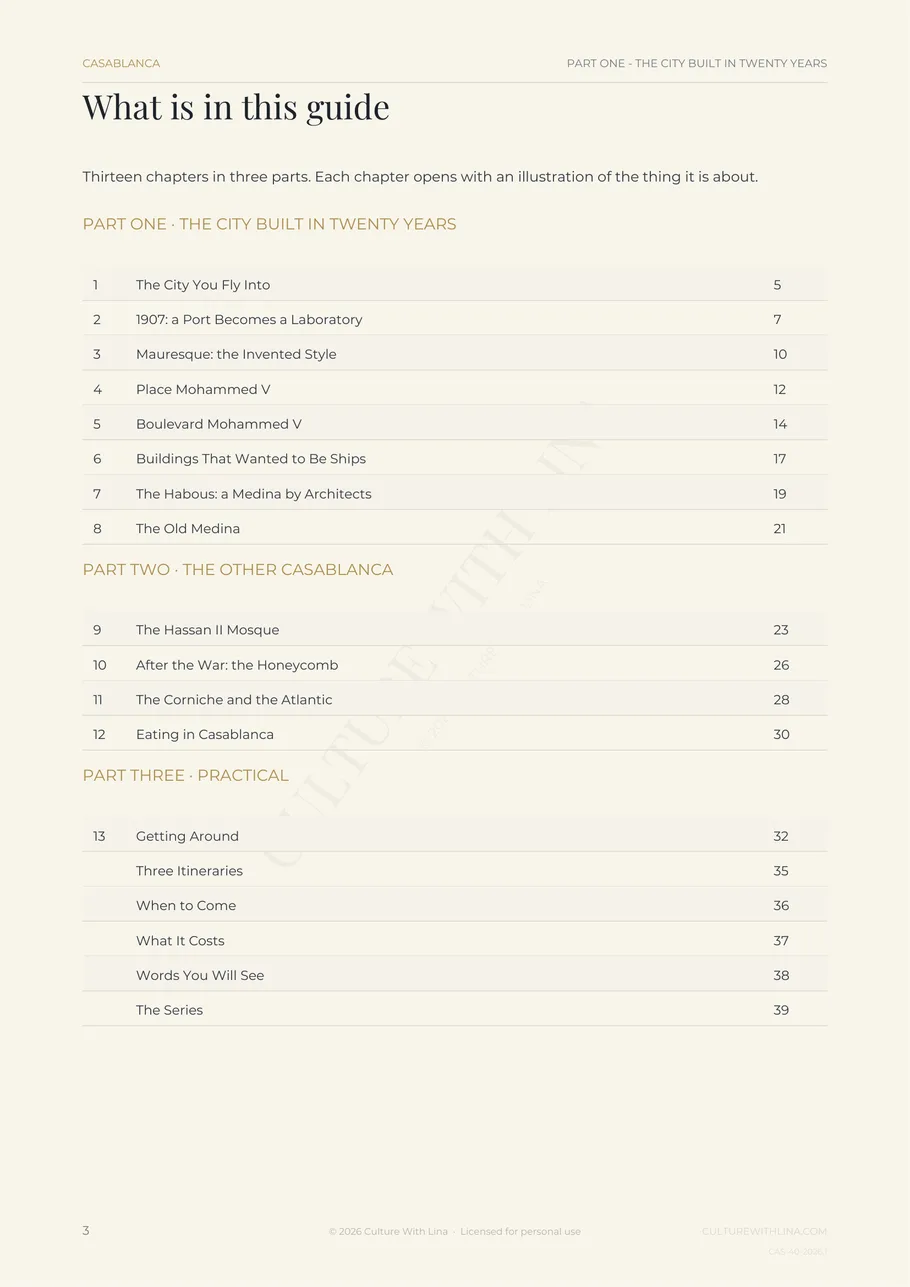
- The city you fly into — why it gets skipped, and the one fact that changes how it looks
- 1907 — a bombardment, a clock tower built in the shape of a minaret, and Henri Prost’s plan
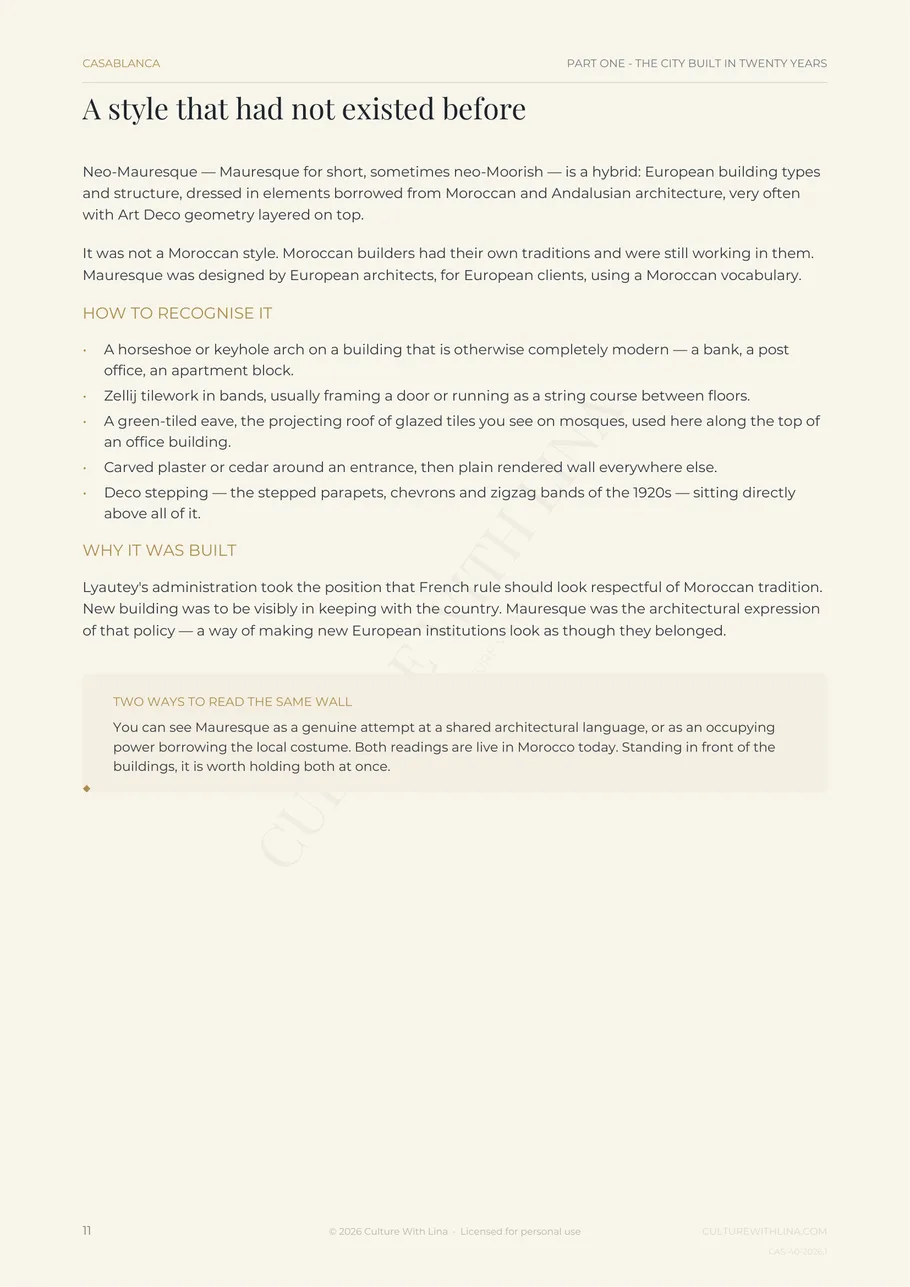
- Mauresque — the invented style: what it is, five ways to recognise it from the street, and the politics underneath it
- Place Mohammed V — the four civic buildings, the iwan on the courthouse, and the name trap that catches everyone out
- Boulevard Mohammed V — the Deco walk, and the Rialto, a 1930s cinema still showing films
- Buildings that wanted to be ships — paquebot style, Edmond Brion’s Bendahan Building, and Marius Boyer
- The Habous — a medina designed on a drawing board in 1916, and the four things that give it away
- The Old Medina — Anfa, Dar el Beida, the sqala, and what came before all of it
Part Two — The Other Casablanca
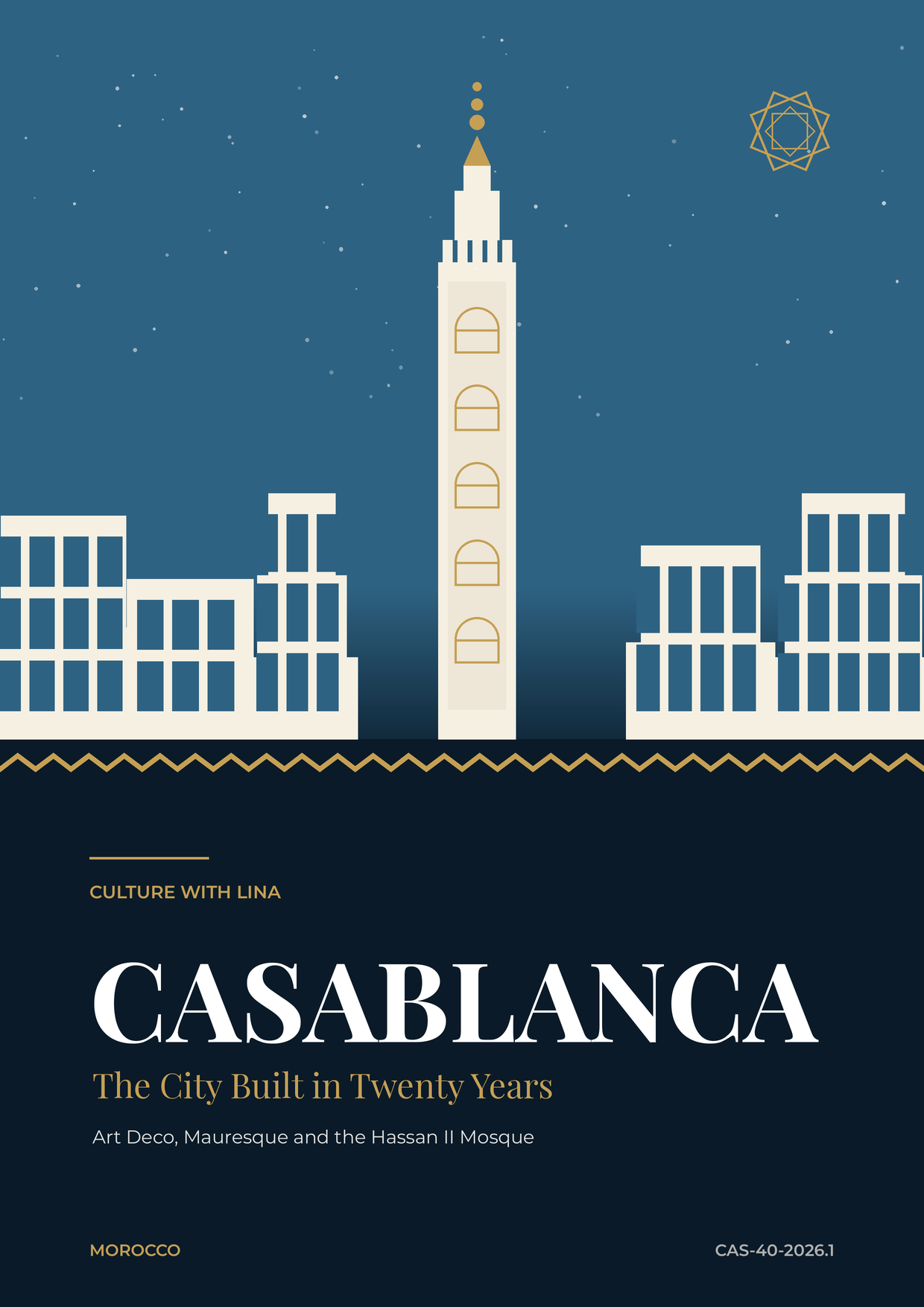
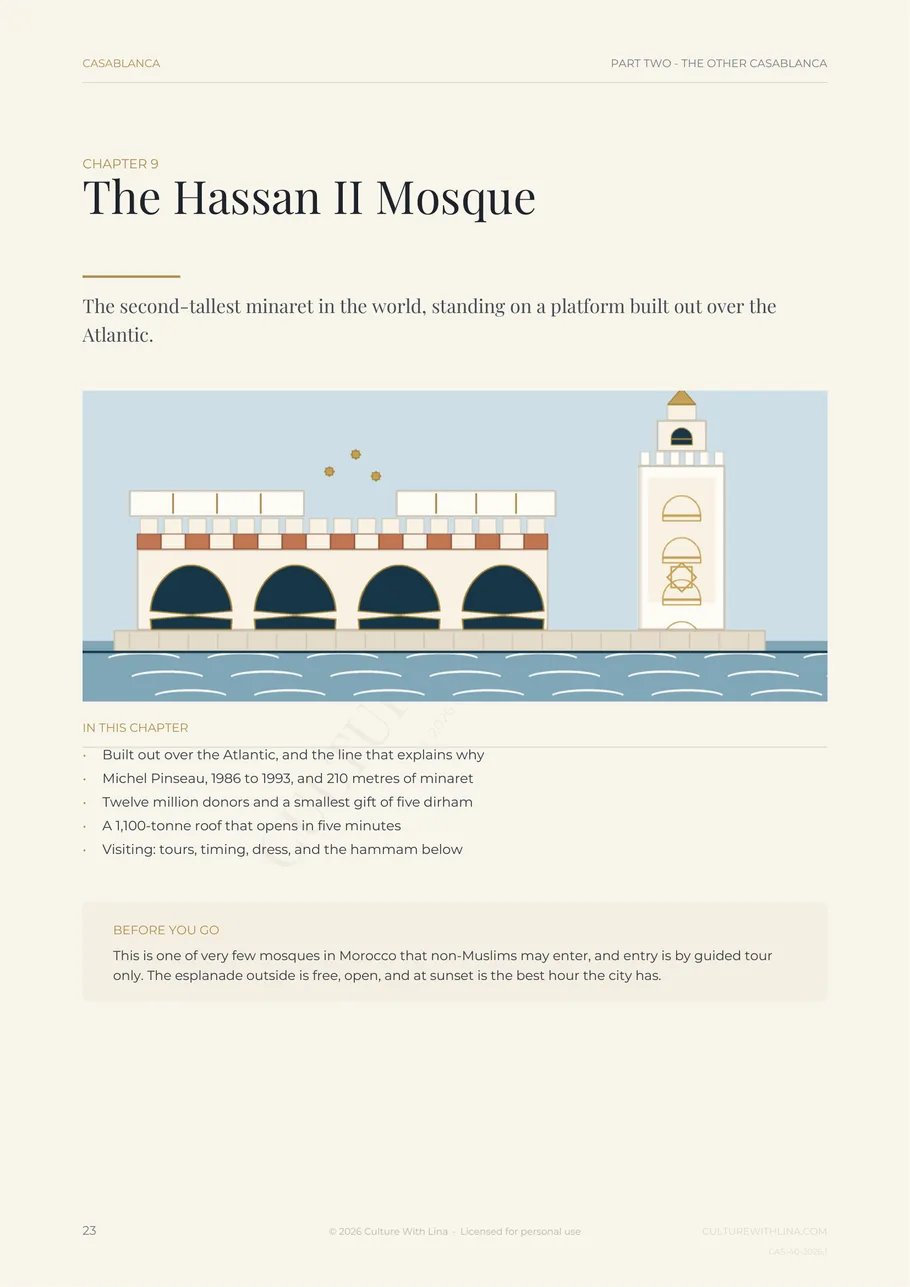
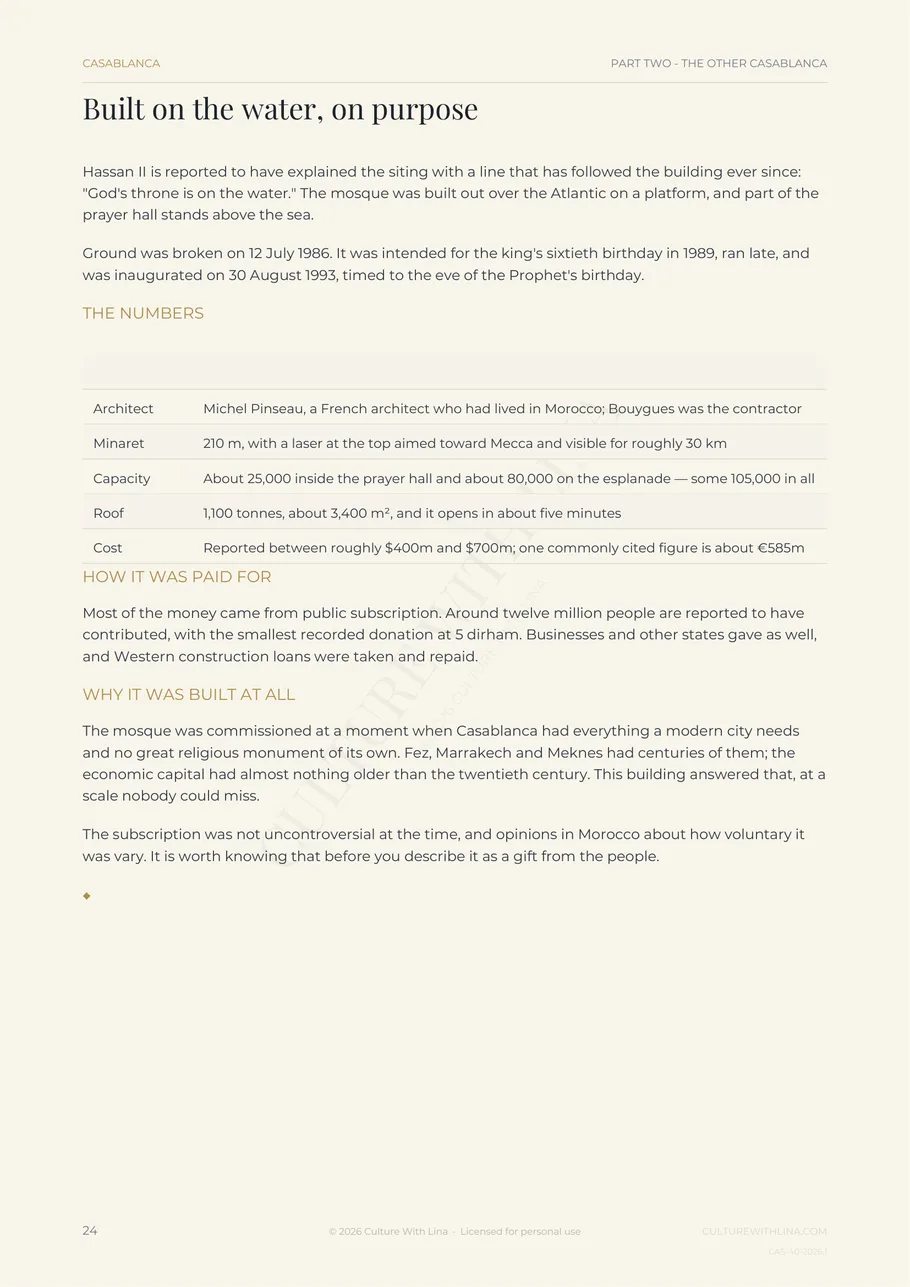
- The Hassan II Mosque — Michel Pinseau, 1986 to 1993, a 210-metre minaret, twelve million donors with a smallest gift of five dirham, a 1,100-tonne roof that opens in five minutes, and how to visit as a non-Muslim
- After the war — Ecochard, the bidonvilles, and the Nid d’Abeille honeycomb that was argued over at the 1953 CIAM congress
- The Corniche — Ain Diab, El Hank lighthouse, and the half-hour walk from the mosque that nobody takes
- Eating — the Central Market of 1917, where you buy the fish at a stall and carry it to a kitchen that cooks it for you
Part Three — Practical
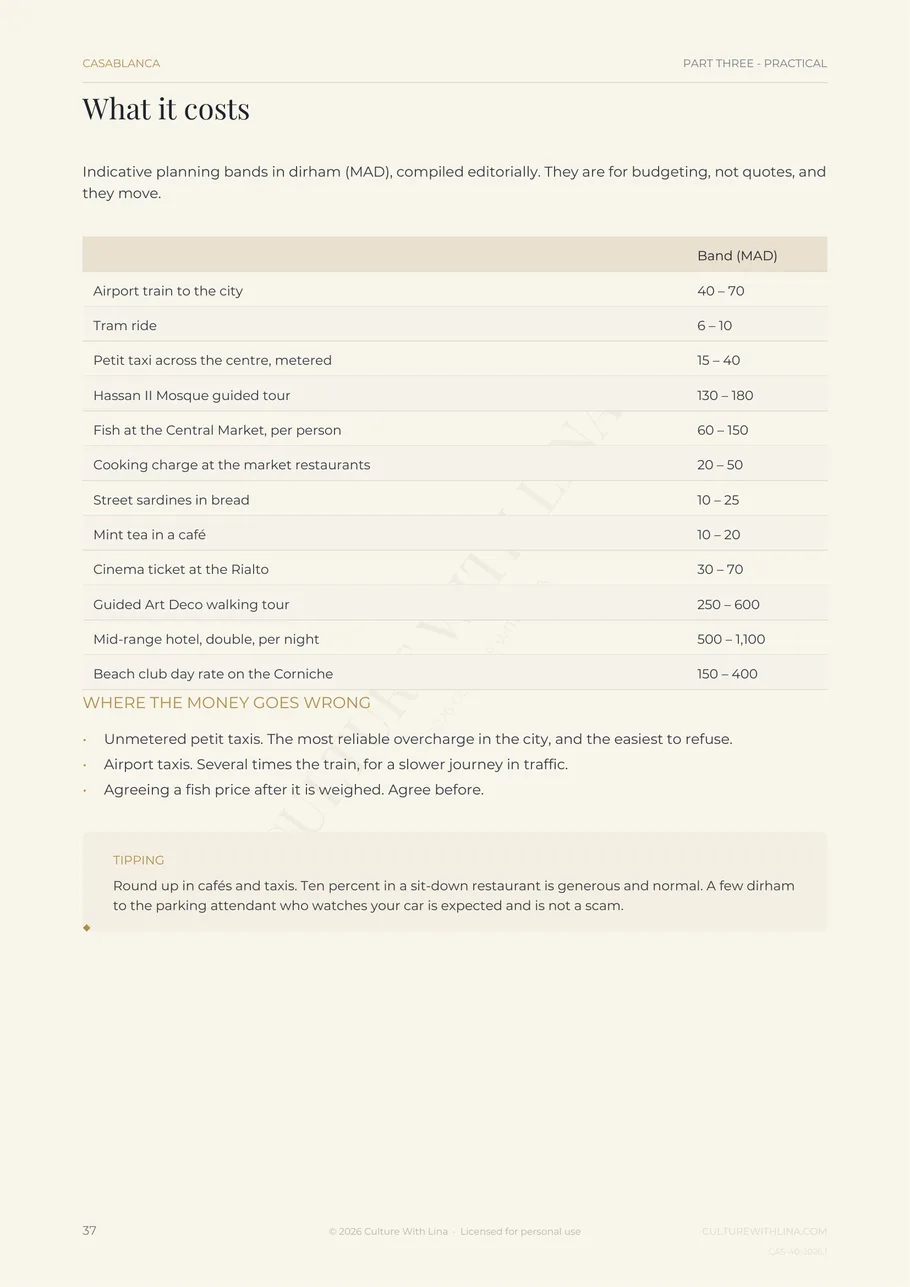
The airport train, the meter rule that stops you overpaying, tram and taxis, where to stay and why rates fall at weekends, three itineraries including one for a layover, month-by-month timing, a full cost table in dirham, and a glossary.
What it is
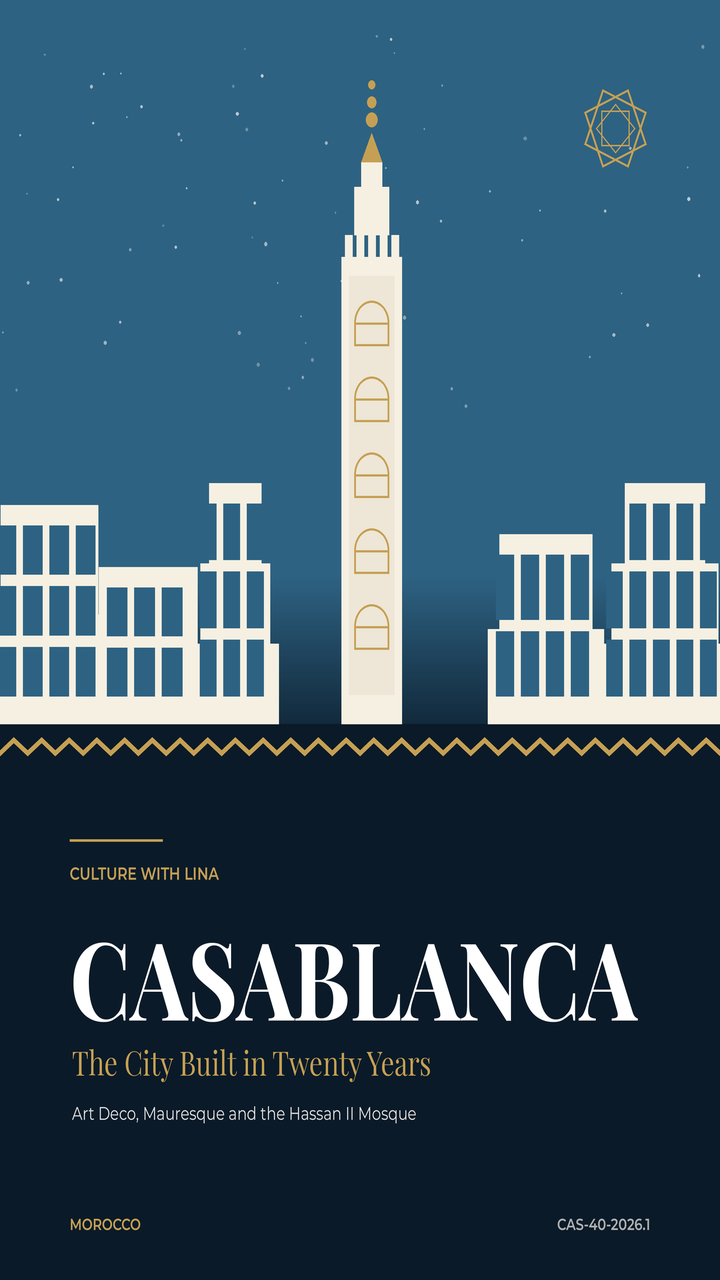
A 40-page A4 PDF with thirteen original illustrations, one per chapter. Instant download after checkout. Reads on a phone and prints at home.
A free two-chapter sampler is available on the site.
Where a building’s architect or date is disputed, this guide says so rather than picking the tidier version. Prices are indicative planning bands compiled editorially, not quotes.
Reviews
There are no reviews yet.